• Fri frakt över 249 kr
  • •
  • Snabba leveranser
  • •
  • Billiga böcker
Kundservice

Du är på sajten för privatpersoner.

Företag, bibliotek eller offentlig verksamhet?

Du handlar på classic.bokus.com, där alla dina funktioner finns intakta.
Till classic.bokus.com
Bokus logotyp. Gå till startsidan.
  • Erbjudanden
  • Nyheter
  • Student
  • Topplistor
  • Barn & ungdom
  • Bokus Play
  • E-böcker
  • Pocketböcker
  • Spel & pussel

10% rabatt på allt med kod NYSTART10 →

Sidfot

Mina sidor

    Hjälp

    • Kundservice
    • Vanliga frågor och svar
    • Frakt och leverans
    • Retur vid ångerrätt
    • Reklamera vara
    • Betalning
    • Köpvillkor
    • Allmänna villkor
    • Information om webbplatsens tillgänglighet

    Om Bokus

    • Om oss
    • Pressrum
    • För studenter
    • För företag
    • För bibliotek och offentlig verksamhet
    • För leverantörer
    • Hållbarhet

    Populärt

    • Aktuella erbjudanden
    • Presentkort
    • Studentlitteratur
    • Nya böcker
    • Topplistor
    • Signerade böcker
    • Engelska böcker

    Inspiration

    • Boktips
    • BookTok
    • Populära bokserier
    • Barnbokskaraktärer
    • Populära författare
    Logotyp för Bokus
    Följ oss på Facebook (extern länk)Följ oss på Instagram (extern länk)Följ oss på YouTube (extern länk)Följ oss på TikTok (extern länk)
    bokus @ CookiesAnpassa cookiesIntegritetspolicyKöpvillkor
    Till Citymail hemsida (extern länk)Till Budbee hemsida (extern länk)Till Postnord hemsida (extern länk)Till Schenker hemsida (extern länk)Till Early Bird hemsida (extern länk)Till Walleys hemsida (extern länk)
    1. Historia och arkeologi
    2. Historia
    3. Militärhistoria
    4. Konflikter efter andra världskriget

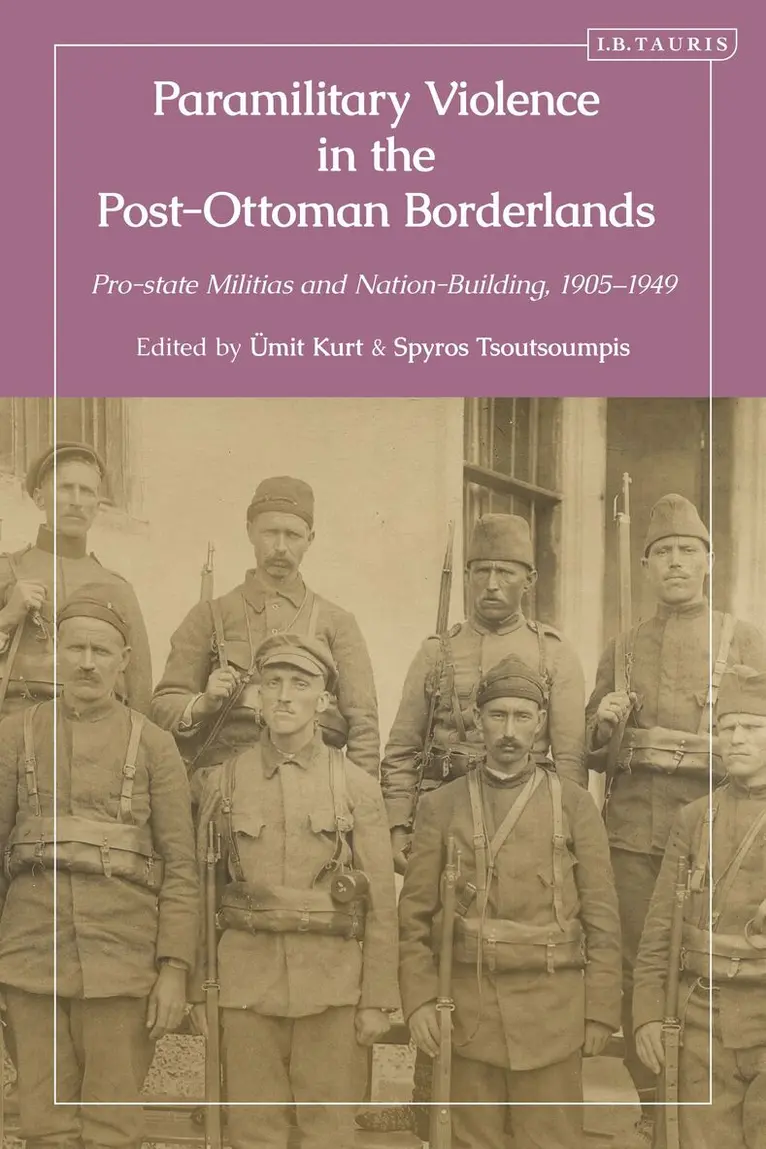
    Paramilitary Violence in the Post-Ottoman Borderlands

    Pro-state Militias and Nation-Building, 1905-1949

    AvÜmit Kurt,Spyros Tsoutsoumpis

    Inbunden, Engelska, 2026

    Del i serien I.B. Tauris

    1 206 kr

    Slutsåld

    Beskrivning

    This book examines the emergence, activities and legacies of pro-state paramilitarism in the late and post-Ottoman borderlands during the era of the European civil war (1905-1949). This period was marked by profound violence and acute ethno-political transformation spurred on by the decline and eventual fall of the Ottoman empire and the emergence of a wide array of national and transnational political projects variably shaped by ethnic nationalism, fascism, and socialism. The chapters in this book examine the backstories, trajectories and activities of those who fought in the name of the various ethno-statal agendas, paramilitaries, gang leaders, bandits, and other pro-state actors, across the periphery of the empire and including understudied areas such as Kosovo, Montenegro, North-Western Greece. The book reveals the organization, patterns and logic of ethnic victimization, and the impact of ethnic and paramilitary mobilization in the governance structures and political institutions on the societies at the receiving end of violence. This approach offers new insights into the motivations of pro-state armed actors and challenges state-centric narratives on the history and legacy of nation-building, violence and paramilitary mobilization in the embattled borderlands of the Balkans, the Caucasus and Anatolia.

    Produktinformation

    • Utgivningsdatum:2026-12-24
    • Mått:156 x 234 x 14 mm
    • Vikt:387 g
    • Format:Inbunden
    • Språk:Engelska
    • Serie:I.B. Tauris
    • Antal sidor:312
    • Förlag:Bloomsbury Publishing PLC
    • ISBN:9780755654468

    Utforska kategorier

    • Konflikter efter andra världskriget inom Historia och arkeologi

    Mer om författaren

    Spyros Tsoutsoumpis is Lecturer in Modern European History, University of Manchester, UK. He is the author of The Peoples Armies, a History of the Greek resistance during the Second World War (2019).Ümit Kurt is Assistant Professor in History, University of Newcastle, Australia. He is the author of The Armenians of Aintab, The Economics of Genocide in an Ottoman Province (2021)

    Recensioner i media

    This excellent volume skilfully illuminates the shadowy world of pro-state paramilitarism in the borderlands of the late and post-Ottoman world. With in-depth analyses of paramilitaries, bandits, and ethnic violence across the Balkans, Caucasus, and Anatolia, it challenges state-centric narratives and delivers an innovative contribution to understanding nation-building, ethnic victimisation, and the lasting legacies of paramilitary mobilisation in this part of the world.

    Innehållsförteckning

    • Foreword and Acknowledgments1. Introduction, Spyros Tsoutsoumpis (The University of Manchester, UK)and Ümit Kurt (University of Newcastle, Australia)Section 1: Plunging into the abyss: Paramilitarism in the era of the Greater War (1905-1922)2. Tribal Alliances, State Security, and Violence in the Ottoman Eastern Borderlands: The Hamidiye Light Cavalry Regiments as Paramilitary Forces, Edip Gölbasi (Leipzig University, Germany)3. The Ottoman Special Organization’s Activities in the South Caucasus Borderlands and the Participation of Local Muslims in Genocidal Killings, Candan Badem (Independent Scholar)4. Young Bosnia Between Democracy and Paramilitarism: Serbia, Austria-Hungary, and the Evolution of Militant Irredentism from the Annexation Crisis to the Sarajevo Assassination, Edin Hajdarpasic (Loyola University Chicago, USA)5. Ottoman Fedaîism, Caucasian Paramilitarism: The Revolutionism of Nikol Douman (1890-1914), Varak Ketsemanian (American University of Beirut, Lebanon) 6. The Political Economy of Late Ottoman Paramilitarism: Violence, Looting and the Destruction of the Aintab Armenians, Ümit Kurt (University of Newcastle, Australia)7. (Para-)Military Entrepreneurship in Southeastern Europe amid the Greater War, Jovo Miladinovic (University of Konstanz, Germany)8. Paramilitarism in the Early 20th Century Serbia. From Revolutionary Movement to Quasi-state Paramilitaries, Dmitar Tasic (Institute for Recent History, Belgrade, Serbia)Section 2: A violent interregnum: Paramilitarism between the wars (1923-1939)9. Anatomy of an Assassination: the 1928 Parliament Killings and the Paramilitarized Politics of Interwar Yugoslavia, John Paul Newman (Maynooth University, Ireland)10. Outlaws, Bureaucrats, and the Gallows: Desertion, Brigandage, and Capital Punishment in Turkey’s Early Republican Period, Ahmet Özcan (Gedik University, Turkey)11. The Guiding Apparatus of the Zilan Massacre: Militias (1930-1950), Sedat Ulugana (Independent Scholar)Section 3: Once more unto the breach: Paramilitarism during the Second World War and the early Cold War Period (1940-1949)12. “For Nation and Fatherland”: Anti-Communist Kapetans in Greek Macedonia (1941–1944), Stratos N. Dordanas (University of Thessaloniki, Greece) and Vaios Kalogrias (Independent Scholar)13. Armed collaboration in Italy’s occupation areas of the Balkans during the Second World War, Paolo Fonzi (University of Eastern Piedmont, Italy)14. Paramilitary organization of Vlachs and Italo-Romanian Rivalry in Nazi-Occupied Greece, Charalambos Gappas (The University of North Carolina at Chapel Hill, USA)15. Paramilitarism after the Second World War: The Case of Greece, Spyros Tsoutsoumpis (The University of Manchester, UK)Afterward: Intrigue Aboard the Savarona: The Long Arc of Ottoman Paramilitarism, Ryan Gingeras (Naval Postgraduate School in California, USA)