• Fri frakt över 249 kr
  • •
  • Snabba leveranser
  • •
  • Billiga böcker
Kundservice

Du är på sajten för privatpersoner.

Företag, bibliotek eller offentlig verksamhet?

Du handlar på classic.bokus.com, där alla dina funktioner finns intakta.
Till classic.bokus.com
Bokus logotyp. Gå till startsidan.
  • Erbjudanden
  • Nyheter
  • Student
  • Topplistor
  • Barn & ungdom
  • Bokus Play
  • E-böcker
  • Pocketböcker
  • Spel & pussel

10% rabatt på allt med kod: NYSTART10 →

Sidfot

Mina sidor

    Hjälp

    • Kundservice
    • Vanliga frågor och svar
    • Frakt och leverans
    • Retur vid ångerrätt
    • Reklamera vara
    • Betalning
    • Köpvillkor
    • Allmänna villkor
    • Information om webbplatsens tillgänglighet

    Om Bokus

    • Om oss
    • Pressrum
    • För studenter
    • För företag
    • För bibliotek och offentlig verksamhet
    • För leverantörer
    • Hållbarhet

    Populärt

    • Aktuella erbjudanden
    • Presentkort
    • Studentlitteratur
    • Nya böcker
    • Topplistor
    • Signerade böcker
    • Engelska böcker

    Inspiration

    • Boktips
    • BookTok
    • Populära bokserier
    • Barnbokskaraktärer
    • Populära författare
    Logotyp för Bokus
    Följ oss på Facebook (extern länk)Följ oss på Instagram (extern länk)Följ oss på YouTube (extern länk)Följ oss på TikTok (extern länk)
    bokus @ CookiesAnpassa cookiesIntegritetspolicyKöpvillkor
    Till Citymail hemsida (extern länk)Till Budbee hemsida (extern länk)Till Postnord hemsida (extern länk)Till Schenker hemsida (extern länk)Till Early Bird hemsida (extern länk)Till Walleys hemsida (extern länk)
    1. Samhälle och politik
    2. Sociologi och antropologi
    3. Antropologi

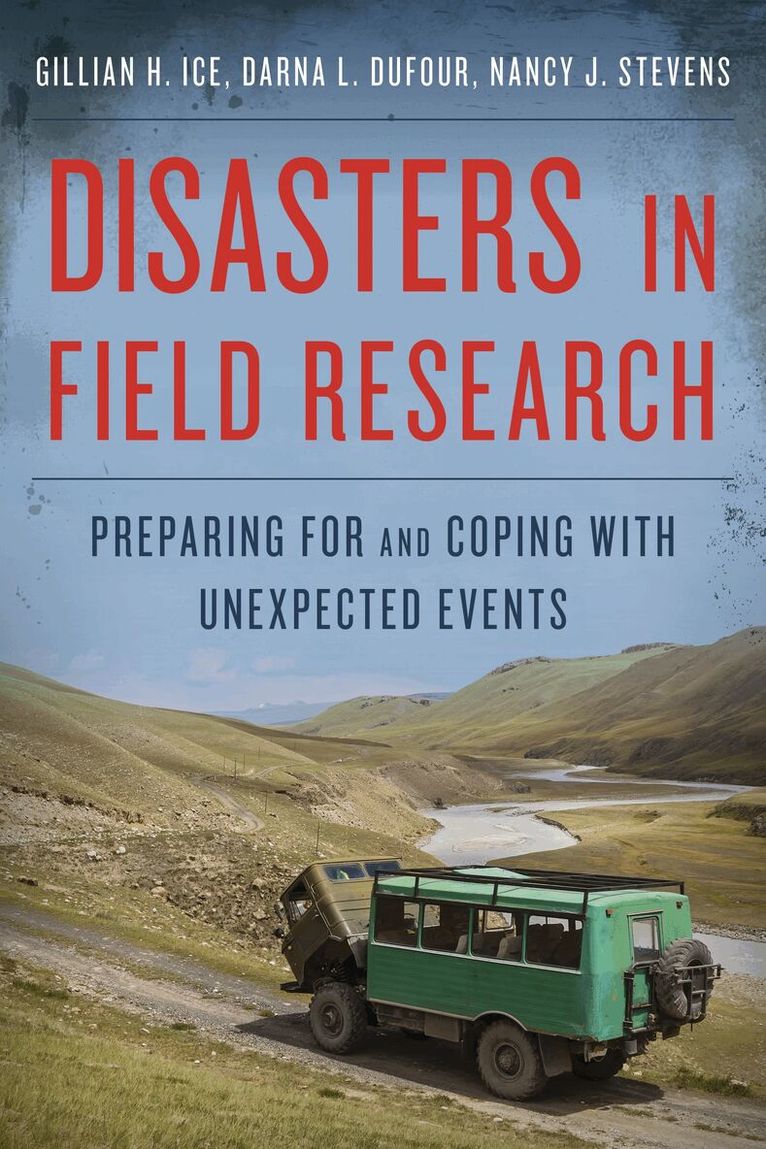
    Disasters in Field Research

    Preparing for and Coping with Unexpected Events

    AvGillian H. Ice,Darna L. Dufour

    Häftad, Engelska, 2015

    535 kr

    Beställningsvara. Skickas inom 10-15 vardagar. Fri frakt över 249 kr.

    Fler format och utgåvor

    Inbunden

    1 396 kr

    Beskrivning

    From ravenous ants and temperamental gear to debilitating illness and unpredictable politics, field research can be fraught with challenges and opportunities for mishap. Disasters in Field Research is your guide to what can go wrong while conducting fieldwork—and what you can do to avoid or minimize the impact of unexpected events.Ice, Dufour, and Stevens address the issues confronting both students and professional researchers as they embark on field research. For example, permits may be difficult to obtain—or even revoked at the last minute. Cultural differences and misunderstandings can disrupt data collection. Equipment can be held up by customs—or fail to work as expected. The authors offer practical advice on preparing for such possibilities, while active researchers from a wide array of disciplines relate, in brief first-person narratives, their own encounters with disaster, how they solved (or failed to solve) the problem, and their recommendations for avoiding similar issues in the future. Each thematic chapter concludes with strategies and suggestions for making the most of your preparations, recovering from missteps, and coping with calamity. The result is an excellent companion book for field methods courses in a variety of disciplines—and an excellent companion to carry with you into the field.

    Produktinformation

    • Utgivningsdatum:2015-01-22
    • Mått:152 x 227 x 17 mm
    • Vikt:349 g
    • Format:Häftad
    • Språk:Engelska
    • Antal sidor:230
    • Förlag:Bloomsbury Publishing Plc
    • ISBN:9780759118027

    Utforska kategorier

    • Antropologi inom Samhälle och politik
    • Sociologi inom Samhälle och politik

    Mer om författaren

    Gillian H. Ice is associate professor of social medicine and director of global health at Ohio University's College of Osteopathic Medicine and College of Health Sciences and Professions. Darna L. Dufour is professor of anthropology at the University of Colorado, Boulder. Nancy J. Stevens is professor of functional morphology and vertebrate paleontology at Ohio University.

    Recensioner i media

    Highly engaging [and] accessible to a broad range of readers with varying degrees of fieldwork expertise. Disasters in Field Research is an indispensable primer. . . .[It sheds] light on aspects of field research that are often only discussed through anecdotes or private conversations between advisor and advisee. . . .While the target audience for the text is professional scientists, graduate, and undergraduate students, the demographic that would benefit most from this book are students in field methods courses across a range of disciplines and early-career field workers. Disasters in Field Research may also serve as an indispensable tool to guide and organize feasible and logistically-sound research proposals and would therefore make an excellent required text for courses geared toward grant writing. . . .Even the most seasoned field research can appreciate the book’s overarching sentiment that even though one can never be fully prepared for the challenges they will encounter in the field, there is virtue in being flexible, patient, having a sense of humor, and expecting the unexpected.

    Innehållsförteckning

    • List of Boxes and Figures1—Introduction2—Oh, the Permission, Permits, and Approvals You Will Need: Research PermissionsPermissions to Study the LivingPermission to do Research in Host Country: VisasPermissions from Host Country InstitutionsPermission from the Local CommunityAnd . . . Consent from the Subjects ThemselvesEven Research on Inanimate Objects Requires PermitsPermits, Permits, and More PermitsSuggestions and Strategies3—“And you may ask yourself—Well . . . how did I get here?”: Fieldwork LogisticsPermission to Enter the CountryGetting to the Field DestinationLocal TransportMoneyWhere Do You Stay?CommunicationsTransporting Equipment and Data to and from the FieldSuggestions and Strategies4—My Equipment Is Possessed and the Dog Ate My Notebook: Managing Equipment and DataIs the Equipment “Field Friendly”?Recording Data in the FieldGood to Know Before You GoKeeping Everything WorkingSuggestions and Strategies5—Where Have They All Gone?: Participant Recruitment and RetentionSamplingHabituation of Animal SubjectsRecruitment of Human ParticipantsGatekeepersLocal InsightsPolitics and HistoryRetention of SubjectsSuggestions and Strategies6—I’m Not a Witch: Cultural Misunderstandings in the FieldLanguageCultural NormsSuspicions of Outsiders or GovernmentResearch MisunderstandingsSensitive TopicsGender IssuesDiffering Expectations of Researcher and SubjectsAvoiding Cultural MishapsSuggestions and Strategies7—I’m in the Middle of a War Zone: Safety and SecurityThe Fluid Nature of RiskTheft and Interpersonal ViolenceFieldwork in Conflict Zones and Other Dangerous PlacesPerceptions and SuspicionsWhy Work in Dangerous Places?Suggestions and Strategies8—What Do I Do When Struck by Lightning? Maintaining Health in the FieldWhy Be Concerned about Your Health?Travelers’ DiarrheaFebrile IllnessVector-Borne InfectionsOther Infectious DiseasesThe ExoticsSkin ProblemsHealth Risks: Large FaunaHealth Risks: Human-Induced Accidents/InjuriesHealth Risks: EnvironmentalMental Health in the FieldThe Problems You Bring with YouSuggestions and Strategies9—Is Fieldwork for Me?: Assessing Your Inclination for FieldworkAn Interest in Travel and AdventureGritTolerance of AmbiguityBeing OK with Being AwayAbility to Accept the Way Things AreFamilyIntellectual Challenges and SatisfactionsCamping—Literally and FigurativelyFoodGoing Alone or Taking a TeamHow Long Do I Keep Working?Suggestions and StrategiesIndexAbout the Authors