• Fri frakt över 249 kr
  • •
  • Snabba leveranser
  • •
  • Billiga böcker
Kundservice

Du är på sajten för privatpersoner.

Företag, bibliotek eller offentlig verksamhet?

Du handlar på classic.bokus.com, där alla dina funktioner finns intakta.
Till classic.bokus.com
Bokus logotyp. Gå till startsidan.
  • Erbjudanden
  • Nyheter
  • Student
  • Topplistor
  • Barn & ungdom
  • Bokus Play
  • E-böcker
  • Pocketböcker
  • Spel & pussel

10% rabatt på allt med kod NYSTART10 →

Sidfot

Mina sidor

    Hjälp

    • Kundservice
    • Vanliga frågor och svar
    • Frakt och leverans
    • Retur vid ångerrätt
    • Reklamera vara
    • Betalning
    • Köpvillkor
    • Allmänna villkor
    • Information om webbplatsens tillgänglighet

    Om Bokus

    • Om oss
    • Pressrum
    • För studenter
    • För företag
    • För bibliotek och offentlig verksamhet
    • För leverantörer
    • Hållbarhet

    Populärt

    • Aktuella erbjudanden
    • Presentkort
    • Studentlitteratur
    • Nya böcker
    • Topplistor
    • Signerade böcker
    • Engelska böcker

    Inspiration

    • Boktips
    • BookTok
    • Populära bokserier
    • Barnbokskaraktärer
    • Populära författare
    Logotyp för Bokus
    Följ oss på Facebook (extern länk)Följ oss på Instagram (extern länk)Följ oss på YouTube (extern länk)Följ oss på TikTok (extern länk)
    bokus @ CookiesAnpassa cookiesIntegritetspolicyKöpvillkor
    Till Citymail hemsida (extern länk)Till Budbee hemsida (extern länk)Till Postnord hemsida (extern länk)Till Schenker hemsida (extern länk)Till Early Bird hemsida (extern länk)Till Walleys hemsida (extern länk)
    1. Samhälle och politik
    2. Sociologi och antropologi
    3. Antropologi

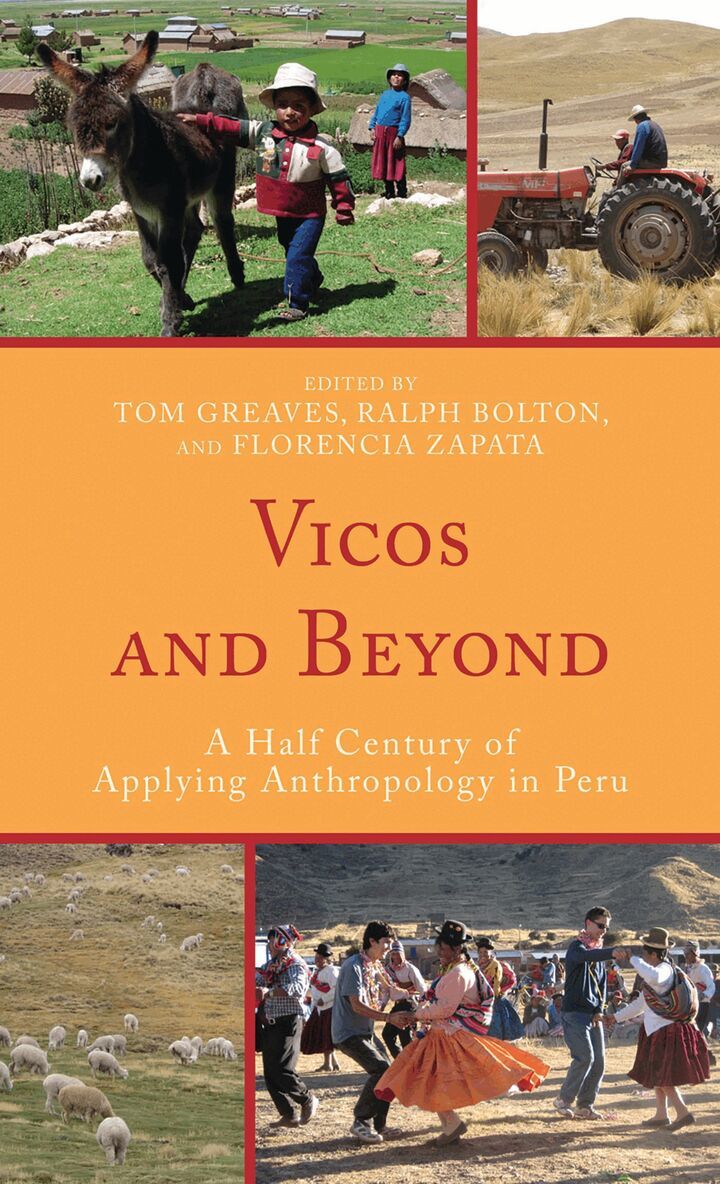
    Vicos and Beyond

    A Half Century of Applying Anthropology in Peru

    AvTom Greaves,Ralph Bolton

    Inbunden, Engelska, 2010

    1 396 kr

    Beställningsvara. Skickas inom 10-15 vardagar. Fri frakt över 249 kr.

    Beskrivning

    In 1952, Professor Allan Holmberg arranged for Cornell University to lease the Hacienda Vicos, an agricultural estate in the central Peruvian highlands on which some 1800 Quechua-speaking highland peasants resided. Between 1952 and 1957 Holmberg, with colleagues and students, initiated a set of social, economic, and agrarian changes, and nurtured mechanisms for community-based management of the estate by the resident peasants. By the end of a second lease in 1962, sufficient political pressure had been brought to bear on a reluctant national government to force the sale of Vicos to its people. Holmberg's twin goals for the Vicos Project were to bring about community possession of their land base and to study the process as it unfolded, advancing anthropological understanding of cultural change. To describe the process of doing both, he invented the term "participant intervention."Despite the large corpus of existing Vicos publications, this book contains much information that here reaches print for the first time. The chapter authors do not entirely agree on various key points regarding the nature of the Vicos Project, the intentions of project personnel and community actors, and what interpretive framework is most valid; in part, these disagreements reflect the relevance and importance of the Vicos Project to contemporary applied anthropologists and the contrasting ways in which any historical event can be explained. Some chapters contrast Vicos with other projects in the southern Andean highlands; others examine new developments at Vicos itself. The conclusion suggests how those changes should be understood, within Andean anthropology and within anthropology more generally.

    Produktinformation

    • Utgivningsdatum:2010-11-16
    • Mått:162 x 239 x 27 mm
    • Vikt:723 g
    • Format:Inbunden
    • Språk:Engelska
    • Antal sidor:358
    • Förlag:AltaMira Press
    • ISBN:9780759119741

    Utforska kategorier

    • Antropologi inom Samhälle och politik

    Mer om författaren

    Tom Greaves is emeritus professor of anthropology at Bucknell University. Ralph Bolton is professor of anthropology at Pomona College. Florencia Zapata is Cultural Heritage Program Officer at The Mountain Institute.

    Recensioner i media

    Considered a groundbreaking example of applied anthropology, the Cornell-Peru Project (CPP, 1952-62) is now mostly forgotten. Editors Greaves (emer., Bucknell Univ.), Bolton (Pomona College), and Zapata (The Mountain Institute) have assembled a volume that is part detailed history by surviving members of the project and part evaluation of it by anthropologists who were not part of it. Chapters by researchers describing similar projects and by anthropologists discussing the current state of Vicos round out the book. No consensus emerges as to the CPP's success or failure, but each contribution provides an important perspective on the project, the role of applied anthropology then and now, and the changes in Peruvian society since the 1950s. Graduate students and researchers interested in the relationship between anthropology and development, or the history of the discipline in Latin America, will find the book useful. Undergraduates will find the specificity of the contributions daunting, but those by Jason Pribilsky, Bolton, and Zapata discussing, respectively, anthropology in the era of Cold War politics, the continued relevance of applied anthropology, and a specific case of a cultural heritage program provide treatments accessible to advanced undergraduates. Summing Up: Recommended. Graduate students, researchers, faculty.

    Innehållsförteckning

    • Chapter 1 IntroductionPart 2 Part I. Remembering the Vicos ProjectChapter 3 Chapter 1. Who Was That Gringo? Holmberg before VicosChapter 4 Chapter 2. Early Years of the Vicos Project from the Perspective of a Sympathetic Participant-ObserverChapter 5 Chapter 3. Lessons from VicosChapter 6 Chapter 4. Anthropological Journeys: Vicos and the Callejon de Huaylas 1948-2006Part 7 Part II. Evaluating the Vicos ProjectChapter 8 Chapter 5. Anthropological Hope and Social Reality: Cornell's Vicos Project Re-examinedChapter 9 Chapter 6. Modernizing Peru: Negotiating Indigenismo, Science, and the "Indian Problem" in the Cornell-Peru ProjectChapter 10 Chapter 7. Reflections on Vicos: Anthropology, the Cold War, and the Idea of Peasant ConservatismChapter 11 Chapter 8. Vicos as a Model: A RetrospectivePart 12 Part III. Alternatives to the Vicos ProjectChapter 13 Chapter 9. Globalizing Andean Society: Migration and Change in Peru's Peasant CommunitiesChapter 14 Chapter 10. Chijnaya: The Birth and Evolution of an Andean Community; Memories and Reflections of an Applied AnthropologistChapter 15 Chapter 11. The Case of Kuyo ChicoPart 16 Part IV. Vicos TodayChapter 17 Cornell Returns to Vicos, 2005Chapter 18 Remembering Vicos: Local Memories and VoicesChapter 19 ConclusionChapter 20 About the AuthorsChapter 21 Index