• Fri frakt över 249 kr
  • •
  • Snabba leveranser
  • •
  • Billiga böcker
Kundservice

Du är på sajten för privatpersoner.

Företag, bibliotek eller offentlig verksamhet?

Du handlar på classic.bokus.com, där alla dina funktioner finns intakta.
Till classic.bokus.com
Bokus logotyp. Gå till startsidan.
  • Erbjudanden
  • Nyheter
  • Student
  • Topplistor
  • Barn & ungdom
  • Bokus Play
  • E-böcker
  • Pocketböcker
  • Spel & pussel

10% studentrabatt med kod TERM26

Sidfot

Mina sidor

    Hjälp

    • Kundservice
    • Vanliga frågor och svar
    • Frakt och leverans
    • Retur vid ångerrätt
    • Reklamera vara
    • Betalning
    • Köpvillkor
    • Allmänna villkor
    • Information om webbplatsens tillgänglighet

    Om Bokus

    • Om oss
    • Pressrum
    • För studenter
    • För företag
    • För bibliotek och offentlig verksamhet
    • För leverantörer
    • Hållbarhet

    Populärt

    • Aktuella erbjudanden
    • Presentkort
    • Studentlitteratur
    • Nya böcker
    • Topplistor
    • Signerade böcker
    • Engelska böcker

    Inspiration

    • Boktips
    • BookTok
    • Populära bokserier
    • Barnbokskaraktärer
    • Populära författare
    Logotyp för Bokus
    Följ oss på Facebook (extern länk)Följ oss på Instagram (extern länk)Följ oss på YouTube (extern länk)Följ oss på TikTok (extern länk)
    bokus @ CookiesAnpassa cookiesIntegritetspolicyKöpvillkor
    Till Citymail hemsida (extern länk)Till Budbee hemsida (extern länk)Till Postnord hemsida (extern länk)Till Schenker hemsida (extern länk)Till Early Bird hemsida (extern länk)Till Walleys hemsida (extern länk)
    1. Samhälle och politik
    2. Samhälle och kultur
    3. Kultur och medier
    4. Referensverk och tvärvetenskap

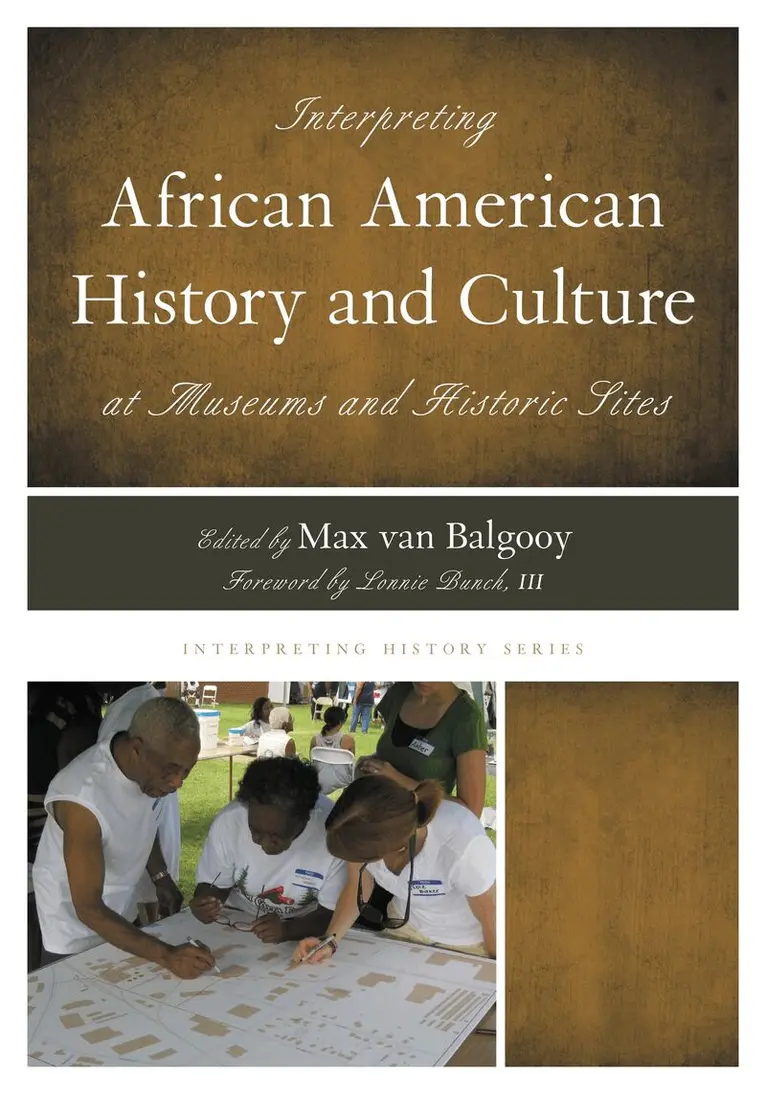
    Interpreting African American History and Culture at Museums and Historic Sites

    AvMax A. van Balgooy

    Häftad, Engelska, 2014

    Del 3 i serien Interpreting History

    579 kr

    Beställningsvara. Skickas inom 10-15 vardagar. Fri frakt över 249 kr.

    Beskrivning

    In this landmark guide, nearly two dozen essays by scholars, educators, and museum leaders suggest the next steps in the interpretation of African American history and culture from the colonial period to the twentieth century at history museums and historic sites. This diverse anthology addresses both historical research and interpretive methodologies, including investigating church and legal records, using social media, navigating sensitive or difficult topics, preserving historic places, engaging students and communities, and strengthening connections between local and national history. Case studies of exhibitions, tours, and school programs from around the country provide practical inspiration, including photographs of projects and examples of exhibit label text.Highlights include:Amanda Seymour discusses the prevalence of "false nostalgia" at the homes of the first five presidents and offers practical solutions to create a more inclusive, nuanced history.Dr. Bernard Powers reveals that African American church records are a rich but often overlooked source for developing a more complete portrayal of individuals and communities.Dr. David Young, executive director of Cliveden, uses his experience in reinterpreting this National Historic Landmark to identify four ways that people respond to a history that has been too often untold, ignored, or appropriated—and how museums and historic sites can constructively respond.Dr. Matthew Pinsker explains that historic sites may be missing a huge opportunity in telling the story of freedom and emancipation by focusing on the underground railroad rather than its much bigger "upper-ground" counterpart.Martha Katz-Hyman tackles the challenges of interpreting the material culture of both enslaved and free African Americans in the years before the Civil War by discussing the furnishing of period rooms.Dr. Benjamin Filene describes three "micro-public history" projects that lead to new ways of understanding the past, handling source limitations, building partnerships, and reaching audiences.Andrea Jones shares her approach for engaging students through historical simulations based on the "Fight for Your Rights" school program at the Atlanta History Center.A exhibit on African American Vietnam War veterans at the Heinz History Center not only linked local and international events, but became an award-winning model of civic engagement. A collaboration between a university and museum that began as a local history project interpreting the Scottsboro Boys Trial as a website and brochure ended up changing Alabama law.A list of national organizations and an extensive bibliography on the interpretation of African American history provide convenient gateways to additional resources.

    Produktinformation

    • Utgivningsdatum:2014-12-23
    • Mått:187 x 257 x 20 mm
    • Vikt:649 g
    • Format:Häftad
    • Språk:Engelska
    • Serie:Interpreting History
    • Antal sidor:234
    • Förlag:Bloomsbury Publishing Plc
    • Medarbetare:LonnieG. BunchIII
    • ISBN:9780759122796

    Utforska kategorier

    • Referensverk och tvärvetenskap inom Samhälle och politik
    • Amerikas historia inom Historia och arkeologi
    • Etnicitet inom Samhälle och politik

    Mer om författaren

    Max A. van Balgooy is president of Engaging Places LLC, a design and strategy firm that connects people and historic places. He works with a wide range of historic sites on interpretive planning and business strategy, from Drayton Hall to Taliesin West. These experiences provide a rich source of ideas for EngagingPlaces.net, where he blogs regularly about the opportunities and challenges facing historic sites and house museums. He serves on the AASLH Council and teaches in the museum studies program at George Washington University, and received his degrees in history from Pomona College and the University of Delaware (Hagley Fellow).

    Recensioner i media

    Interpreting African-American history at historic sites is an essential but often complicated task. This timely and important volume seeks to improve and suggest successful plans for historical interpretation, and contains nearly two dozen essays spanning from the colonial period to the 21st century. It embraces a myriad of research methods and strategies for interpretation, including the use of social media, archival and documentary research, outreach programmes as well as instructing interpreters how to manage conflict and difficult questions. . . .This volume offers a rich and interesting insight into the world of public history. . . .[and] provides an engaging and fascinating account of how African-American history is interpreted today. Historical interpreters have an opportunity to explore, ask questions, dig deeper and engage an audience whilst navigating the tensions of American history. This volume celebrates contributions and successes, but we need to recognise that many historic sites have much to improve when confronting the legacy of slavery.

    Innehållsförteckning

    • Foreword by Lonnie G. Bunch, IIIAcknowledgmentsIntroductionChapter 1: Pride and Prejudice: Interpreting Slavery at the Homes of Five Founding Fathers, Amanda SeymourChapter 2: Developing Comprehensive and Conscientious Interpretation of Slavery at Historic Sites and Museums, Kristin L. Gallas and James DeWolf PerryChapter 3: Interpreting Difficult Knowledge, Julia RoseChapter 4: Expanding Interpretation at Historic Sites: When Change Brings Conflict, David W. YoungChapter 5: There is a Doctor in the House--and he's Black, Michelle L. McClellanChapter 6: Finding Sarah Bickford, William PetersonChapter 7: Documenting Local African American Community History, Lila Teresa ChurchChapter 8: Interpreting the Upper-Ground Railroad, Matthew PinskerChapter 9: Churches as Places of History: The Case of Nineteenth Century Charleston, South Carolina, Bernard E. Powers, Jr.Chapter 10: Imagining Slave Square: Resurrecting History through Cemetery Research and Interpretation, D L HendersonChapter 11: Furnishing Slave Quarters and Free Black Homes: Adding a Powerful Tool to Interpreting African American Life, Martha B. Katz-HymanChapter 12: Six Degrees of Separation: Using Social Media and Digital Platforms to Enhance African American History Projects, Lynn RainvilleChapter 13: Asking Big Questions of a Small Place, George W. McDanielChapter 14: Power in Limits: Narrow Frames Open Up African American Public History, Benjamin FileneChapter 15: Connecting Students with Community History, Stacia KuceyeskiChapter 16: Do You Have What it Takes to be a Freedom Fighter?, Andrea K. JonesChapter 17: Preserving Los Angeles’ African American Historic Places, Jenny Scanlin and Teresa GrimesChapter 18: More Than Just a Building: Interpreting the Legacy of the Frederick Douglass Elementary School, Wendi Manuel-Scott and Sara Howard-O’BrienChapter 19: Soul Soldiers: Giving Voice to Vietnam’s Veterans, Robbie DavisChapter 20: Making African American History Relevant through Co-Creation and Community Service Learning, Robert Connolly and Ana M. ReaChapter 21: The Scottsboro Boys Museum: University-Community Collaboration Yields Unanticipated Results, Ellen Griffith Spears and Shelia WashingtonSelected Bibliography on the Interpretation of African American History and Culture National OrganizationsIndexAbout the Author and Contributors