• Fri frakt över 249 kr
  • •
  • Snabba leveranser
  • •
  • Billiga böcker
Kundservice

Du är på sajten för privatpersoner.

Företag, bibliotek eller offentlig verksamhet?

Du handlar på classic.bokus.com, där alla dina funktioner finns intakta.
Till classic.bokus.com
Bokus logotyp. Gå till startsidan.
  • Erbjudanden
  • Nyheter
  • Student
  • Topplistor
  • Barn & ungdom
  • Bokus Play
  • E-böcker
  • Pocketböcker
  • Spel & pussel

10% rabatt på allt med kod: NYSTART10 →

Sidfot

Mina sidor

    Hjälp

    • Kundservice
    • Vanliga frågor och svar
    • Frakt och leverans
    • Retur vid ångerrätt
    • Reklamera vara
    • Betalning
    • Köpvillkor
    • Allmänna villkor
    • Information om webbplatsens tillgänglighet

    Om Bokus

    • Om oss
    • Pressrum
    • För studenter
    • För företag
    • För bibliotek och offentlig verksamhet
    • För leverantörer
    • Hållbarhet

    Populärt

    • Aktuella erbjudanden
    • Presentkort
    • Studentlitteratur
    • Nya böcker
    • Topplistor
    • Signerade böcker
    • Engelska böcker

    Inspiration

    • Boktips
    • BookTok
    • Populära bokserier
    • Barnbokskaraktärer
    • Populära författare
    Logotyp för Bokus
    Följ oss på Facebook (extern länk)Följ oss på Instagram (extern länk)Följ oss på YouTube (extern länk)Följ oss på TikTok (extern länk)
    bokus @ CookiesAnpassa cookiesIntegritetspolicyKöpvillkor
    Till Citymail hemsida (extern länk)Till Budbee hemsida (extern länk)Till Postnord hemsida (extern länk)Till Schenker hemsida (extern länk)Till Early Bird hemsida (extern länk)Till Walleys hemsida (extern länk)
    1. Ekonomi och Ledarskap
    2. Nationalekonomi
    3. Ekonomisk historia

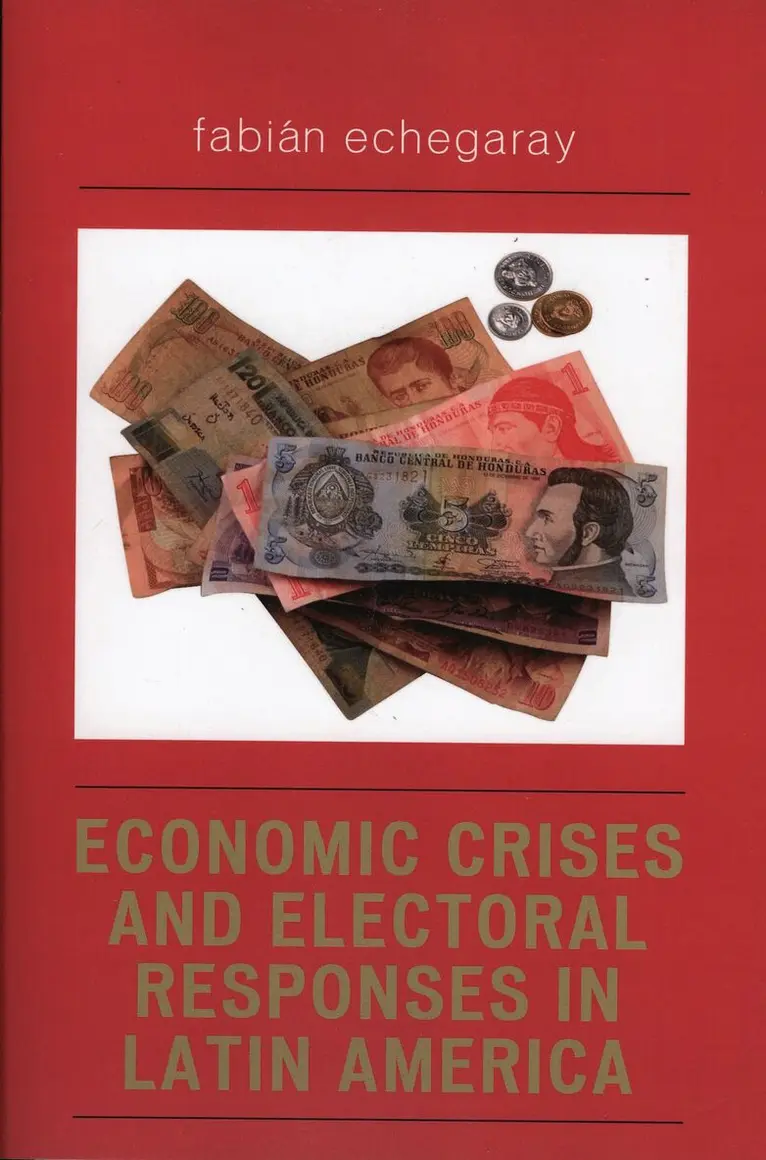
    Economic Crises and Electoral Responses in Latin America

    AvFabián Echegaray

    Häftad, Engelska, 2005

    701 kr

    Beställningsvara. Skickas inom 10-15 vardagar. Fri frakt över 249 kr.

    Beskrivning

    Since 1982, Latin Americans have endured dramatic economic crises and elections that advanced liberal democracy and political pluralism. These conditions led many to believe that electoral results mainly reflect reactions to the economy. Based on an extensive study of the elections covering the 1980s and most of the 1990s, Economic Crises and Electoral Responses in Latin America offers a comprehensive overview of the many complex factors in the hearts and minds of voters.

    Produktinformation

    • Utgivningsdatum:2005-10-19
    • Mått:193 x 226 x 17 mm
    • Vikt:313 g
    • Format:Häftad
    • Språk:Engelska
    • Antal sidor:216
    • Förlag:University Press of America
    • ISBN:9780761832744

    Utforska kategorier

    • Ekonomisk historia inom Ekonomi och Ledarskap
    • Val och folkomröstningar inom Samhälle och politik

    Mer om författaren

    Fabián Echegaray is the Director at Market Analysis, a market research and public opinion company covering Brazil and all major Latin American countries. Echegaray was a lecturer at Trinity College and UFSC (Brazil) on Latin American Politics and Political Psychology, and published dozens of articles in academic and professional journals. He holds a Ph.D. in Political Science from the University of Connecticut.

    Recensioner i media

    Echegary does a fine job of reviewing the relevant Western and U.S. voting behavior and Latin American election literature, which informs his arguments and serves as the touchstone for his aggregate and individual models. This monograph should be read by students and scholars of Latin American mass and individual voting behavior and should be referenced by those who seek to test its findings in a more expanded set of cases (elections) that have taken place over the last decade.

    Innehållsförteckning

    • Chapter 1 IntroductionChapter 2 Theories of Electoral Choice and Empirical Research on Elections in Latin AmericaChapter 3 Electoral Choice and Decisional CluesChapter 4 Models of Electoral Choice: Measurement and Empirical DescriptionChapter 5 Aggregate-Level Analysis of Electoral Outcomes in Latin AmericaChapter 6 Talking Contextual Difference into AccountChapter 7 Individual-Level Analysis of Voting Behavior in Three Latin American CountriesChapter 8 Understanding the Basis of Electoral Support in Latin AmericaChapter 9 AppendicesChapter 10 References