• Fri frakt över 249 kr
  • •
  • Snabba leveranser
  • •
  • Billiga böcker
Kundservice

Du är på sajten för privatpersoner.

Företag, bibliotek eller offentlig verksamhet?

Du handlar på classic.bokus.com, där alla dina funktioner finns intakta.
Till classic.bokus.com
Bokus logotyp. Gå till startsidan.
  • Erbjudanden
  • Student
  • Topplistor
  • Barn & ungdom
  • Bokus Play
  • E-böcker
  • Ljudböcker
  • Pocketböcker
  • Spel och pussel

Pocketfynda! Hundratals böcker för 49 kr/st →

Sidfot

Mina sidor

    Hjälp

    • Kundservice
    • Vanliga frågor och svar
    • Frakt och leverans
    • Retur vid ångerrätt
    • Reklamera vara
    • Betalning
    • Köpvillkor
    • Allmänna villkor
    • Information om webbplatsens tillgänglighet

    Om Bokus

    • Om oss
    • Pressrum
    • För studenter
    • För företag
    • För bibliotek och offentlig verksamhet
    • För leverantörer
    • Hållbarhet

    Populärt

    • Aktuella erbjudanden
    • Presentkort
    • Studentlitteratur
    • Nya böcker
    • Topplistor
    • Signerade böcker
    • Engelska böcker

    Inspiration

    • Boktips
    • BookTok
    • Barnbokskaraktärer
    • Populära författare
    Logotyp för Bokus
    Följ oss på Facebook (extern länk)Följ oss på Instagram (extern länk)Följ oss på YouTube (extern länk)Följ oss på TikTok (extern länk)
    bokus @ CookiesAnpassa cookiesIntegritetspolicyKöpvillkor
    Till Citymail hemsida (extern länk)Till Budbee hemsida (extern länk)Till Postnord hemsida (extern länk)Till Schenker hemsida (extern länk)Till Early Bird hemsida (extern länk)Till Walleys hemsida (extern länk)
    1. Samhälle och politik
    2. Samhälle och kultur
    3. Sociala och etiska frågor
    4. Våld och övergrepp

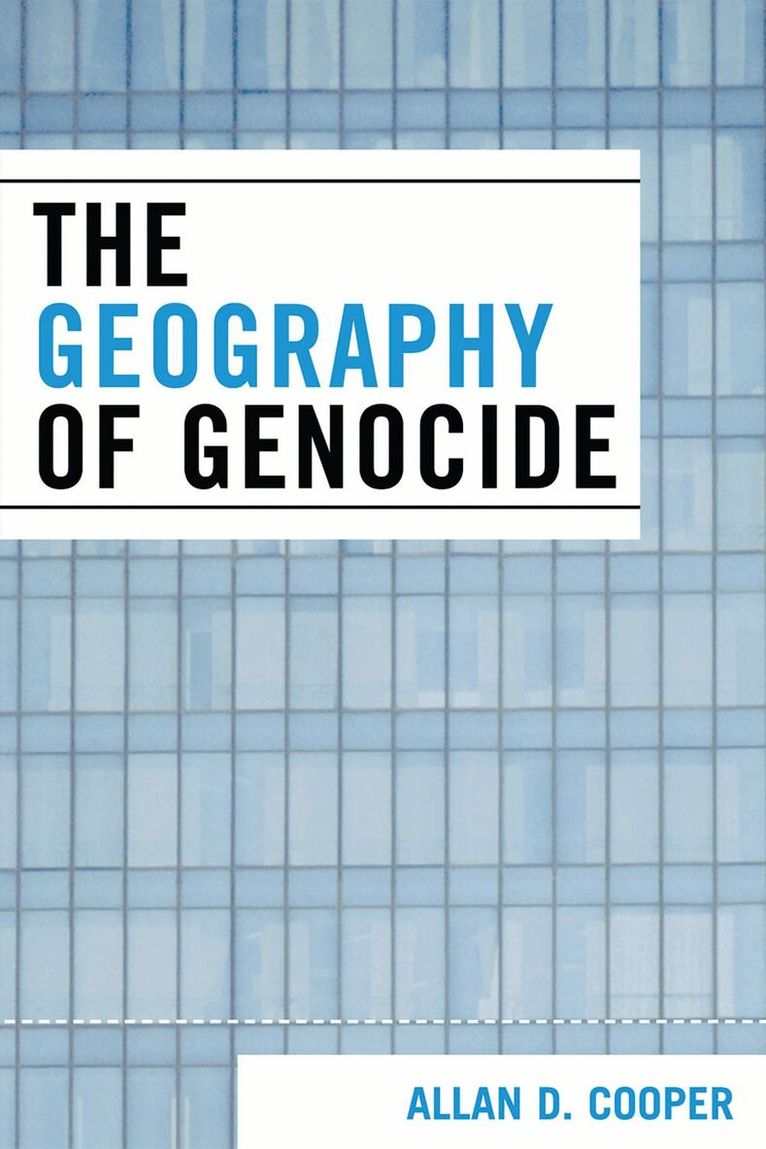
    Geography of Genocide

    AvAllan D. Cooper

    Häftad, Engelska, 2008

    767 kr

    Beställningsvara. Skickas inom 10-15 vardagar. Fri frakt över 249 kr.

    Fler format och utgåvor

    E-bok

    830 kr

    Beskrivning

    The Geography of Genocide offers a unique analysis of over sixty genocides in world history, explaining why genocides only occur in territorial interiors and never originate from cosmopolitan urban centers. This study explores why genocides tend to result from emasculating political defeats experienced by perpetrator groups and examines whether such extreme political violence is the product of a masculine identity crisis. Author Allan D. Cooper notes that genocides are most often organized and implemented by individuals who have experienced traumatic childhood events involving the abandonment or abuse by their father. Although genocides target religious groups, nations, races or ethnic groups, these identity structures are rarely at the heart of the war crimes that ensue. Cooper integrates research derived from the study of serial killing and rape to show certain commonalities with the phenomenon of genocide. The Geography of Genocide presents various strategies for responding to genocide and introduces Cooper's groundbreaking alternatives for ultimately inhibiting the occurrence of genocide.

    Produktinformation

    • Utgivningsdatum:2008-11-16
    • Mått:154 x 233 x 20 mm
    • Vikt:395 g
    • Format:Häftad
    • Språk:Engelska
    • Antal sidor:266
    • Förlag:University Press of America
    • ISBN:9780761840978

    Utforska kategorier

    • Våld och övergrepp inom Samhälle och politik
    • Sociologi inom Samhälle och politik
    • Diskriminering och rättvisa inom Samhälle och politik

    Mer om författaren

    Allan D. Cooper is professor of political science specializing in international law and human rights.

    Recensioner i media

    Among studies on genocide, this book stands out for its originality and provocativeness. Many will appreciate Cooper's feminist orientation and interdisciplinary approach. The breadth of coverage in this imaginative work makes it a valuable resource for scholars and teachers.

    Innehållsförteckning

    • Chapter 1. Defining GenocideChapter 2. Constructing DifferenceChapter 3. The Emasculating MomentChapter 4. Spatiality and the Xenophobic ImaginationChapter 5. Responding to GenocideChapter 6. The End of MasculinityChapter 7 Appendix 1. Case StudiesChapter 8 Appendix 2. The Emasculating Moment of Historic Genocides