• Fri frakt över 249 kr
  • •
  • Snabba leveranser
  • •
  • Billiga böcker
Kundservice

Du är på sajten för privatpersoner.

Företag, bibliotek eller offentlig verksamhet?

Du handlar på classic.bokus.com, där alla dina funktioner finns intakta.
Till classic.bokus.com
Bokus logotyp. Gå till startsidan.
  • Erbjudanden
  • Nyheter
  • Student
  • Topplistor
  • Barn & ungdom
  • Bokus Play
  • E-böcker
  • Pocketböcker
  • Spel & pussel

10% studentrabatt med kod TERM26

Sidfot

Mina sidor

    Hjälp

    • Kundservice
    • Vanliga frågor och svar
    • Frakt och leverans
    • Retur vid ångerrätt
    • Reklamera vara
    • Betalning
    • Köpvillkor
    • Allmänna villkor
    • Information om webbplatsens tillgänglighet

    Om Bokus

    • Om oss
    • Pressrum
    • För studenter
    • För företag
    • För bibliotek och offentlig verksamhet
    • För leverantörer
    • Hållbarhet

    Populärt

    • Aktuella erbjudanden
    • Presentkort
    • Studentlitteratur
    • Nya böcker
    • Topplistor
    • Signerade böcker
    • Engelska böcker

    Inspiration

    • Boktips
    • BookTok
    • Populära bokserier
    • Barnbokskaraktärer
    • Populära författare
    Logotyp för Bokus
    Följ oss på Facebook (extern länk)Följ oss på Instagram (extern länk)Följ oss på YouTube (extern länk)Följ oss på TikTok (extern länk)
    bokus @ CookiesAnpassa cookiesIntegritetspolicyKöpvillkor
    Till Citymail hemsida (extern länk)Till Budbee hemsida (extern länk)Till Postnord hemsida (extern länk)Till Schenker hemsida (extern länk)Till Early Bird hemsida (extern länk)Till Walleys hemsida (extern länk)
    1. Filosofi och religion
    2. Religion och tro
    3. Religion: allmänt

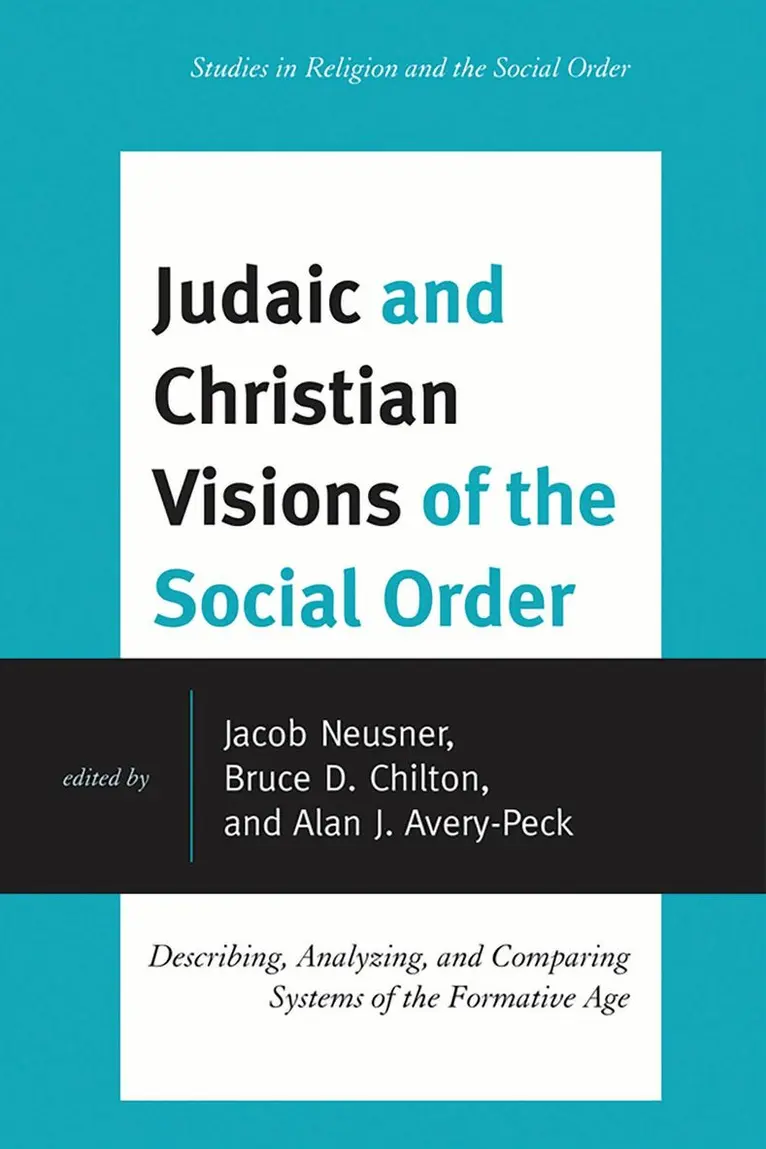
    Judaic and Christian Visions of the Social Order

    Describing, Analyzing and Comparing Systems of the Formative Age

    AvJacob Neusner,Bruce D. Chilton

    Häftad, Engelska, 2011

    Del i serien Jacob Neusner Series: Religion/Social Order

    701 kr

    Beställningsvara. Skickas inom 10-15 vardagar. Fri frakt över 249 kr.

    Beskrivning

    Free-standing ideas form systems when random facts coalescing in a set of abstract propositions can be shown logically to cohere. We know that that is so when ideas intersect and can be shown to accommodate new problems and generate answers to fresh questions. The system exhibits its cogency by fixing upon one thing and saying it in many ways. That emerges when the evidence of a particular conception of the social order turns out to concern itself with a generative question and to recapitulate an answer that is repeated many times over. In that way the writings that in theory form a system of the social order signal their logic by what they deem self-evident. The essays address writings of formative Judaism in the time of the Mishnah and the Talmud, the first six centuries of the Common Era, and formative Christianity in the first six centuries of the Common Era. They take up a common program of categories and consequent convictions: where Judaism and Christianity intersected. This seeks not just random points of agreement but fundamental structural congruence: the confluence of systems. That inquiry concerns shared organizing categories of religion and ethics of the two faiths. What concerns us is how Scriptures held in common produced a single construction of history and a common view of culture and society.

    Produktinformation

    • Utgivningsdatum:2011-09-06
    • Mått:155 x 231 x 27 mm
    • Vikt:585 g
    • Format:Häftad
    • Språk:Engelska
    • Serie:Jacob Neusner Series: Religion/Social Order
    • Antal sidor:388
    • Förlag:University Press of America
    • ISBN:9780761856351

    Utforska kategorier

    • Religion: allmänt inom Filosofi och religion
    • Kristendom inom Filosofi och religion
    • Judendom inom Filosofi och religion

    Mer om författaren

    Jacob Neusner is distinguished service professor of the history and theology of Judaism and senior fellow with the Institute of Advanced Theology at Bard College. He is a member of the Institute for Advanced Study in Princeton, New Jersey, and a life member of Clare Hall, Cambridge University. He holds nine honorary degrees and fourteen academic medals, along with other awards. He has published more than a thousand books.Bruce D. Chilton is the Bernard Iddings Bell Professor of Philosophy and Religion at Bard College, executive director of the Institute of Advanced Theology, and rector of the Church of St. John the Evangelist. His books include: Rabbi Jesus, Rabbi Paul, Mary Magdalene, Abraham's Curse, The Cambridge Companion to the Bible, The Way of Jesus, and The Targums (with Paul Flesher). Alan J. Avery-Peck is Kraft-Hiatt Professor of Judaic Studies and chair of the Department of Religious Studies at the College of the Holy Cross, Worcester, Massachusetts. Specializing in Jewish history and religion in the first six centuries C.E., his work includes The Encyclopedia of Religious and Philosophical Writings in Late Antiquity: Pagan, Judaic, Christian (co-edited with Jacob Neusner).

    Innehållsförteckning

    • PrefaceChapter 1. Foreword: How Does Religion Imagine Society?Ancient IsraelChapter 2. From the Repertoire of the Hebrew Bible: Visions of the Social OrderJudaismChapter 3. Enoch's Vague Visions of a Future Social Order; Foils to its Vivid Portrayals of the Present ChaosChapter 4. Visions of the Social Order: The Qumran LibraryChapter 5. Through Greek Eyes: Jewish "Theocracy" and "State of the Wise"Chapter 6. Philo's Constructs of Social OrderChapter 7. The Mishnah and Concepts of the Social OrderChapter 8. The Social Vision of Rabbinic JudaismChapter 9. Torah and Culture: H. Richard Niebuhr's Christ and Culture after Fifty Years: A Judaic ResponseChapter 10. Six People You Meet in the Synagogue: Visions of Social Order in Early Rabbinic PrayerChristianityChapter 11. The Kingdom of GodChapter 12. Paul's Theory of the Social OrderChapter 13. Early Christian Martyrdom, Scripture, and Social OrderChapter 14. Irenaeus of Lyons (130-200) Re-Imagining the Cosmos from the Perspective of the OppressedChapter15. Origen's Social Vision of Christian LifeChapter 16. Eusebius's (and Constantine's) Theory of the Political OrderChapter 17. Augustine of Hippo (354-430): Architect of Western Christianity's Political TheologyConclusinosChapter Conclusions, Observations, and Limitations: Reflections on the Visions of the Social Order Collaborative Project