• Fri frakt över 249 kr
  • •
  • Snabba leveranser
  • •
  • Billiga böcker
Kundservice

Du är på sajten för privatpersoner.

Företag, bibliotek eller offentlig verksamhet?

Du handlar på classic.bokus.com, där alla dina funktioner finns intakta.
Till classic.bokus.com
Bokus logotyp. Gå till startsidan.
  • Erbjudanden
  • Nyheter
  • Student
  • Topplistor
  • Barn & ungdom
  • Bokus Play
  • E-böcker
  • Pocketböcker
  • Spel & pussel

10% rabatt på allt med kod NYSTART10 →

Sidfot

Mina sidor

    Hjälp

    • Kundservice
    • Vanliga frågor och svar
    • Frakt och leverans
    • Retur vid ångerrätt
    • Reklamera vara
    • Betalning
    • Köpvillkor
    • Allmänna villkor
    • Information om webbplatsens tillgänglighet

    Om Bokus

    • Om oss
    • Pressrum
    • För studenter
    • För företag
    • För bibliotek och offentlig verksamhet
    • För leverantörer
    • Hållbarhet

    Populärt

    • Aktuella erbjudanden
    • Presentkort
    • Studentlitteratur
    • Nya böcker
    • Topplistor
    • Signerade böcker
    • Engelska böcker

    Inspiration

    • Boktips
    • BookTok
    • Populära bokserier
    • Barnbokskaraktärer
    • Populära författare
    Logotyp för Bokus
    Följ oss på Facebook (extern länk)Följ oss på Instagram (extern länk)Följ oss på YouTube (extern länk)Följ oss på TikTok (extern länk)
    bokus @ CookiesAnpassa cookiesIntegritetspolicyKöpvillkor
    Till Citymail hemsida (extern länk)Till Budbee hemsida (extern länk)Till Postnord hemsida (extern länk)Till Schenker hemsida (extern länk)Till Early Bird hemsida (extern länk)Till Walleys hemsida (extern länk)
    1. Filosofi och religion
    2. Religion och tro
    3. Religion: allmänt

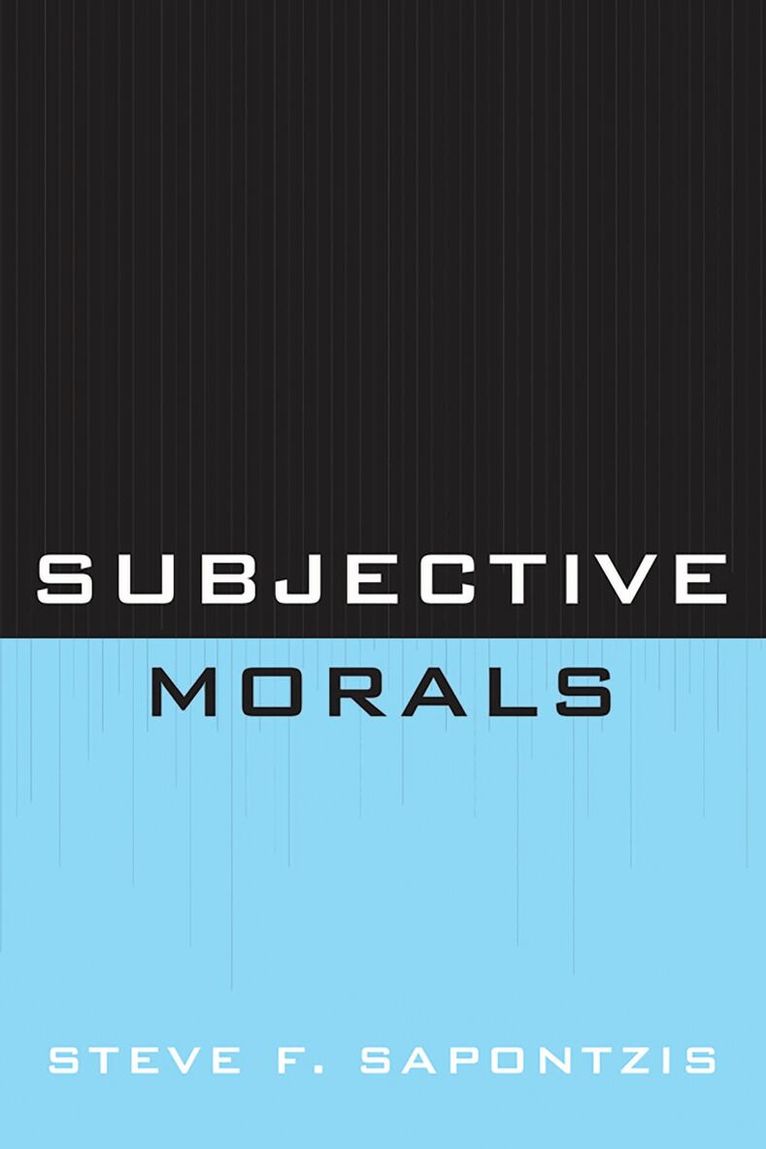
    Subjective Morals

    AvSteve F. Sapontzis

    Häftad, Engelska, 2011

    590 kr

    Beställningsvara. Skickas inom 10-15 vardagar. Fri frakt över 249 kr.

    Fler format och utgåvor

    E-bok

    634 kr

    Beskrivning

    Is morality a good thing? Is moral relativism a bad thing? Traditionally, moral philosophers have presumed that the answers to both questions must be yes. In today’s world, however, many moralists feel obligated to ban gay marriage or censor whatever they deem offensive, and others feel morality commands them to bomb abortion clinics and fly planes into buildings. Unfortunately, it has become all too common for such true believers to use moral values to justify their often destructive behavior. Today’s moral zealotry leaves the value of morality questionable and makes traditional moral philosophy feel pale and irrelevant. Subjective Morals breaks with tradition to provide a careful analysis of moral values and the goods and evils they produce. This work explores the subjective and objective bases of moral values and details the kinds of truth and justification of which they are and are not capable. After analyzing the concepts and categories that structure our moral practice, Sapontzis concludes with recommendations for how we may enjoy the benefits of moral values while minimizing their evils.

    Produktinformation

    • Utgivningsdatum:2011-11-17
    • Mått:155 x 232 x 12 mm
    • Vikt:322 g
    • Format:Häftad
    • Språk:Engelska
    • Antal sidor:218
    • Förlag:University Press of America
    • ISBN:9780761856856

    Utforska kategorier

    • Religion: allmänt inom Filosofi och religion
    • Filosofiska discipliner inom Filosofi och religion

    Mer om författaren

    Steve F. Sapontzis is emeritus professor of philosophy at California State University, East Bay. He is the author of Morals, Reason, and Animals and numerous scholarly articles and the editor of Food for Thought: The Debate over Eating Meat.

    Innehållsförteckning

    • IntroductionChapter One: Starting with the Eye of the Beholder1. No value without feeling2. The primary argument3. Three supporting arguments 4. Answering six common objections 5. Plato’s rejection of subjective moralsChapter Two: Axiology, More Complicated Than It Looks1. Categorizing values2. Derivative value3. Direct value4. Immediate value5. Summary of categories6. Imperatives and priorities7. Answering Plato’s cart-before-the-horse objectionChapter Three: Varieties of Truth and Justification1. Objectivity or bust2. Circumstantial and contextual truth3. Historical truth4. Varieties of justification5. Context-based justification6. SummaryChapter Four: A Phenomenology of Moral Values1. Methodology2. Origin3. Subject matter4. Functions5. Concern6. Priority7. Extension: Impersonality, impartiality, inescapability, common sensicality, diversity8. Summary and coordinationChapter Five: Moral Relativism1. Cultural relativism2. The compulsion for moral values to be objective3. Why should I be moral?Chapter Six: The Right and the not so Good1. Evaluating morality2. The brighter side of morality: social coexistence3. The brighter side: “true happiness”4. The brighter side: nonhuman welfare5. The darker side of morality: happiness6. The darker side: liberty7. The darker side: punishment, exploitation, intolerance, and zealotry8. Circularity9. An eye for an eye10. Heat versus lightChapter Seven: Inferences, Observations, and Speculations1. Empathy, respect, and negative functioning2. Moral persuasion3. Religious morality4. Recommendations