E-bok, Engelska, 2011
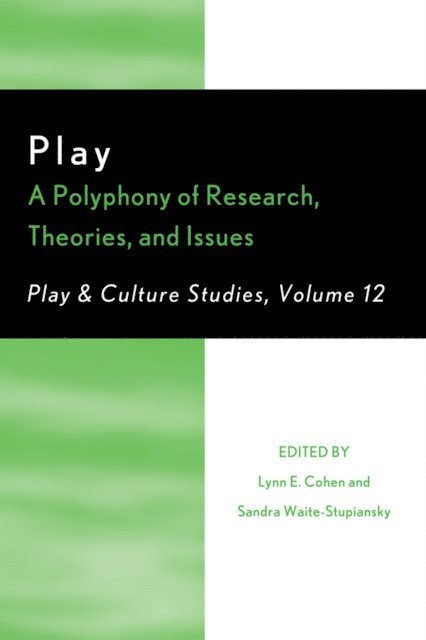
Play: A Polyphony of Research, Theories, and Issues
Av Lynn E. Cohen, Sandra Waite-Stupiansky
591 kr
Läs direkt i Bokus Reader – eller ladda ned till din enhet (PDF kräver ofta zoom och scroll på små skärmar).
Beskrivning
The Association for the Study of Play (TASP) (www.tasp.org) is the sponsor of volume twelve in the Play & Culture Studies series. TASP is a professional group of interdisciplinary researchers who study play.
Polyphony, defined as having many tones or voices, was used by the Russian philosopher Mikhail Mikhailovich Bakhtin to describe the immense plurality of experiences in relationships. The chapters in volume 12 of Play & Culture Studies address the polyphony or many voices in the study of play from an interdisciplinary cadre of scholars in the fields of anthropology, education, psychology, linguistics, and history. In this time of globalization, hyper-capitalism, and discourses that disqualify children’s play, we invite the reader to participate in diverse ways of thinking about play and pedagogy. To this end, Play, Volume 12 addresses research methodology, contemporary theories, technology, and advocacy. Applications to practice and policy implications are presented.
Polyphony, defined as having many tones or voices, was used by the Russian philosopher Mikhail Mikhailovich Bakhtin to describe the immense plurality of experiences in relationships. The chapters in volume 12 of Play & Culture Studies address the polyphony or many voices in the study of play from an interdisciplinary cadre of scholars in the fields of anthropology, education, psychology, linguistics, and history. In this time of globalization, hyper-capitalism, and discourses that disqualify children’s play, we invite the reader to participate in diverse ways of thinking about play and pedagogy. To this end, Play, Volume 12 addresses research methodology, contemporary theories, technology, and advocacy. Applications to practice and policy implications are presented.
Produktinformation
- Utgivningsdatum: 2011-12-16
- Språk: Engelska
- Antal sidor: 230
- Filformat: PDF
- Kopieringsskydd: LCP
- ISBN: 9780761856948
- Förlag: University Press of America
- Serie: Play and Culture Studies
Betyg & recensioner
0 recensioner
Inga recensioner tillgängliga.