• Fri frakt över 249 kr
  • •
  • Snabba leveranser
  • •
  • Billiga böcker
Kundservice

Du är på sajten för privatpersoner.

Företag, bibliotek eller offentlig verksamhet?

Du handlar på classic.bokus.com, där alla dina funktioner finns intakta.
Till classic.bokus.com
Bokus logotyp. Gå till startsidan.
  • Erbjudanden
  • Nyheter
  • Student
  • Topplistor
  • Barn & ungdom
  • Bokus Play
  • E-böcker
  • Pocketböcker
  • Spel & pussel

10% rabatt på allt med kod NYSTART10 →

Sidfot

Mina sidor

    Hjälp

    • Kundservice
    • Vanliga frågor och svar
    • Frakt och leverans
    • Retur vid ångerrätt
    • Reklamera vara
    • Betalning
    • Köpvillkor
    • Allmänna villkor
    • Information om webbplatsens tillgänglighet

    Om Bokus

    • Om oss
    • Pressrum
    • För studenter
    • För företag
    • För bibliotek och offentlig verksamhet
    • För leverantörer
    • Hållbarhet

    Populärt

    • Aktuella erbjudanden
    • Presentkort
    • Studentlitteratur
    • Nya böcker
    • Topplistor
    • Signerade böcker
    • Engelska böcker

    Inspiration

    • Boktips
    • BookTok
    • Populära bokserier
    • Barnbokskaraktärer
    • Populära författare
    Logotyp för Bokus
    Följ oss på Facebook (extern länk)Följ oss på Instagram (extern länk)Följ oss på YouTube (extern länk)Följ oss på TikTok (extern länk)
    bokus @ CookiesAnpassa cookiesIntegritetspolicyKöpvillkor
    Till Citymail hemsida (extern länk)Till Budbee hemsida (extern länk)Till Postnord hemsida (extern länk)Till Schenker hemsida (extern länk)Till Early Bird hemsida (extern länk)Till Walleys hemsida (extern länk)
    1. Psykologi och pedagogik
    2. Pedagogik
    3. Specialundervisning

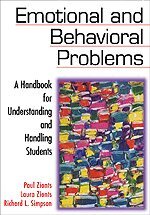
    Emotional and Behavioral Problems

    A Handbook for Understanding and Handling Students

    AvPaul Zionts,Laura T. Zionts

    Häftad, Engelska, 2002

    656 kr

    Beställningsvara. Skickas inom 3-6 vardagar. Fri frakt över 249 kr.

    Fler format och utgåvor

    Inbunden

    1 183 kr

    Beskrivning

    "This book is an excellent overview of a very complex area. It is a useful guide to identifying and treating children with emotional and behavioral disabilities (EBD), and is particularly outstanding on topics related to the educational system and the numerous laws and policies surrounding the education of EBD children. This book will serve the field well."
    Krista Kutash, Ph.D., Deputy Director and Associate Professor, Research and Training Center for Children's Mental Health, Louis de la Parte Florida Mental Health Institute
    Tampa, FL

    "This serves as a great resource for educators who want to know more about youth with emotional and behavioral disorders and the needs of their families. I know I will draw from it in the future to orient new staff working with emotionally and behaviorally challenged youth."
    Mary F. Sinclair, Ph.D., Institute on Community Integration, College of Education and Human Development
    University of Minnesota, Minneapolis, MN

    Finally! A straightforward, practical guide to help you identify, evaluate, and aid students with emotional and behavioral problems.

    The authors take a complex, under-discussed topic and give teachers and administrators useful, basic guidelines they can put to use quickly in understanding, identifying, and helping this group of students.

    This well-organized, easy-to-follow handbook features:

    • Definitions and causes of emotional and behavioral problems
    • Concrete examples of diagnostic and assessment methods
    • Detailed management programs for treating emotionally and behaviorally challenged students
    • Resource lists for both professionals and parents

    In Part One, educators will find clear, invaluable information about recognizing the major types and causes of emotional and behavioral disorders (EBD), evaluating students with EBD, as well effectively handling aggressive and violent behaviors in EBD students.

    Part Two offers practical help in treating students, including chapters on school-based placement, the role of medications in treatment, and the joint roles the family and teacher must take to help the student

    Produktinformation

    • Utgivningsdatum:2002-05-07
    • Mått:177 x 254 x 16 mm
    • Vikt:450 g
    • Format:Häftad
    • Språk:Engelska
    • Antal sidor:256
    • Upplaga:1
    • Förlag:SAGE Publications
    • ISBN:9780761977049

    Utforska kategorier

    • Specialundervisning inom Psykologi och pedagogik

    Mer om författaren

    Paul Zionts is a professor of special education and Chairperson of the Department of Educational Foundations and Special Services at Kent State University. He has been a teacher in a reform school and an inner-city high school, a program director, consultant, and teacher trainer. He has lectured and provided training in local, state, and national events and has conducted hundreds of workshops that have included teachers, counselors, psycho­ logists, social workers, administrators, parents, secretaries, and bus drivers. He has authored Teaching Disturbed and Disturbing Students (2nd edition) and Inclusion Strategies for Students with Learning and Behavior Problems, and he has coauthored with Richard Simpson both Autism (2nd edition) and Understanding Children and Youth with Emotional and Behavioral Problems. Laura Zionts, PhD, is an assistant professor at Texas A&M University in the Department of Educational Psychology’s Special Education, At-Risk and Bilingual Education program. She has worked with students who have emotional and behavioral disorders as a classroom teacher and a transition specialist. She has enjoyed teaching in both early elementary and secondary classrooms in mostly urban settings. Her primary area of research is the disproportionate representation of minority youth in programs for children and youth with behavioral disorders. Richard L. Simpson was Professor Emeritus at the University of Kansas. He was a member of the Department of Special Education faculty for over 40 years. While at the University of Kansas he directed numerous University of Kansas and University of Kansas Medical Center demonstration programs for students with autism spectrum disorders and other disabilities and coordinated a variety of federal grant programs related to students with autism spectrum disorders and other disabilities. He also worked as a special education teacher, school psychologist and coordinator of a community mental health outreach program. Rich authored numerous books, articles, and texts on a variety of topics connected to students with disabilities. Rich was the former senior editor of the professional journal Focus on Autism and Other Developmental Disabilities. His awards include the Council for Exceptional Children Research Award, Midwest Symposium for Leadership in Behavior Disorders Leadership Award, Autism Society of Kansas Leadership Award, and numerous University of Kansas awards and distinguished roles, including the Gene A. Budig Endowed Teaching Professorship of Special Education.

    Recensioner i media

    "This book is an excellent overview of a very complex area. It is a useful guide to identifying and treating children with emotional and behavioral disabilities (EBD), and is particularly outstanding on topics related to the educational system and the numerous laws and policies surrounding the education of EBD children. This book will serve the field well."

    Innehållsförteckning

    • PrefaceAcknowledgmentsAbout the AuthorsPart One: Understanding Emotional and Behavioral Disorders1: Introduction to Emotional Disturbance and Behavioral DisordersBy Any Other Name: Emotional and Behavioral DisordersPossible Causes of Emotional Disturbance and Behavioral DisordersIncidenceSerious Emotional Disturbance or Behavioral Disorders or EBD: What′s the Difference?How Professionals View LabelsIdentification of EBDBehaviors That Fit Into Educational StagesCharacteristics of Emotionally Disturbed or Behaviorally Disordered Children and YouthSummary2. Major Types of Emotional and Behavioral DisordersExternalizing BehaviorsInternalizing BehaviorsFunction DisordersSummary3. Causes of Emotional and Behavioral DisordersUnderstanding Factors Related to the Development of EBDUnderstanding Potential Causes of EBDSummary4. Evaluating and Assessing Students Who Have Emotional and Behavioral Disorders - Laura Zionts & Katherine deGeorgeThe Purpose of EvaluationAn Overview of EBD EvaluationSpecific Aspects of the Evaluation Process as They Relate to EBDEvaluation Techniques Used to Determine EligibilitySummary5. Violence and Aggression in Schools - Sara Sibilsky, Paul ZiontsViolence and Aggression in the SchoolsThe Roots of Violent and Aggressive Behaviors in Children and AdolescentsViolence, Aggression, and EBDResponses to School Violence and AggressionReducing and Preventing Violence and AggressionSummary6. Adolescents Who Have Emotional and Behavioral Disorders and the Juvenile Justice SystemBackground Information on EBD and the Juvenile Justice SystemPerplexing Issues of Ethnicity, Mental Health, and Juvenile Justice in the United StatesAddressing Issues of Ethnicity and Bias in Juvenile Justice AgenciesAddressing the Mental Health Needs of All Youth in the Juvenile Justice SystemSpecial Education and the Juvenile Justice SystemJuvenile Justice and Youth Who Have EBD: Intervention and Reintegration StrategiesSummaryPart Two: Helping Students Who Have Emotional and Behavioral Disorders7. Treatment of Emotional and Behavioral DisordersBehavior ModificationExamples of Two Behavior Modification ProgramsSchoolwide Discipline: Positive Behavioral SupportsCognitive Behavior TherapySummary8. School-Based PlacementsAfter IdentificationDetermining Appropriate Educational GoalsThe Least Restrictive EnvironmentThe Continuum of Services: Placement OptionsAn Important Caveat About PlacementsPossible Parental Reactions to Placement OptionsChanging Placements Because of BehaviorA Few Words About InclusionSummary9. Supporting Students With Emotional and Behavioral Disorders Outside the Public School SettingMedications for Emotional and Behavioral Disorders: PsychopharmacologyThe Role of Psychiatric and Juvenile Justice Professionals on the IEP TeamCollaborative Efforts Between Mental Health Agencies and the Educational SystemSystems of CareInsurance, Managed Care, Medicare, and Systems of CareSummary10. The Role of Families in Supporting Children With Emotional and Behavioral Concerns - Karen Anhalt, Richard Simpson, Laura ZiontsParents as Referral AgentsTeachers as Referral AgentsParents as Advocates for Their Children With Emotional and Behavioral ConcernsThe Importance of Being a Support AgentImplementing Changes at HomeExercises for Improving CommunicationIdeas to Improve Discipline Strategies at HomeFinding Ways to Relieve StressSummary11. What Lies Ahead: Postschool TransitionCritical Concepts About EBDPostschool SuccessTransition PlanningSummaryResources for Professionals and Parents - Laura Zionts, Katherine deGeorgeIndex