• Fri frakt över 249 kr
  • •
  • Snabba leveranser
  • •
  • Billiga böcker
Kundservice

Du är på sajten för privatpersoner.

Företag, bibliotek eller offentlig verksamhet?

Du handlar på classic.bokus.com, där alla dina funktioner finns intakta.
Till classic.bokus.com
Bokus logotyp. Gå till startsidan.
  • Erbjudanden
  • Nyheter
  • Student
  • Topplistor
  • Barn & ungdom
  • Bokus Play
  • E-böcker
  • Pocketböcker
  • Spel & pussel

10% rabatt på allt med kod: NYSTART10 →

Sidfot

Mina sidor

    Hjälp

    • Kundservice
    • Vanliga frågor och svar
    • Frakt och leverans
    • Retur vid ångerrätt
    • Reklamera vara
    • Betalning
    • Köpvillkor
    • Allmänna villkor
    • Information om webbplatsens tillgänglighet

    Om Bokus

    • Om oss
    • Pressrum
    • För studenter
    • För företag
    • För bibliotek och offentlig verksamhet
    • För leverantörer
    • Hållbarhet

    Populärt

    • Aktuella erbjudanden
    • Presentkort
    • Studentlitteratur
    • Nya böcker
    • Topplistor
    • Signerade böcker
    • Engelska böcker

    Inspiration

    • Boktips
    • BookTok
    • Populära bokserier
    • Barnbokskaraktärer
    • Populära författare
    Logotyp för Bokus
    Följ oss på Facebook (extern länk)Följ oss på Instagram (extern länk)Följ oss på YouTube (extern länk)Följ oss på TikTok (extern länk)
    bokus @ CookiesAnpassa cookiesIntegritetspolicyKöpvillkor
    Till Citymail hemsida (extern länk)Till Budbee hemsida (extern länk)Till Postnord hemsida (extern länk)Till Schenker hemsida (extern länk)Till Early Bird hemsida (extern länk)Till Walleys hemsida (extern länk)
    1. Filosofi och religion
    2. Religion och tro
    3. Religion: allmänt

    Aristotle, Oedipus, and Greek Religion

    AvLouis F. Groarke,William Sweet

    Häftad, Engelska, 2025

    359 kr

    Beställningsvara. Skickas inom 5-8 vardagar. Fri frakt över 249 kr.

    Beskrivning

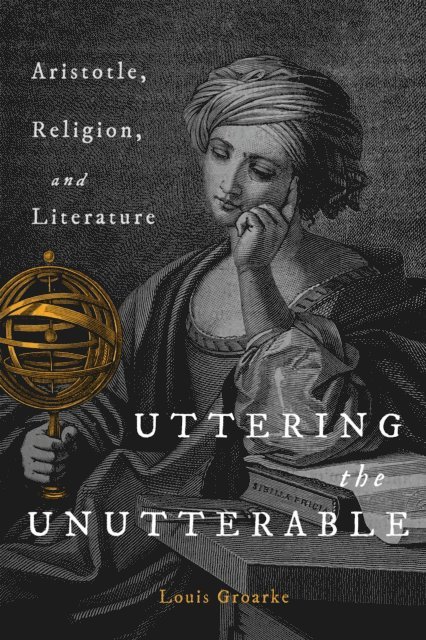
    Aristotle, Oedipus, and Greek Religion explores an important religious side to ancient Aristotelianism that has an impact on contemporary philosophical debates. _x000D__x000D_Louis F. Groarke shows how an exegetical perspective open to and respectful of Greek Pagan religion allows readers to discover a remarkably different Aristotle than the one to which we have grown accustomed. _x000D__x000D_To begin with, one must discover what Aristotle (and his school) taught, not by examining isolated passages, but by getting a sense of his philosophy as a whole. One has to make sense of the circumstantial evidence and carefully piece together a coherent technical case for the overall argument._x000D__x000D_In each chapter, Groarke considers another aspect of Aristotelian thought; this is in opposition to mainstream opinion which often describes Aristotle as a secret atheist, an agnostic, or as something akin to a modern-day positivist or a reductionist._x000D__x000D_The author goes on to show that Aristotle valued religious practice on a personal and social level, that his metaphysics are marked by intimations of the divine, that he provides an epistemological space for both science and religion, that his account of Greek tragedy has an inalienable moral and religious side, and that his account of the origins of cognition is not so far removed from religious scripture. _x000D__x000D_Aristotle, Oedipus, and Greek Religion is an analysis of universal themes from the viewpoint of an enormously influential ancient thinker, and an adventure into the history of ideas.
    Produktinformation

    • Utgivningsdatum:2025-12-02
    • Mått:127 x 203 x 25 mm
    • Vikt:494 g
    • Format:Häftad
    • Språk:Engelska
    • Antal sidor:462
    • Förlag:University of Ottawa Press
    • ISBN:9780776642420

    Utforska kategorier

    • Religion: allmänt inom Filosofi och religion

    Mer om författaren

    Louis Groarke (Philosophy) has a BA (in art history) from Colorado State University and a MA and PhD (in philosophy) from the University of Waterloo. He has published on ethics, politics, aesthetics, philosophy of religion, argumentation theory, and philosophy of science. He has a particular interest in Aristotle and the ancient Greeks. Books include: The Good Rebel (2001), An Aristotelian Account of Induction (2010), and Moral Reasoning (2011) and Living Wisely (forthcoming). Professor Groarke sees Catholic Studies as an integral component of a broader approach to liberal arts education. The Judeo-Christian tradition formulates answers to philosophical, theological, moral, political and even artistic questions in a unique way that deserves close scrutiny. Focusing on Catholicism and on challenges to Catholicism provides for a useful and challenging course of study.

    Innehållsförteckning

    • AbstractDedicationEpigraphNote on Bibliographical StyleCHAPTER 1Method and Overview1. Introduction, Subject-Matter, and Methodology2. Chapter SummaryCHAPTER 2 Did Aristotle Practise Religion?2.1. A General Picture: Ancient Greek Atheism?2.2. Aristotle and Disbelief2.3. The Religious Aristotle: A Minority Position 2.4. First Textual Evidence2.5. Aristotle’s Religious Practice2.6. Jaeger: The Old Developmentalism2.7. Melzer: The Esoteric versus the Exoteric Aristotle2.8. Aristotle and Prayer Generally2.9. Aristotle and Petitionary Prayer2.10. Aristotle’s Self-Thinking God and Petitionary Prayer2.11. Mythology and Pagan Revelation2.12. The Scope of Inspiration 2.13. The Paranormal: Mystery Cults and Mysticism CHAPTER 3The Cosmos as a Hall of Mirrors3.1. Aristotle’s “Theology”3.2. Imago Dei in an Aristotelian Vein 3.3. Eternal Duration3.4. “Unmovedness”3.5. “Unmixedness”3.6. Immateriality3.7. Actuality3.8. Aristotle’s God as Final and/or Efficient Cause of the Cosmos3.9. Incommensurable WonderCHAPTER 4 Did Aristotle Believe in Fate (Τύχη)?4.1. Terminology, Determinism 4.2. Τύχη, Science, and the Particular4.3. Τύχη in Physics II.4-6 4.4. Bechler: Accidental Causality, Contrary to Reason?4.5. Four Levels of Accidental Causality4.6. Mayhew: Prayer, Τύχη, and Politics4.7. Inspiration and Supernatural AgencyCHAPTER 5Oedipus and Aristotle5.1. Reasoning from Examples5.2. The Story of Oedipus Tyrannos5.3. Aristotle’s Opinion of Oedipus 5.4. Esoteric and Exoteric Interpretations5.5. Hamartia 5.6. Oedipus and Hamartia: Adkins5.7. Oedipus and Hamartia: Stinton5.8. Hamartia as a Term with Moral Color5.9. Missing the Mark: The Aristotelian Mean5.10. Oedipus’ Passion for Truth? 5.11. Human Agency in Oedipus and Ancient Greek Culture5.12. Oedipus The Tyrant 5.13. Oedipus Killing Laius 5.14. Oedipus’ Excusable Crimes? Aristotle’s Ethical Exceptions 5.15. Oedipus Furious5.16. Oedipus and Akrasia5.17. Was Oedipus Guilty of Parricide? 5.18. Purity and Pollution (Miasma)5.19. Guilt and Shame5.20. Bloodguilt and Oedipus5.21. Plato, Aristotle, and Catharsis5.22. Sophocles’ Oedipus: A Tragedy Without Hamartia?5.23. Oedipus and Hubris 5.24. Oedipus, Theatre, and Theôria CHAPTER 6A Phenomenology of Discovery6.1. Aristotle and the New Testament6.2. Aphrodite and Emmaus6.3. Anagnȏrisis / Discovery6.4. Aristotelian Induction6.5 Other Kinds of Aristotelian Induction6.6. Other Aristotelian Kinds of Quick-Knowing6.7. Putting It All Together: Formalizing the Flash of Understanding6.8. Rapid Insight in Homer and Luke6.9. Complications6.9.A. Physical Resurrection?6.9.B. Can We Have Knowledge Directly from the Divine?6.9.C. Divine Visitation? CHAPTER 77.1. An Overall ViewBibliographyIndex