• Fri frakt över 249 kr
  • •
  • Snabba leveranser
  • •
  • Billiga böcker
Kundservice

Du är på sajten för privatpersoner.

Företag, bibliotek eller offentlig verksamhet?

Du handlar på classic.bokus.com, där alla dina funktioner finns intakta.
Till classic.bokus.com
Bokus logotyp. Gå till startsidan.
  • Erbjudanden
  • Nyheter
  • Student
  • Topplistor
  • Barn & ungdom
  • Bokus Play
  • E-böcker
  • Pocketböcker
  • Spel & pussel

10% rabatt på allt med kod NYSTART10 →

Sidfot

Mina sidor

    Hjälp

    • Kundservice
    • Vanliga frågor och svar
    • Frakt och leverans
    • Retur vid ångerrätt
    • Reklamera vara
    • Betalning
    • Köpvillkor
    • Allmänna villkor
    • Information om webbplatsens tillgänglighet

    Om Bokus

    • Om oss
    • Pressrum
    • För studenter
    • För företag
    • För bibliotek och offentlig verksamhet
    • För leverantörer
    • Hållbarhet

    Populärt

    • Aktuella erbjudanden
    • Presentkort
    • Studentlitteratur
    • Nya böcker
    • Topplistor
    • Signerade böcker
    • Engelska böcker

    Inspiration

    • Boktips
    • BookTok
    • Populära bokserier
    • Barnbokskaraktärer
    • Populära författare
    Logotyp för Bokus
    Följ oss på Facebook (extern länk)Följ oss på Instagram (extern länk)Följ oss på YouTube (extern länk)Följ oss på TikTok (extern länk)
    bokus @ CookiesAnpassa cookiesIntegritetspolicyKöpvillkor
    Till Citymail hemsida (extern länk)Till Budbee hemsida (extern länk)Till Postnord hemsida (extern länk)Till Schenker hemsida (extern länk)Till Early Bird hemsida (extern länk)Till Walleys hemsida (extern länk)
    1. Ekonomi och Ledarskap
    2. Företagsekonomi
    3. Organisationsteori

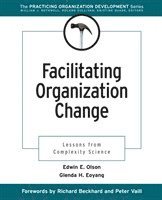
    Facilitating Organization Change

    Lessons from Complexity Science

    AvEdwin E. Olson,Glenda H. Eoyang

    Häftad, Engelska, 2001

    Del 5 i serien J-B O-D (Organizational Development)

    723 kr

    Beställningsvara. Skickas inom 5-8 vardagar. Fri frakt över 249 kr.

    Beskrivning

    Looking for a highly effective alternative to traditional change models?Finally, an alternative to traditional change models-the science of complex adaptive systems (CAS). The authors explain how, rather than focusing on the macro "strategioc" level of the organization system, complexity theory suggests that the most powerful change processes occur at the micro level where relationship, interaction and simple rules shape emerging patterns.* Details how the emerging paradigm of a CAS affects the role of change agents* Tells how you can build the requisite skills to function in a CAS* Provides tips for thriving in that new paradigm "Olson and Eoyang do a superb job of using complexity science to develop numerous methods and tools that practitioners can immediately use to make their organizations more effective."--Kevin Dooley, Professor of Management and Industrial Engineering, Arizona State University

    Produktinformation

    • Utgivningsdatum:2001-02-07
    • Mått:178 x 236 x 13 mm
    • Vikt:417 g
    • Format:Häftad
    • Språk:Engelska
    • Serie:J-B O-D (Organizational Development)
    • Antal sidor:240
    • Förlag:John Wiley & Sons Inc
    • ISBN:9780787953300

    Utforska kategorier

    • Organisationsteori inom Ekonomi och Ledarskap

    Mer om författaren

    Edwin E. Olson, PhD, earned a master's degree in pastoral counseling and a PhD in government. He teaches organization behavior at the University of Maryland, University College.Glenda H. Eoyang is the author of Facilitating Organization Change: Lessons from Complexity Science, published by Wiley.

    Recensioner i media

    "The authors offer a comprehensive alternative to traditional change models" (Quality Progress, June 2002)

    Innehållsförteckning

    • List of Tables, Figures, and Exhibits ixForeword to the Series xiIntroduction to the Series xiiiStatement of the Board xviiForeword xxiiiDedication xxxPreface xxxiAcknowledgments xxxixSelf-Diagnosis xli1. An Emerging Paradigm of Organization Change 1Organization As Machine 2Problem with Traditional Approaches 4Alternatives to the Machine Model 6Toward an Integrated Framework 7From the Part to the Whole 10From the Whole to the Part 10Emergent Patterns Through Self-Organization 11Conditions for Self-Organization 11The Self-Organizing Process 15No Condition Stands Alone 16CAS and the Change Agent 18Summary 19Method: Self-Organizing Dynamics 202. Change Through Connections (Not Top-Down Control) 25Story: Hospital Merger 26Entangled Connections 27No Single Source of Change 29Leadership and Influence in a CAS 31Role of Formal Leader 33Change Agent Role 37Summary 39Method: Feedback Analysis 40Method: Leader As Change Agent 453. Adapt to Uncertainty (Not Predictable Stages of Development) 49Nonlinear Organization Change 51Story: Unpredictability vs. Need for Control 52Consulting to Uncertainty 54No Sequence of Events 55Speed of Adaptation 56Change Agent Role 60Summary 62Method: Decision Making Under Conditions of Uncertainty 634. Emerging Goals, Plans, and Structures (Not Clear, Detailed Plans or Goals) 69Case: Knowledge Management Firms 71Planning in a CAS 72Vision in a CAS 73Goal Setting in a CAS 75Structures in a CAS 75Change Agent Role 80Summary 81Method: Self-Organizing Exercise 815. Amplify Difference (Not Build Consensus) 85Story: The Hidden Difference 86Unbraiding Differences 88Differences in a CAS 89Differences and Organization Resilience 90Differences and Organization Change 91Change Agent Role 93Summary 94Method: Difference Matrix 956. Self-Similarity (Not Differences Between Levels) 101Story: The Hidden Difference (Continued) 102Self-Similarity in Organizations 103Scaling 104Scaling in Organizations 104Simple Rules 106Change Agent Role 107Summary 108Method: Fractal As Metaphor 1087. Success As Fit with the Environment (Not Closing the Gap with an Ideal) 115Story: Focusing on Fit 116Success As Fitness 118Performance Feedback 121Competition and Cooperation 122Change Agent Role 124Summary 125Method: Same and Different 1268. Self-Organization and the Change Agent: Tips for Thriving in the New Paradigm 131Story: Just Do It! 132Self-Organization and Traditional Change Methods 134Change Agent Responsibilities 135Entering the System 138Assessment 139Intervention 141Evaluation 144Skills for a Complexity Approach 146Summary 148Method: Reflection Evaluation 1499. Making Self-Organization a Reality: Evolution in Organizations 155Work with the Conditions for Self-Organization 157Conclusion 164Continuing the Co-Evolution 165References 167About the Authors 173About the Editors 175Index 179