• Fri frakt över 249 kr
  • •
  • Snabba leveranser
  • •
  • Billiga böcker
Kundservice

Du är på sajten för privatpersoner.

Företag, bibliotek eller offentlig verksamhet?

Du handlar på classic.bokus.com, där alla dina funktioner finns intakta.
Till classic.bokus.com
Bokus logotyp. Gå till startsidan.
  • Erbjudanden
  • Student
  • Topplistor
  • Barn & ungdom
  • Bokus Play
  • E-böcker
  • Ljudböcker
  • Pocketböcker
  • Spel och pussel

Pocketfynda! Hundratals böcker för 49 kr/st →

Sidfot

Mina sidor

    Hjälp

    • Kundservice
    • Vanliga frågor och svar
    • Frakt och leverans
    • Retur vid ångerrätt
    • Reklamera vara
    • Betalning
    • Köpvillkor
    • Allmänna villkor
    • Information om webbplatsens tillgänglighet

    Om Bokus

    • Om oss
    • Pressrum
    • För studenter
    • För företag
    • För bibliotek och offentlig verksamhet
    • För leverantörer
    • Hållbarhet

    Populärt

    • Aktuella erbjudanden
    • Presentkort
    • Studentlitteratur
    • Nya böcker
    • Topplistor
    • Signerade böcker
    • Engelska böcker

    Inspiration

    • Boktips
    • BookTok
    • Barnbokskaraktärer
    • Populära författare
    Logotyp för Bokus
    Följ oss på Facebook (extern länk)Följ oss på Instagram (extern länk)Följ oss på YouTube (extern länk)Följ oss på TikTok (extern länk)
    bokus @ CookiesAnpassa cookiesIntegritetspolicyKöpvillkor
    Till Citymail hemsida (extern länk)Till Budbee hemsida (extern länk)Till Postnord hemsida (extern länk)Till Schenker hemsida (extern länk)Till Early Bird hemsida (extern länk)Till Walleys hemsida (extern länk)
    1. Filosofi och religion
    2. Religion och tro
    3. Buddhism

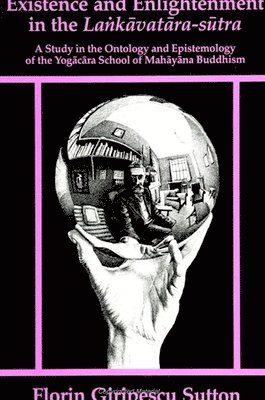
    Existence and Enlightenment in the Laṅkāvatāra-Sūtra

    A Study in the Ontology and the Epistemology of the Yogācāra School of Mahāyāna Buddhism

    AvFlorin G. Sutton

    Häftad, Engelska, 1990

    Del i serien SUNY series in Buddhist Studies

    410 kr

    Tillfälligt slut

    Fler format och utgåvor

    Inbunden

    Tillf. slut

    Beskrivning

    This book offers a systematic analysis of one of the most important concepts characterizing the Yogācāra School of Buddhism (the last creative stage of Indian Buddhism) as outlined and explained in one of its most authoritative and influential texts, Laṅkāvatāra-Sūtra. Compiled in the second half of the fourth-century A.D., this sutra not only represents a comprehensive synthesis of both early and late religio-philosophical ideas crucial to the understanding of Buddhism in India, but it also provides an insight into the very early roots of the Japanese Zen Buddhism in the heart of the South Asian esotericism.The first part of the book outlines the three-fold nature of Being, as conceptualized in Buddhist metaphysics. The author uses an interpretive framework borrowed from the existentialist philosophy of Heidegger, in order to separate the transcendental Essence of Being from its Temporal manifestation as Self, and from its Spatial or Cosmic dimension. The second part clarifies the Buddhist approach to knowledge in its religious, transcendental sense and it shows that the Buddhists were actually first in making use of dialectical reasoning for the purpose of transcending the contradictory dualities imbedded in the common ways of perceiving, thinking, and arguing about reality.

    Produktinformation

    • Utgivningsdatum:1990-12-11
    • Mått:152 x 229 x 20 mm
    • Vikt:526 g
    • Format:Häftad
    • Språk:Engelska
    • Serie:SUNY series in Buddhist Studies
    • Antal sidor:393
    • Förlag:State University of New York Press
    • ISBN:9780791401736

    Utforska kategorier

    • Buddhism inom Filosofi och religion

    Mer om författaren

    Floring Giripescu Sutton is Assistant Professor of Oriental Philosophy at Rutgers University.

    Recensioner i media

    "No comparable work has been published on the Lankavatara-sutra since that of D. T. Suzuki." — Dr. Shohei Ichimura"The mapping of the Lankavatara-sutra into the ontological and epistemological phases is cogent and insightful. (Sutton's) breadth of knowledge, historical as well as ideological, adds much to the value of the work and opens up comparative avenues of thought." — Kenneth Inada

    Innehållsförteckning

    • Introduction0.1. The Purpose of the Study, and the Significance of the Lankavatara-sutra within Buddhist Doctrinal History0.2. Dating the Text: Problems of Form and Interpretation0.3. Methodology and Outline of the StudyPart One: Concepts of Being1.0. The Nature of Buddhist OntologyGeneral considerations • The practical aim of the Yogacara Philosophy1.1. The Threefold Meaning of Tathagata-garbha and its Relation to Alaya-vijnana : the Essence of BeingPreliminary considerations • Tathagata-garbha as essential, supramundane, pure dharma, and its contrast with the Hindu Atman • Tathagata-garbha as embryo, and the dynamics of Buddhahood • Tathagata-garbha as womb or matrix of Buddhahood • Conclusion1.2. The Five Skandhas: the Temporal Manifestation of BeingIntroduction • Brief overview of the Atman controversy prior to the Lankavatara-sutra • Rupa, or the formative elements of the five Skandhas • Nama, or the formless elements of the five Skandhas • The Skandhas and the empirical self, or personality • The Skandhas and the trans-empirical Self, the Tathagata • The five Skandhas and the denial of metaphysical dualities • Concluding remarks on the notion of Self and its varieties1.3. Dharmadhatu : the Spatial or Cosmic Dimension of BeingIntroductory remarks • Dharmadhatu as cosmic Law: the fundamental structure of the universe • Dharmadhatu as universal Void: the ground of Being • Concluding observationsPart Two: Concepts of Knowing2.0. Buddhist Epistemology, Buddhist DialecticsTruth, untruth, half-truth, "the truth" • The tetralemma logic: a thousand years of Buddhist dialectics • The early use of the tetralemma in the Pali canon • Rationality and irrationality in Nagarjuna's relativistic logic • Epistemology in the Lankavatara-sutra : a radical critique of language, logic, and knowledge • Conclusions and preview of part two2.1. The Epistemological Reduction of the Citta-matra (Mind-only) DoctrinePreliminary considerations • Citta as the empirical mind Citta as the transcendental Mind • Citta-matra as explanation for the triple world (Tribhava) • Concluding words and the connection between Lankavatara and Zen2.2. From Mind to No-mind: the Transcendental Leap beyond Empirical CognitionIntroduction • The five Dharmas or epistemic categories • The three Svabhavas or modes of cognition • The attainment of Aryajnana : transcendental Wisdom or Gnosis • Concluding remarks2.3. The Conjunctive System of the Eight Vijnanas : the Integration of Both Mind and No-mind States of ConsciousnessIntroductory remarks • Jnana and Vijnana : abstract intuition versus concrete knowledge • Khyati- and Vastuprativikalpa-vijnana : the perceptual and the object-discriminating knowledge • The inner revolution (Paravrtti ): the return to the tranquil state of pure consciousness (Alaya-vijnana ) • Conclusion2.4. The Disjunctive Theory of Causation: Things are Neither this, Nor that, for They Are All Subject to Causes and Conditions (Hetu-pratyaya)Introduction • The expansion of the relevance of causation: from the psychological to the cosmic-philosophical principle • Causation as a possible theoretical basis for a monistic view of the world • Causation as a teaching device • Excursus: highlighting Nagarjuna's thought in respect to causation • The soteriological value of the theory of causation • Concluding observations3.0. Final OverviewAppendixNotesBibliographyIndex