• Fri frakt över 249 kr
  • •
  • Snabba leveranser
  • •
  • Billiga böcker
Kundservice

Du är på sajten för privatpersoner.

Företag, bibliotek eller offentlig verksamhet?

Du handlar på classic.bokus.com, där alla dina funktioner finns intakta.
Till classic.bokus.com
Bokus logotyp. Gå till startsidan.
  • Erbjudanden
  • Nyheter
  • Student
  • Topplistor
  • Barn & ungdom
  • Bokus Play
  • E-böcker
  • Pocketböcker
  • Spel & pussel

10% rabatt på allt med kod: NYSTART10 →

Sidfot

Mina sidor

    Hjälp

    • Kundservice
    • Vanliga frågor och svar
    • Frakt och leverans
    • Retur vid ångerrätt
    • Reklamera vara
    • Betalning
    • Köpvillkor
    • Allmänna villkor
    • Information om webbplatsens tillgänglighet

    Om Bokus

    • Om oss
    • Pressrum
    • För studenter
    • För företag
    • För bibliotek och offentlig verksamhet
    • För leverantörer
    • Hållbarhet

    Populärt

    • Aktuella erbjudanden
    • Presentkort
    • Studentlitteratur
    • Nya böcker
    • Topplistor
    • Signerade böcker
    • Engelska böcker

    Inspiration

    • Boktips
    • BookTok
    • Populära bokserier
    • Barnbokskaraktärer
    • Populära författare
    Logotyp för Bokus
    Följ oss på Facebook (extern länk)Följ oss på Instagram (extern länk)Följ oss på YouTube (extern länk)Följ oss på TikTok (extern länk)
    bokus @ CookiesAnpassa cookiesIntegritetspolicyKöpvillkor
    Till Citymail hemsida (extern länk)Till Budbee hemsida (extern länk)Till Postnord hemsida (extern länk)Till Schenker hemsida (extern länk)Till Early Bird hemsida (extern länk)Till Walleys hemsida (extern länk)
    1. Samhälle och politik
    2. Samhälle och kultur
    3. Sociala grupper och identitet

    Jewish Civilization

    The Jewish Historical Experience in a Comparative Perspective

    AvShmuel N. Eisenstadt

    Inbunden, Engelska, 1992

    Del i serien SUNY series in Israeli Studies

    1 108 kr

    Tillfälligt slut

    Fler format och utgåvor

    Häftad

    Tillf. slut

    Beskrivning

    This book explains why the best way to understand the Jewish historical experience is to look at Jewish people, not just as a religious or ethnic group or a nation or "people," but, as bearers of civilization. This approach helps to explain the greatest riddle of Jewish civilization, namely, its continuity despite destruction, exile, and loss of political independence.In the first part of the book, Eisenstadt compares Jewish life and religious orientations and practices with Hellenistic and Roman civilizations, as well as with Christian and Islamic civilizations. In the second part of the book, he analyzes the modern period with its different patterns of incorporation of Jewish communities into European and American societies; national movements that developed among Jews toward the end of the nineteenth century, especially the Zionist movement; and specific characteristics of Israeli society.The major question Eisenstadt poses is to what extent the characteristics of the Jewish experience are distinctive, in comparison to other ethnic and religious minorities incorporated into modern nation-states, or other revolutionary ideological settler societies. He demonstrates through his case studies the continuous creativity of Jewish civilization.

    Produktinformation

    • Utgivningsdatum:1992-09-17
    • Mått:152 x 229 x undefined mm
    • Vikt:590 g
    • Format:Inbunden
    • Språk:Engelska
    • Serie:SUNY series in Israeli Studies
    • Antal sidor:324
    • Förlag:State University of New York Press
    • ISBN:9780791410950

    Utforska kategorier

    • Sociala grupper och identitet inom Samhälle och politik
    • Allmän historia och världshistoria inom Historia och arkeologi

    Mer om författaren

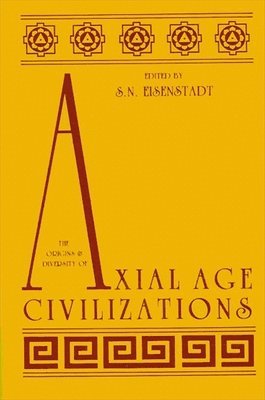
    S. N. Eisenstadt is Rose Issacs Professor of Sociology at The Hebrew University of Jerusalem. He is the editor of The Origins and Diversity of Axial Age Civilizations, also published by SUNY Press.

    Innehållsförteckning

    • Introduction 1. Jewish History as the History of Jewish Civilizations Introduction: The Problem of Jewish ContinuityThe Civilizational Approach to Jewish HistoryThe Presupposition of a Civilizational Perspective—Culture, Ontology, and Social DynamicsThe Axial Age Civilizations 2. The Distinctive Characteristics of Jewish Civilization in a Historical and Comparative Perspective The Ancient Israelite CivilizationThe Crystallization of Jewish Civilization in the Period of the Second CommonwealthSome Comparative Indications: The Crystallization of Christianity and Christian CivilizationThe Distinctive Characteristics of Islamic Civilization 3. Basic Themes and Institutional Formations of Exilic Jewish Civilization: The Inner-Civilizational Perspective The Historical SettingInstitutional ChangesThe Predominance of the Oral Law (Halakhah)The Transformation of the Basic Themes of Jewish Civilization and the Crystallization of New ThemesThe Ideology of Galut and Eretz-Israel: Messianic Redemption and MartyrdomHeterogeneity and Dynamics within the Rabbinic MoldSome Concluding Observations on the Specificity of the Jewish Historical Experience: The Ancient and Medieval PeriodsThe Historical Experiences of the Three Monotheistic Civilizations and the Impact of Heterodoxies: Some Comparative ObservationsThe Jewish Historical Experience in Medieval Times in a Comparative Framework: Heterodox Potentials and the Sovereignty of the CourtThe Social Conditions of the Tradition of Sovereignty of the Court and Civility in Medieval Jewish Communities 4. The Disintegration of the Medieval Jewish Civilizational Framework in the Modern Period and the Integration of Jews in European Societies The Period of Transition: Sixteenth to Eighteenth CenturiesThe Modern Period: IntroductionThe Major Directions of Jewish Collective Life and Cultural Activities: Haskala, Reform, Assimilation, and Jewish Scholarship in Western and Central EuropeVariations among Different Western and Central European Jewish Communities: Heterogeneity and Common OrientationsModern Jewish Historical Experience in Eastern Europe 5. The Incorporation of the Jews in the United States Introduction: The Distinctive Characteristics of the Jewish American ExperienceThe Specific Premises of American Civilization; American Pluralism; and the Incorporation of JewsJewish Collective Activities; Incorporation in the Mainstream of American Life; Modes of AssimilationThe Paradox of Jewish American Life: Communal Activity and Drifting Away 6. Modern Jewish National Movements and the Zionist Movement IntroductionZionism as a National Movement: The Revolutionary DimensionSpecific Dimensions of Zionist Nationalism: Territory, Language, and HistorySpecific Characteristics of Zionist Revolutionary OrientationsThe Zionist Vision and the Basic Themes of Jewish Civilization: Exile, Return, and RedemptionThe Diaspora in Zionist IdeologyThe Reconstruction of Collective Identity and Traditions: Zionism and Religion 7. The Formation and Transformation of Israeli Society The Formation of Israeli Society and Its Initial Institutional MoldThe Disintegration of the Initial Institutional Mold of Israeli SocietyIsraeli Society in Transition 8. The United States and Israel: An Essay in Comparative Analysis Some Common Characteristics of the United States and Israel: Constitutional, Modernizing, Revolutionary, Ideological SocietiesIdeological Differences between the United States and Israel: Individualistic versus Collective OrientationIdeological Differentiation between the United States and Israel: Primordial, Historical, and Religious Components in the Construction of Collective IdentityDifferences between the United States and Israel: Size, Political Ecology, and International Relations 9. Concluding Observations: The Jewish Experience in the Modern and Contemporary Eras The Two Poles: The Holocaust and Heterogeneity of Jewish ExperienceThe Major Modes of Jewish Experience in the Modern DiasporaThe Jewish Experience in the Contemporary EraThe State of Israel and the Problem of Its Centrality in Jewish Life: The Complexity of Israel-Diaspora RelationsConcluding Remarks: The Challenges before Jewish Civilization in the Contemporary Era Notes Index