• Fri frakt över 249 kr
  • •
  • Snabba leveranser
  • •
  • Billiga böcker
Kundservice

Du är på sajten för privatpersoner.

Företag, bibliotek eller offentlig verksamhet?

Du handlar på classic.bokus.com, där alla dina funktioner finns intakta.
Till classic.bokus.com
Bokus logotyp. Gå till startsidan.
  • Erbjudanden
  • Nyheter
  • Student
  • Topplistor
  • Barn & ungdom
  • Bokus Play
  • E-böcker
  • Pocketböcker
  • Spel & pussel

10% rabatt på allt med kod: NYSTART10 →

Sidfot

Mina sidor

    Hjälp

    • Kundservice
    • Vanliga frågor och svar
    • Frakt och leverans
    • Retur vid ångerrätt
    • Reklamera vara
    • Betalning
    • Köpvillkor
    • Allmänna villkor
    • Information om webbplatsens tillgänglighet

    Om Bokus

    • Om oss
    • Pressrum
    • För studenter
    • För företag
    • För bibliotek och offentlig verksamhet
    • För leverantörer
    • Hållbarhet

    Populärt

    • Aktuella erbjudanden
    • Presentkort
    • Studentlitteratur
    • Nya böcker
    • Topplistor
    • Signerade böcker
    • Engelska böcker

    Inspiration

    • Boktips
    • BookTok
    • Populära bokserier
    • Barnbokskaraktärer
    • Populära författare
    Logotyp för Bokus
    Följ oss på Facebook (extern länk)Följ oss på Instagram (extern länk)Följ oss på YouTube (extern länk)Följ oss på TikTok (extern länk)
    bokus @ CookiesAnpassa cookiesIntegritetspolicyKöpvillkor
    Till Citymail hemsida (extern länk)Till Budbee hemsida (extern länk)Till Postnord hemsida (extern länk)Till Schenker hemsida (extern länk)Till Early Bird hemsida (extern länk)Till Walleys hemsida (extern länk)
    1. Filosofi och religion
    2. Religion och tro
    3. Judendom

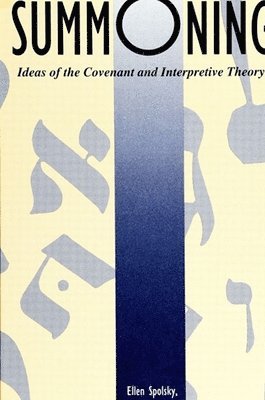
    Summoning

    Ideas of the Covenant and Interpretive Theory

    AvEllen Spolsky

    Häftad, Engelska, 1993

    Del i serien SUNY series in Modern Jewish Literature and Culture

    389 kr

    Tillfälligt slut

    Beskrivning

    This book explores the variety of ways that the Jewish understanding of the Covenant relates to the notion of a contract or a shared grammar as developed in recent structural and post-structural theory. The book enters the debate on the relationship beween a variety of open-ended forms of text interpretation and traditional Jewish interpretive practice, expanding and deepening that debate. Until now, the discussion has focused primarily on Midrashic interpretation; these essays balance the assumption of the openness of interpretation with an exploration of the concurrent restrictions on interpretation imposed by a covenant.

    Produktinformation

    • Utgivningsdatum:1993-08-24
    • Mått:152 x 229 x 25 mm
    • Vikt:386 g
    • Format:Häftad
    • Språk:Engelska
    • Serie:SUNY series in Modern Jewish Literature and Culture
    • Antal sidor:272
    • Förlag:State University of New York Press
    • ISBN:9780791415269

    Utforska kategorier

    • Judendom inom Filosofi och religion

    Mer om författaren

    Ellen Spolsky is Associate Professor at Bar-Ilan University, Israel and Director of the Lechter Institute for Literary Research.

    Recensioner i media

    "This book is a solid contribution to the ongoing study of the relationship between traditional Jewish textuality and modern literary analysis. The quality of the scholarship is of a uniformly high level. Appropriately enough, the Harold Fisch essay that opens the collection is a hermeneutical masterpiece.I find the application of covenantal hermeneutics to a wide range of literary works—from Shakespeare to Philip Roth—to be surprisingly convincing. I also appreciate the interdisciplinary approach, given that some of the essays deal with philosophy, the sciences, and law, as well as biblical, rabbinic, and modern, literary hermeneutics." — Norman Finkelstein, Xavier University

    Innehållsförteckning

    • Acknowledgments Introduction The difficulties and advantages of assuming modularity of mindDescribing changes in literary systemsHow can these claims be investigated? 1. Minds, Modules, and Models The earliest and strongest version of the modularity hypothesisJackendoff's modularity theoryThe visual and the language modulesGardner's modularity theoryThe crucial recognition of failureParrallel distributed processing modelsEdelman's Neural DarwinismDennett's gappy consciousnessSumming up and hedging 2. New Genres: American Autobiography Western American autobiographyThe category fits the time 3. New Inferences: Reading Hamlet and the Politics of Genre Resisting genreCategorization and inference 4. Women Readers and Women's Rules Fetterley's reading and Fetterley's ruleGilbert's reading without Fetterley's ruleCategorization and transformation: Leaving room for the improbable 5. Intermodular Competition: Transformation and Inference Metaphor and visionPreference rulesAdvantages and risks of multiple coding 6. Immobile and Immortal in the Monument of Literary History Resistance to change: The conservatism if the experienced readerThe link between the Middle Ages and the RenaissanceSpearing's dignity conditions and alterity conditionsThe Bloom connection 7. Writing Literary History: Neoclassicism, Modularity, and the New Histories Viewer-centered and object-centered understandingSpeaker-centered vs. public languageInteraction of the object-centered and the viewer-centeredLeaving space for the otherNew historical criticismListening to others 8. The Dynamic of Freedom and Compulsion The inevitability of contradictionA Summary of the possibilities for change in the modular mindBuilding culture into the survival of the speciesResisting reading NotesReferences Index