• Fri frakt över 249 kr
  • •
  • Snabba leveranser
  • •
  • Billiga böcker
Kundservice

Du är på sajten för privatpersoner.

Företag, bibliotek eller offentlig verksamhet?

Du handlar på classic.bokus.com, där alla dina funktioner finns intakta.
Till classic.bokus.com
Bokus logotyp. Gå till startsidan.
  • Erbjudanden
  • Nyheter
  • Student
  • Topplistor
  • Barn & ungdom
  • Bokus Play
  • E-böcker
  • Pocketböcker
  • Spel & pussel

10% rabatt på allt med kod: NYSTART10 →

Sidfot

Mina sidor

    Hjälp

    • Kundservice
    • Vanliga frågor och svar
    • Frakt och leverans
    • Retur vid ångerrätt
    • Reklamera vara
    • Betalning
    • Köpvillkor
    • Allmänna villkor
    • Information om webbplatsens tillgänglighet

    Om Bokus

    • Om oss
    • Pressrum
    • För studenter
    • För företag
    • För bibliotek och offentlig verksamhet
    • För leverantörer
    • Hållbarhet

    Populärt

    • Aktuella erbjudanden
    • Presentkort
    • Studentlitteratur
    • Nya böcker
    • Topplistor
    • Signerade böcker
    • Engelska böcker

    Inspiration

    • Boktips
    • BookTok
    • Populära bokserier
    • Barnbokskaraktärer
    • Populära författare
    Logotyp för Bokus
    Följ oss på Facebook (extern länk)Följ oss på Instagram (extern länk)Följ oss på YouTube (extern länk)Följ oss på TikTok (extern länk)
    bokus @ CookiesAnpassa cookiesIntegritetspolicyKöpvillkor
    Till Citymail hemsida (extern länk)Till Budbee hemsida (extern länk)Till Postnord hemsida (extern länk)Till Schenker hemsida (extern länk)Till Early Bird hemsida (extern länk)Till Walleys hemsida (extern länk)
    1. Psykologi och pedagogik
    2. Psykologi
    3. Barnpsykologi och utvecklingspsykologi

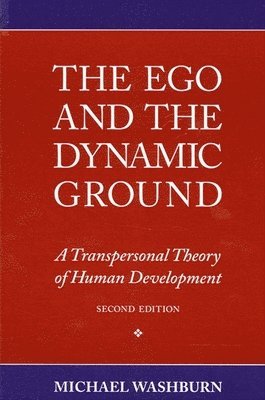
    Ego and the Dynamic Ground

    AvMichael Washburn

    Häftad, Engelska, 1995

    436 kr

    Beställningsvara. Skickas inom 5-8 vardagar. Fri frakt över 249 kr.

    Beskrivning

    Maps the course of human development from the earliest stages of ego development to the highest stages of ego transcendence.This new edition is a thorough revision of the first edition. Drawing on both psychoanalysis and analytical psychology and on both Eastern and Western spiritual sources, the book maps the course of human development from the earliest stages of ego development to the highest stages of ego transcendence. Washburn formulates an important paradigm for transpersonal psychology and clearly distinguishes it from the other major paradigm in the field, the structural-hierarchical paradigm of Ken Wilber.In Washburn's view, human development is a spiral movement played out between the ego and its ultimate source: the Dynamic Ground. Ego development in the first half of life moves in a direction away from the Dynamic Ground; ego transcendence in the second half of life spirals back to the Ground on the way to a higher union with the Ground-whole-psyche integration.Washburn's spiral paradigm helps explain why human development has the character of a journey of departure and higher return, of setting out into the world and then finding one's way "home."This new edition more effectively integrates key psychoanalytic and Jungian ideas by placing them within a developmental framework that resolves their contradictions. Washburn's paradigm stresses both the biological roots and the spiritual potentialities of the psyche and is sensitive to the ambivalences, dualisms, transvaluations, and higher syntheses of life.

    Produktinformation

    • Utgivningsdatum:1995-02-03
    • Mått:153 x 233 x 18 mm
    • Vikt:440 g
    • Format:Häftad
    • Språk:Engelska
    • Antal sidor:288
    • Upplaga:2
    • Förlag:State University of New York Press
    • ISBN:9780791422564

    Utforska kategorier

    • Barnpsykologi och utvecklingspsykologi inom Psykologi och pedagogik

    Mer om författaren

    Michael Washburn is Professor Emeritus of Philosophy at Indiana University South Bend. He is the author of Embodied Spirituality in a Sacred World, The Ego and the Dynamic Ground: A Transpersonal Theory of Human Development, and Transpersonal Psychology in Psychoanalytic Perspective, all published by SUNY Press.

    Recensioner i media

    "I find it a psychologically more pertinent synthesis of the claims, experiences, and insights in transpersonal development than Wilber's paradigm. It is neater, more parsimonious, and more powerful." — James N. Mosel"Washburn brings together many insights from psychotherapy and from meditation in an incomparably illuminating map of emotional-spiritual processes of transformation." — Donald Evans

    Innehållsförteckning

    • Preface to First Edition Preface to Second Edition Introduction 1. Transpersonal Theory: Two Basic Paradigms The Dynamic-Dialectical ParadigmThe Structural-Hierarchical ParadigmChoosing Between the ParadigmsConclusion2. The Body Ego Original EmbedmentThe Emergence of the Ego from the Dynamic Ground and the Initial Appearance of the Great MotherThe Splitting of the Great MotherConflict with the Great Mother and Primal RepressionThe Body Project, the Oedipus Complex, and Primal RepressionConclusion3. The Body Ego: Cognitive and Affective Development The Presymbolic StageThe Referential-Protosymbolic StageThe Symbolic-Protoconceptual StageConclusion4. The Mental Ego The Mental Ego's Crisis of Awakening in AdolescenceEarning Being and Value in Early AdulthoodThe Mental Ego and CognitionThe Mental Ego's Difficulties at MidlifeConclusion5. The Unconscious The Dynamic GroundThe Instinctual-Archetypal UnconsciousThe Body UnconsciousPrimal RepressionThe Personal UnconsciousConclusion6. Meditation: The Royal Road to the Unconscious A Definition of MeditationMeditation and PrayerMeditation and the UnconsciousMeditation Before and After Crossing the Threshold of Primal RepressionBeyond MeditationConclusion7. Regression in the Service of Transcendence Stage One: Withdrawal from the WorldStage Two: Encounter with the Prepersonal UnconsciousConclusion8. Regeneration in Spirit General Features of the Regeneration ProcessSpecific Features of the Regeneration ProcessConclusion9. Integration Dualism Transcended: The Coincidentia OppositorumThe Horizons of Integrated LifeConclusionNotes Bibliography Index