• Fri frakt över 249 kr
  • •
  • Snabba leveranser
  • •
  • Billiga böcker
Kundservice

Du är på sajten för privatpersoner.

Företag, bibliotek eller offentlig verksamhet?

Du handlar på classic.bokus.com, där alla dina funktioner finns intakta.
Till classic.bokus.com
Bokus logotyp. Gå till startsidan.
  • Erbjudanden
  • Nyheter
  • Student
  • Topplistor
  • Barn & ungdom
  • Bokus Play
  • E-böcker
  • Pocketböcker
  • Spel & pussel

10% rabatt på allt med kod: NYSTART10 →

Sidfot

Mina sidor

    Hjälp

    • Kundservice
    • Vanliga frågor och svar
    • Frakt och leverans
    • Retur vid ångerrätt
    • Reklamera vara
    • Betalning
    • Köpvillkor
    • Allmänna villkor
    • Information om webbplatsens tillgänglighet

    Om Bokus

    • Om oss
    • Pressrum
    • För studenter
    • För företag
    • För bibliotek och offentlig verksamhet
    • För leverantörer
    • Hållbarhet

    Populärt

    • Aktuella erbjudanden
    • Presentkort
    • Studentlitteratur
    • Nya böcker
    • Topplistor
    • Signerade böcker
    • Engelska böcker

    Inspiration

    • Boktips
    • BookTok
    • Populära bokserier
    • Barnbokskaraktärer
    • Populära författare
    Logotyp för Bokus
    Följ oss på Facebook (extern länk)Följ oss på Instagram (extern länk)Följ oss på YouTube (extern länk)Följ oss på TikTok (extern länk)
    bokus @ CookiesAnpassa cookiesIntegritetspolicyKöpvillkor
    Till Citymail hemsida (extern länk)Till Budbee hemsida (extern länk)Till Postnord hemsida (extern länk)Till Schenker hemsida (extern länk)Till Early Bird hemsida (extern länk)Till Walleys hemsida (extern länk)
    1. Samhälle och politik
    2. Social välfärd och brottslighet
    3. Brottslighet och kriminologi

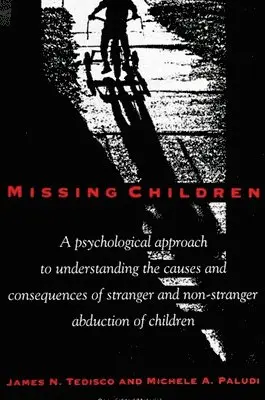
    Missing Children

    A Psychological Approach to Understanding the Causes and Consequences of Stranger and Non-Stranger Abduction of Children

    AvJames N. Tedisco,Michele A. Paludi

    Häftad, Engelska, 1996

    Del i serien SUNY series, The Psychology of Women

    333 kr

    Tillfälligt slut

    Beskrivning

    Focuses on variables that assist in confronting and preventing child abductions, including teacher training, public education and awareness, psychotherapeutic techniques for families and friends of abducted children as well as the children themselves.Child abduction is the most widespread form of child victimization studied. In 1992 alone, a total of 27,553 cases of missing children were reported in New York State through the Missing Children Register. The majority of missing children cases involved suspected runaways. Abduction cases accounted for one percent of the total report; those committed by family members comprised the most frequent form of abduction (as opposed to abduction by strangers). In addition, 88 percent of the children reported missing were age 13 or older, 60 percent were girls, and 58 percent were white.Child abduction is a serious socio-economic problem. Until now there has been no text that addresses the incidence, psychological dimensions, and explanatory models of child abductions. This book fills a need by focusing on variables that assist in confronting and preventing child abductions, including teacher training, public education and awareness, psychotherapeutic techniques for families and friends of abducted children as well as the children themselves.

    Produktinformation

    • Utgivningsdatum:1996-03-07
    • Mått:153 x 229 x 9 mm
    • Vikt:249 g
    • Format:Häftad
    • Språk:Engelska
    • Serie:SUNY series, The Psychology of Women
    • Antal sidor:161
    • Förlag:State University of New York Press
    • ISBN:9780791428801

    Utforska kategorier

    • Brottslighet och kriminologi inom Samhälle och politik
    • Arbetspsykologi inom Psykologi och pedagogik

    Mer om författaren

    James N. Tedisco has been a member of the New York State Assembly since 1982. In his first year in the Assembly, Tedisco was appointed Ranking Republican member on the Committee on Children and Families. He also served on the Assembly Committees on Aging and Education, and Child Abuse. In 1983, as a result of his work on behalf of missing children, Tedisco was appointed Chairperson of the Assembly Republican Task Force on Missing Children. Tedisco also worked in the field of education from 1973 to 1982, first as a guidance counselor, then as a special education teacher. His expertise as a psychologist, educator, and legislator is integrated in this book. Michele A. Paludi is a developmental psychologist specializing in the psychology of women and victimization. She is Principal of Michele Paludi and Associates, Consultants in Sexual Harassment and offers education and training in issues related to sexual harassment at elementary and secondary schools, colleges and organizations. Paludi has collaborated with Assemblymember Tedisco as his Legislative Advisor on Women's Issues. She is the author of Ivory Power: Sexual Harassment on Campus, and Exploring/Teaching the Psychology of Women: A Manual of Resources, and Sexual Harassment on College Campuses: Abusing the Ivory Power, all published by SUNY Press.

    Recensioner i media

    "Even though parents believe they are capable of keeping their children safe, few are aware of the plethora of ways child abductors can achieve their goals. The public needs to be aware that most child abductions occur at the hands of parents or other family members. The array of resources and tips contained in this volume are invaluable. The topic is significant for every parent, teacher, daycare worker, all police personnel, all child protective services workers, and all therapists." — Paula K. Lundberg-Love, University of Texas-Tyler

    Innehållsförteckning

    • ForewordPrefaceAcknowledgmentsIntroductionPart One. Introduction to the Psychology of Child Abductions1. Perceptions and Realities Introduction: We See What We Expect to SeeMyth: An Abductor Is a Psychotic Human Being, Easily Identifiable by Children and AdultsMyth: There Are No Long-Term Aftereffects of Abductions for Those Who Are FoundMyth: It Is Only Young, Helpless Children Who Are the Prey of AbductorsMyth: Runaway Children and Adolescents Are Not Targeted for AbductionsMyth: Parental Abduction Is Not a Serious Matter and Is Not a Form of Child AbuseMyth: Abductions Do Not Happen Here to the People I Know—They Happen Somewhere ElseSummaryReferencesPart Two. "Missing" Children and Adolescents2. Runaways IntroductionAdolescence: Transition to AdulthoodThe Process of Running AwayTerrified Runners: Victims of IncestRealities of Street Life for Runaway AdolescentsSummaryReferences3. Stranger Abductions IntroductionWho Are Stranger Abductors?Common Lures Used by Stranger AbductorsVulnerable ChildrenStrangers' Explanations for their AbductionsPsychological Factors Leading to AbductionsImpact of Abductions on Children and Their CommunitiesSummaryReferences4. Noncustodial Parental Abductions IntroductionTwo "Worlds:" Her Marriage/His MarriageTwo "Worlds:" Her Divorce/His DivorceImpact of Divorce on ChildrenChild Support and Custody Issues: Avoiding a Real-Life Tug of WarNoncustodial Parental Abduction: A Real-Life Tug of WarSummaryReferencesPart Three. Responsibility of Parents, Schools, and Legislators in Dealing with Missing Children5. The Role and Responsibilities of Parents IntroductionFrom Research and Theory to Practical AdviceHow Parents Must Teach Children about Abductions and VictimizationExamples of Behavioral Rehearsal with ChildrenWhat Parents Must Do to Teach Themselves about Missing Children and AbductionsParents' RightsTherapeutic Support for Parents and Other Family MembersSummaryReferences6. The Role and Responsibilities of Schools IntroductionGoals of Curriculum ProjectsSome Suggestions for Effectively Accomplishing Training GoalsEducational Qualifications of TrainersPost-Training Factors to ConsiderPsychological Issues to Consider when Conducting Training ProgramsSample CurriculaAdditional Responsibilities of SchoolsSummaryReference7. The Role and Responsibilities of Legislators in Protecting and Assisting Children IntroductionMissing Children: Federal LegislationMissing Children: State LegislationState ClearinghousesLegislation Dealing with Prevention of Child Abductions and Missing ChildrenA Call to ActionReferenceEpilogueAppendicesAppendix A: Recommendations for Future Research on Missing Children and Child AbductionsAppendix B: Missing Children and Child Abductions: Resources for AdvocacyAppendix C: Missing Children and Child Abductions: Resources for EducationAppendix D: Missing Children and Child Abductions: Resources for Therapeutic InterventionsAppendix E: What to Do if Your Child Is MissingAppendix F: Sample Child Identification SheetAppendix G: Recommendations for Further ReadingAppendix H: Recommendations for Parents for Reducing the Risk of Physical and Sexual Abuse of Children in Day-Care CentersAbout the AuthorsIndex