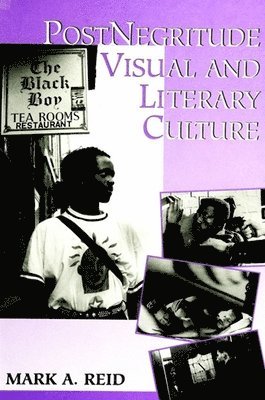
Inbunden, Engelska, 1997
PostNegritude Visual and Literary Culture
Av Mark A. Reid
Del i serien SUNY series, Cultural Studies in Cinema/Video
1104 kr
Beställningsvara. Skickas inom 7-10 vardagar. Fri frakt över 249 kr.
Beskrivning
Produktinformation
- Utgivningsdatum: 1997-03-06
- Mått: 153 x 229 x 8 mm
- Vikt: 431 g
- Format: Inbunden
- Språk: Engelska
- Serie: SUNY series, Cultural Studies in Cinema/Video
- Antal sidor: 146
- Förlag: State University of New York Press
- ISBN: 9780791433010
Utforska kategorier
Mer om författaren
Mark A. Reid is Associate Professor of English and Film at the University of Florida. He is the author of Redefining Black Film, editor of Spike Lee's 'Do the Right Thing', and co-editor of Le Cinema Noir Americain, and is an editorial board member of Cinema Journal, Jump Cut, and Wide Angle.
Recensioner i media
"Mark Reid convincingly argues that race is a social construct rather than a biological fact that is fabricated in cultural forms such as literature, film, and other modes of literary and visual representations. He develops a postNegritude philosophy to combat racism, sexism, homophobia, and other forms of prejudice, while insightfully discussing cultural forms which embody elements of a postNegritude stance, ranging from the films of Spike Lee and Julie Dash to John Williams's novel The Man Who Cried I Am to Adrienne Kennedy's absurdist play The Funny House of a Negro. Original and provocative, Reid's book helps us navigate the tricky shoals of race in contemporary society." — Douglas Kellner, University of Texas at Austin, author of Media Culture"I like the book's originality and the sweep of the scholarship, the groundbreaking nature of its examination of the issue of African-American representation in American cinema today, and the authority and grace with which the author makes his case. The topic is of the greatest import right now, particularly in the aftermath of the Simpson trial. I think this book will incite an enormous amount of discussion and controversy in the best sense of the word, and become one of the signal texts of African-American film scholarship in the late 1990s." — Wheeler Winston Dixon, University of Nebraska
Betyg & recensioner
0 recensioner
Inga recensioner tillgängliga.