• Fri frakt över 249 kr
  • •
  • Snabba leveranser
  • •
  • Billiga böcker
Kundservice

Du är på sajten för privatpersoner.

Företag, bibliotek eller offentlig verksamhet?

Du handlar på classic.bokus.com, där alla dina funktioner finns intakta.
Till classic.bokus.com
Bokus logotyp. Gå till startsidan.
  • Erbjudanden
  • Nyheter
  • Student
  • Topplistor
  • Barn & ungdom
  • Bokus Play
  • E-böcker
  • Pocketböcker
  • Spel & pussel

10% rabatt på allt med kod: NYSTART10 →

Sidfot

Mina sidor

    Hjälp

    • Kundservice
    • Vanliga frågor och svar
    • Frakt och leverans
    • Retur vid ångerrätt
    • Reklamera vara
    • Betalning
    • Köpvillkor
    • Allmänna villkor
    • Information om webbplatsens tillgänglighet

    Om Bokus

    • Om oss
    • Pressrum
    • För studenter
    • För företag
    • För bibliotek och offentlig verksamhet
    • För leverantörer
    • Hållbarhet

    Populärt

    • Aktuella erbjudanden
    • Presentkort
    • Studentlitteratur
    • Nya böcker
    • Topplistor
    • Signerade böcker
    • Engelska böcker

    Inspiration

    • Boktips
    • BookTok
    • Populära bokserier
    • Barnbokskaraktärer
    • Populära författare
    Logotyp för Bokus
    Följ oss på Facebook (extern länk)Följ oss på Instagram (extern länk)Följ oss på YouTube (extern länk)Följ oss på TikTok (extern länk)
    bokus @ CookiesAnpassa cookiesIntegritetspolicyKöpvillkor
    Till Citymail hemsida (extern länk)Till Budbee hemsida (extern länk)Till Postnord hemsida (extern länk)Till Schenker hemsida (extern länk)Till Early Bird hemsida (extern länk)Till Walleys hemsida (extern länk)
    1. Filosofi och religion
    2. Filosofi
    3. Filosofiska discipliner

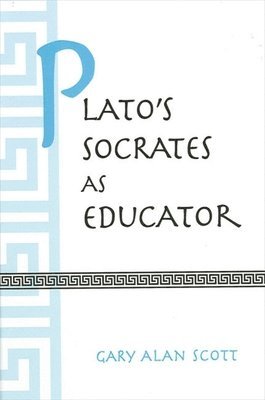
    Plato's Socrates as Educator

    AvGary Alan Scott

    Häftad, Engelska, 2000

    Del i serien SUNY series in Ancient Greek Philosophy

    596 kr

    Beställningsvara. Skickas inom 3-6 vardagar. Fri frakt över 249 kr.

    Fler format och utgåvor

    Inbunden

    Tillf. slut

    Beskrivning

    Examines and evaluates Socrates' role as an educator in Plato's dialogues.Despite his ceaseless efforts to purge his fellow citizens of their unfounded opinions and to bring them to care for what he believes to be the most important things, Plato's Socrates rarely succeeds in his pedagogical project with the characters he encounters. This is in striking contrast to the historical Socrates, who spawned the careers of Plato, Xenophon, and other authors of Socratic dialogues. Through an examination of Socratic pedagogy under its most propitious conditions, focusing on a narrow class of dialogues featuring Lysis and Alcibiades, this book answers the question: "why does Plato portray his divinely appointed gadfly as such a dramatic failure?"

    Produktinformation

    • Utgivningsdatum:2000-10-19
    • Mått:152 x 229 x 16 mm
    • Vikt:363 g
    • Format:Häftad
    • Språk:Engelska
    • Serie:SUNY series in Ancient Greek Philosophy
    • Antal sidor:251
    • Förlag:State University of New York Press
    • ISBN:9780791447246

    Utforska kategorier

    • Filosofiska discipliner inom Filosofi och religion

    Mer om författaren

    Gary Alan Scott is Assistant Professor of Philosophy at Saint Peter's College.

    Recensioner i media

    "This book is exceptionally important and useful. It combines three things usually found separately (if at all): sensitivity to the dialogues as integrities of drama and argument; a clear philosophical understanding of the issues relating to human freedom; and a thorough appreciation of the complexity and subtlety of Socrates as an educator. The discussions work together thematically, and are also interesting just as interpretations of the three dialogues. The book is an exceptionally important and useful work." — W. Thomas Schmid, author of Plato's Charmides and the Socratic Ideal of Rationality

    Innehållsförteckning

    • AcknowledgmentsList of AbbreviationsIntroduction 1. Socrates and Teaching 1.a. Why Socrates Denies Being a Teacher1.b. Conventional Athenian Assumptions about Teachers and Teaching1.c. Socrates as Student: The Contrast between a Market and a Gift Economy1.d. The Meaning of "Teaching" in the Gorgias: "Additive" versus "Integrative" Models1.e. Conclusion: The Socratic Paideusis 2. The Lysis: Limits and Liberation in Socrates' Encounter with Lysis 2.a. The Threshold Imagery in the Dramatic Setting and Prologue (203a1–206e2)2.b. Socrates' First Conversation with Lysis (206e3–211b5) 2.b.1. Step One—The Unsettling: Disturbing What Is Familiar2.b.2. Step Two—The Arousal: Fanning the Flames of Desire2.b.3. Step Three—The Chastening: Reimposing Limits 2.c. Conclusion: The Positive Results of the Lysis 3. The Alcibiades I: Socratic Dialogue as Self-Care 3.a. Disarming Alcibiades: The Preliminary Contest3.b. Introduction to the Problem of Taking Trouble over Oneself3.c. The Meaning of Taking Trouble over Oneself3.d. Practices for "Taking Trouble": Gumnastike and Mathesis 3.d.1. Gumnastike and Dialogue3.d.2. Learning What Needs to Be Learned 3.e. Conclusion: The Ominous End of the Alcibiades I 4. The Symposium: Eros, Truth Telling, and the Preservation of Freedom 4.a. Alcibiades' Motive in the Algon with Socrates4.b. Alcibiades' Attempt to Dominate Socrates 4.b.1. Eros and Thumos4.b.2. The Vindication of Socrates' Approach to Others 4.c. Irony and Inebriation: Two Ways of Telling the Truth 4.c.1. Six Points of Emphasis in Alcibiades' Speech4.c.2. Inebriation and Parrhêsia in Truth Telling 4.d. Conclusion: Adjudicating the Agon over Truth Telling 5. Dramatic Failure and the Gift in Socratic Paideusis NotesSelected BibliographyIndex