• Fri frakt över 249 kr
  • •
  • Snabba leveranser
  • •
  • Billiga böcker
Kundservice

Du är på sajten för privatpersoner.

Företag, bibliotek eller offentlig verksamhet?

Du handlar på classic.bokus.com, där alla dina funktioner finns intakta.
Till classic.bokus.com
Bokus logotyp. Gå till startsidan.
  • Erbjudanden
  • Nyheter
  • Student
  • Topplistor
  • Barn & ungdom
  • Bokus Play
  • E-böcker
  • Pocketböcker
  • Spel & pussel

10% rabatt på allt med kod: NYSTART10 →

Sidfot

Mina sidor

    Hjälp

    • Kundservice
    • Vanliga frågor och svar
    • Frakt och leverans
    • Retur vid ångerrätt
    • Reklamera vara
    • Betalning
    • Köpvillkor
    • Allmänna villkor
    • Information om webbplatsens tillgänglighet

    Om Bokus

    • Om oss
    • Pressrum
    • För studenter
    • För företag
    • För bibliotek och offentlig verksamhet
    • För leverantörer
    • Hållbarhet

    Populärt

    • Aktuella erbjudanden
    • Presentkort
    • Studentlitteratur
    • Nya böcker
    • Topplistor
    • Signerade böcker
    • Engelska böcker

    Inspiration

    • Boktips
    • BookTok
    • Populära bokserier
    • Barnbokskaraktärer
    • Populära författare
    Logotyp för Bokus
    Följ oss på Facebook (extern länk)Följ oss på Instagram (extern länk)Följ oss på YouTube (extern länk)Följ oss på TikTok (extern länk)
    bokus @ CookiesAnpassa cookiesIntegritetspolicyKöpvillkor
    Till Citymail hemsida (extern länk)Till Budbee hemsida (extern länk)Till Postnord hemsida (extern länk)Till Schenker hemsida (extern länk)Till Early Bird hemsida (extern länk)Till Walleys hemsida (extern länk)
    1. Samhälle och politik
    2. Politik och statsskick
    3. Statsvetenskap och politisk teori

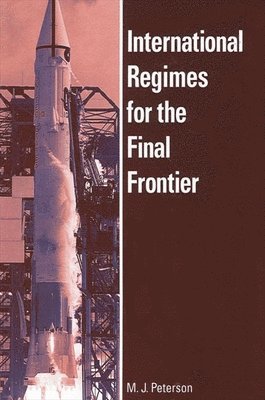
    International Regimes for the Final Frontier

    AvM. J. Peterson

    Häftad, Engelska, 2006

    Del i serien SUNY series in Global Politics

    410 kr

    Tillfälligt slut

    Fler format och utgåvor

    Inbunden

    Tillf. slut

    Beskrivning

    Examines the negotiations between nations that lead to international agreements regulating human activity in outer space.Neither rational choice theory, with its emphasis on interest calculation, nor sociological institutionalist theory, with its emphasis on identity-defined rule following, indicates how governments determine which of their multiple interests or identities are at stake in a particular situation or how they develop mutual comprehension of each other's goals. International Regimes for the Final Frontier addresses these gaps by tracing how governments approach an unfamiliar issue-in this case, international agreements regulating human activity in outer space between 1958 and 1988-and examines three ways situation definitions channel governments' approaches to issues or problems.

    Produktinformation

    • Utgivningsdatum:2006-06-01
    • Mått:153 x 229 x 18 mm
    • Vikt:499 g
    • Format:Häftad
    • Språk:Engelska
    • Serie:SUNY series in Global Politics
    • Antal sidor:352
    • Förlag:State University of New York Press
    • ISBN:9780791465028

    Utforska kategorier

    • Statsvetenskap och politisk teori inom Samhälle och politik

    Mer om författaren

    M. J. Peterson is Professor of Political Science at the University of Massachusetts at Amherst and is the author of Recognition of Governments: Legal Doctrine and State Practice, 1815–1995.

    Recensioner i media

    "International Regimes for the Final Frontier goes a long way in encouraging the progressive development of international law in the new field of space law, not only because of the nature of the major topics involved in this ever-growing discipline but also because of the clarity with which the different chapters are addressed … Two of the most striking features of [Peterson's] book are that it is useful to both academics and practitioners and that, although published in 2005, it remains quite relevant." — American Journal of International Law"This book is a rare find: a work that simultaneously makes contributions to the scholarly understanding of the politics of outer space and to political science. It has the signal virtue of being based on extensive archival research. The empirical material vastly surpasses the scattered and largely speculative literature on the actual negotiations on outer space regime formation." — Daniel H. Deudney, Johns Hopkins University

    Innehållsförteckning

    • Preface Affiliations of Authors Involved in Space Negotiations 1. Creating Regimes for "The Final Frontier" Actors, Social Structures, and InteractionSituation Definitions and InteractionThe Patterns of Space Activity, 1957–1988Plan of the Study 2. The Institutional Context of Negotiations Fundamental Institutions of the States SystemThe UN ForumsParticipants in the NegotiationsImplications of the Two Levels of Institutions 3. The Locational Classification of Outer Space Classifying Outer Space as a LocationReasoning by AnalogySelecting the Initial Analogy for Classifying Outer SpaceMoving to Multiple AnalogiesDelimiting the Outer Space CommonsExplaining Preference Formation, Preference Aggregation, and Negotiation Outcomes 4. Aspects of Spaceflight Appreciating the Registration and Rescue ProblemsThe Soviet Initiative on Rescue of Space CrewsThe French Initiative on RegistrationExplaining Preference Formation, Preference Aggregation, and Negotiation Outcomes 5. Liability for Damage on Earth Appreciating the SituationSetting the Broad Parameters and Resolving the Uncontentious QuestionsResolving the Acute DisagreementsExplaining Preference Formation, Preference Aggregation, and Negotiation Outcomes 6. Military Activity in Outer Space Appreciating the SituationFrom "Outer Space" to "Space" and "Celestial Bodies"Confirming the Separation and the Different RulesExplaining Preference Formation, Preference Aggregation, and Negotiation Outcomes 7. Exploring and Using the Moon Appreciating the SituationProviding ReassuranceContending over Resource ManagementExplaining Preference Formation, Preference Aggregation, and Negotiation Outcomes 8. The Orbit-Spectrum Resource Appreciating the SituationBringing Space Uses into the Radio RegimeThe Third World Drive for Comprehensive PlanningElaborating the Mixed Access RuleExplaining Preference Formation, Preference Aggregation, and Negotiation Outcomes 9. Situation Definitions in the Outer Space Negotiations Establishing Situation DefinitionsThe Impact of Situation Definitions on Preference FormationThe Impact of Situation Definitions on Preference AggregationThe Impact of Situation Definitions on Negotiation OutcomesSituation Definitions and Explanations of Actor ConductThe Future of the Space Treaties NotesBibliographyList of Titles, SUNY series in Global PoliticsIndex