• Fri frakt över 249 kr
  • •
  • Snabba leveranser
  • •
  • Billiga böcker
Kundservice

Du är på sajten för privatpersoner.

Företag, bibliotek eller offentlig verksamhet?

Du handlar på classic.bokus.com, där alla dina funktioner finns intakta.
Till classic.bokus.com
Bokus logotyp. Gå till startsidan.
  • Erbjudanden
  • Nyheter
  • Student
  • Topplistor
  • Barn & ungdom
  • Bokus Play
  • E-böcker
  • Pocketböcker
  • Spel & pussel

10% rabatt på allt med kod NYSTART10 →

Sidfot

Mina sidor

    Hjälp

    • Kundservice
    • Vanliga frågor och svar
    • Frakt och leverans
    • Retur vid ångerrätt
    • Reklamera vara
    • Betalning
    • Köpvillkor
    • Allmänna villkor
    • Information om webbplatsens tillgänglighet

    Om Bokus

    • Om oss
    • Pressrum
    • För studenter
    • För företag
    • För bibliotek och offentlig verksamhet
    • För leverantörer
    • Hållbarhet

    Populärt

    • Aktuella erbjudanden
    • Presentkort
    • Studentlitteratur
    • Nya böcker
    • Topplistor
    • Signerade böcker
    • Engelska böcker

    Inspiration

    • Boktips
    • BookTok
    • Populära bokserier
    • Barnbokskaraktärer
    • Populära författare
    Logotyp för Bokus
    Följ oss på Facebook (extern länk)Följ oss på Instagram (extern länk)Följ oss på YouTube (extern länk)Följ oss på TikTok (extern länk)
    bokus @ CookiesAnpassa cookiesIntegritetspolicyKöpvillkor
    Till Citymail hemsida (extern länk)Till Budbee hemsida (extern länk)Till Postnord hemsida (extern länk)Till Schenker hemsida (extern länk)Till Early Bird hemsida (extern länk)Till Walleys hemsida (extern länk)
    1. Filosofi och religion
    2. Religion och tro
    3. Religion: allmänt

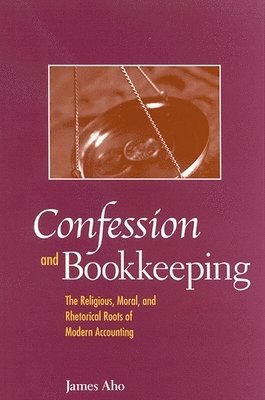
    Confession and Bookkeeping

    The Religious, Moral, and Rhetorical Roots of Modern Accounting

    AvJames Aho

    Inbunden, Engelska, 2005

    1 076 kr

    Tillfälligt slut

    Fler format och utgåvor

    Häftad

    Tillf. slut

    Beskrivning

    A fascinating exploration of the connection between profit making and morality, this book illustrates how modern accounting had its roots in the sacrament of confession.Double-entry bookkeeping (DEB), modern capitalism's first and foremost calculative technology, was "invented" during the Middle Ages when profit making was morally stigmatized. James Aho examines the problematic of moneymaking and offers an explanatory understanding of the paradoxical coupling of profit seeking and morality by situating DEB in the religious circumstances from which it emerged, specifically the newly instituted sacrament of penance, that is, confession.Confession impacted the consciences of medieval businessmen both through its sacramental form and through its moral teachings. The form of confession produced widespread habits of moral scrupulosity (leading to compulsive record keeping); the content of confession taught that commerce itself was morally suspect. Scrupulous businessmen were thus driven to justify their affairs to church, commune, and themselves. With the aid of DEB, moneymaking was "Christianized" and Christianity was made more amenable to the pursuit of wealth. Although DEB is typically viewed exclusively as a scientifically neutral account of the flow of money through a firm, it remains as it was originally devised, a rhetorical argument.

    Produktinformation

    • Utgivningsdatum:2005-09-15
    • Mått:154 x 237 x 7 mm
    • Vikt:318 g
    • Format:Inbunden
    • Språk:Engelska
    • Antal sidor:151
    • Förlag:State University of New York Press
    • ISBN:9780791465455

    Utforska kategorier

    • Religion: allmänt inom Filosofi och religion

    Mer om författaren

    James Aho is Professor of Sociology at Idaho State University and is the author of many books, including The Things of the World: A Social Phenomenology and The Orifice as Sacrificial Site: Culture, Organization, and the Body.

    Innehållsförteckning

    • Preface Acknowledgments 1. The Problem 2. Roman Catholic Penance 4. Business Scruples 5. Medieval Morality and Business 6. The Notary-Bookkeeper 7. The Rhetoric of Double-entry Bookkeeping 8. Confession and Bookkeeping Appendix Notes ReferencesIndex