• Fri frakt över 249 kr
  • •
  • Snabba leveranser
  • •
  • Billiga böcker
Kundservice

Du är på sajten för privatpersoner.

Företag, bibliotek eller offentlig verksamhet?

Du handlar på classic.bokus.com, där alla dina funktioner finns intakta.
Till classic.bokus.com
Bokus logotyp. Gå till startsidan.
  • Erbjudanden
  • Student
  • Topplistor
  • Barn & ungdom
  • Bokus Play
  • E-böcker
  • Ljudböcker
  • Pocketböcker
  • Spel och pussel

Upp till 25% på utvalda nyheter →

Sidfot

Mina sidor

    Hjälp

    • Kundservice
    • Vanliga frågor och svar
    • Frakt och leverans
    • Retur vid ångerrätt
    • Reklamera vara
    • Betalning
    • Köpvillkor
    • Allmänna villkor
    • Information om webbplatsens tillgänglighet

    Om Bokus

    • Om oss
    • Pressrum
    • För studenter
    • För företag
    • För bibliotek och offentlig verksamhet
    • För leverantörer
    • Hållbarhet

    Populärt

    • Aktuella erbjudanden
    • Presentkort
    • Studentlitteratur
    • Nya böcker
    • Topplistor
    • Signerade böcker
    • Engelska böcker

    Inspiration

    • Boktips
    • BookTok
    • Barnbokskaraktärer
    • Populära författare
    Logotyp för Bokus
    Följ oss på Facebook (extern länk)Följ oss på Instagram (extern länk)Följ oss på YouTube (extern länk)Följ oss på TikTok (extern länk)
    bokus @ CookiesAnpassa cookiesIntegritetspolicyKöpvillkor
    Till Citymail hemsida (extern länk)Till Budbee hemsida (extern länk)Till Postnord hemsida (extern länk)Till Schenker hemsida (extern länk)Till Early Bird hemsida (extern länk)Till Walleys hemsida (extern länk)
    1. Samhälle och politik
    2. Samhälle och kultur
    3. Sociala och etiska frågor

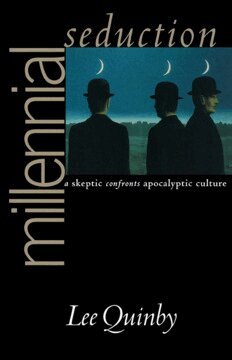
    Millennial Seduction

    A Skeptic Confronts Apocalyptic Culture

    AvLee Quinby

    Inbunden, Engelska, 1999

    1 613 kr

    Beställningsvara. Skickas inom 10-15 vardagar. Fri frakt över 249 kr.

    Fler format och utgåvor

    Häftad

    450 kr

    Beskrivning

    Who among us still thinks the year 2000 is just an arbitrary turn of a calendar page? Why does its approach bring both fear of apocalyptic destruction and the promise of millennial salvation? Lee Quinby investigates how anxiety about the arrival of the new century casts everything from El Niño to sheep cloning in apocalyptic terms, simultaneously fueling panic and fostering unfounded hope for a perfect world.Millennial rhetoric is both pervasive and persuasive, Quinby argues, because it operates with mutually reinforcing doses of fear and hope. Religious and secular anxiety erupts over charged issues such as sex education, the regulation of cyberspace, and the Christian masculinity of the Promise Keepers. Quinby exposes the dangers of millennialist solutions, which link misogyny, homophobia, and racism with absolutist claims about truth, morality, sexuality, and technology.It is the absolutism of apocalyptic thought—not an impending apocalypse—that poses the more serious threat to our society, Quinby maintains. Millennial Seduction advocates a form of skepticism that challenges absolutism and encourages democratic participation.

    Produktinformation

    • Utgivningsdatum:1999-01-26
    • Mått:140 x 216 x 21 mm
    • Vikt:454 g
    • Format:Inbunden
    • Språk:Engelska
    • Antal sidor:192
    • Förlag:Cornell University Press
    • ISBN:9780801435928

    Utforska kategorier

    • Sociala och etiska frågor inom Samhälle och politik
    • Kulturvetenskap inom Samhälle och politik
    • Sociologi och antropologi inom Samhälle och politik

    Mer om författaren

    Lee Quinby is Professor of American Studies and English at Hobart and William Smith Colleges. She is also the author of Anti-Apocalypse.

    Recensioner i media

    Quinby has a gift for explaining complex, radical ideas in accessible, well-organized, and personal terms. This provocative and meaningful book deserves a wide audience of both students and liberal-minded book groups.(Booklist) Quinby's genealogical study of apocalyptic discourse offers a sophisticated sensitivity to problems of gender and sexuality, which are often not sufficiently attended to in similar studies, poststructuralist or otherwise.(Modern Fiction Studies)