• Fri frakt över 249 kr
  • •
  • Snabba leveranser
  • •
  • Billiga böcker
Kundservice

Du är på sajten för privatpersoner.

Företag, bibliotek eller offentlig verksamhet?

Du handlar på classic.bokus.com, där alla dina funktioner finns intakta.
Till classic.bokus.com
Bokus logotyp. Gå till startsidan.
  • Erbjudanden
  • Nyheter
  • Student
  • Topplistor
  • Barn & ungdom
  • Bokus Play
  • E-böcker
  • Pocketböcker
  • Spel & pussel

10% rabatt på allt med kod: NYSTART10 →

Sidfot

Mina sidor

    Hjälp

    • Kundservice
    • Vanliga frågor och svar
    • Frakt och leverans
    • Retur vid ångerrätt
    • Reklamera vara
    • Betalning
    • Köpvillkor
    • Allmänna villkor
    • Information om webbplatsens tillgänglighet

    Om Bokus

    • Om oss
    • Pressrum
    • För studenter
    • För företag
    • För bibliotek och offentlig verksamhet
    • För leverantörer
    • Hållbarhet

    Populärt

    • Aktuella erbjudanden
    • Presentkort
    • Studentlitteratur
    • Nya böcker
    • Topplistor
    • Signerade böcker
    • Engelska böcker

    Inspiration

    • Boktips
    • BookTok
    • Populära bokserier
    • Barnbokskaraktärer
    • Populära författare
    Logotyp för Bokus
    Följ oss på Facebook (extern länk)Följ oss på Instagram (extern länk)Följ oss på YouTube (extern länk)Följ oss på TikTok (extern länk)
    bokus @ CookiesAnpassa cookiesIntegritetspolicyKöpvillkor
    Till Citymail hemsida (extern länk)Till Budbee hemsida (extern länk)Till Postnord hemsida (extern länk)Till Schenker hemsida (extern länk)Till Early Bird hemsida (extern länk)Till Walleys hemsida (extern länk)
    1. Filosofi och religion
    2. Religion och tro
    3. Religion: allmänt

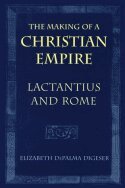
    Making of a Christian Empire

    Lactantius and Rome

    AvElizabeth DePalma Digeser

    Inbunden, Engelska, 1999

    701 kr

    Beställningsvara. Skickas inom 10-15 vardagar. Fri frakt över 249 kr.

    Fler format och utgåvor

    Häftad

    312 kr

    Beskrivning

    The work of the Christian scholar Lactantius provides an ideal lens through which to study how Rome became a Christian empire. Elizabeth DePalma Digeser shows how Lactantius' Divine Institutes—seditious in its time—responded to the emperor Diocletian's persecution and then became an important influence on Constantine the Great, Rome's first Christian emperor.The Making of a Christian Empire is the first full-length book to interpret the Divine Institutes as a historical source. Exploring Lactantius' use of theology, philosophy, and rhetorical techniques, Digeser perceives the Divine Institutes as a sophisticated proposal for a monotheistic state that intimately connected the religious policies of Diocletian and Constantine, both of whom used religion to fortify and unite the Roman Empire. For Digeser, Lactantius' writings justify Constantine's own attitude of tolerance toward pagans and casts light upon other puzzling features of Constantine's religious policy. Her book contributes importantly to an understanding of the political and religious tensions of the early fourth century.

    Produktinformation

    • Utgivningsdatum:1999-11-17
    • Mått:152 x 229 x 22 mm
    • Vikt:907 g
    • Format:Inbunden
    • Språk:Engelska
    • Antal sidor:218
    • Förlag:Cornell University Press
    • ISBN:9780801435942

    Utforska kategorier

    • Religion: allmänt inom Filosofi och religion
    • Kristendom inom Filosofi och religion
    • Europas historia inom Historia och arkeologi

    Mer om författaren

    Elizabeth DePalma Digeser is Professor of History at the University of California, Santa Barbara.

    Recensioner i media

    In this richly textured study... Digeser constructs a challenging and... convincing picture of the tumultous first decades of the fourth century CE.... Even though this work will appeal mostly to those interested in historical and theological developments of this period, Digeser has done all she can, especially through her thorough discussions of bibliography, to make it accessible to the widest possible audience. Highly recommended.(Choice) To write a book like the present one, an author must be willing to believe that ideas make history—perhaps, indeed, that nothing changes history so much as an idea.(American Historical Review) Digeser offers a fresh reading of Lactantius's Divine Institutes, considering its historical, rather than essentially theological value in the political and philosophical contexts of the late roman empire... Clearly argued, Digeser's provocative study offers additional insights into the complexities of imperial-Christian relations in late Antiquity, particularly of Constantine's religious policy, and should appeal to any reader interested in this critical period of transition.(Religious Studies Review) Digeser seeks to answer the mystery of how the Roman Empire changed from persecution of Christianity to toleration in six short years (305–311)... She is at her best in tracing the parallels between Porphyry's attack on Christianity, Constantine's rhetoric of support, and the text of Lactantius's Divine Institutes. Her text sparkles as she demonstrates how different versions of monotheism... could be used in support of not only different theologies but also different modes of civil governance... Her book as well as the massive bibliography by Jackson Bryce bode well for a new look at Lactantius.(Theological Studies) Digeser... proffers an interesting and controversial analysis of the Divine Institutes of Lactantius in The Making of a Christian Empire. Historians of early Christianity will welcome this detailed treatment of the Institutes of Lactantius in the English language, and will appreciate this thorugh assessment of that work within the religious debates of the fourth century.(The Catholic Historical Review) The Making of a Christian Empire is original, challenging, and persuasive. Moreover, beyond contributing to our evolving understanding of the Constantinian age, Digeser's study also has the power to make us question anew the true nature of pagan inclusiveness and the origins of Christian intolerance.(Church History) This book is a first-class piece of historical scholarship, one with something to say to the specialist but fully accessible to the more generally informed reader as well.(Speculum)