• Fri frakt över 249 kr
  • •
  • Snabba leveranser
  • •
  • Billiga böcker
Kundservice

Du är på sajten för privatpersoner.

Företag, bibliotek eller offentlig verksamhet?

Du handlar på classic.bokus.com, där alla dina funktioner finns intakta.
Till classic.bokus.com
Bokus logotyp. Gå till startsidan.
  • Erbjudanden
  • Nyheter
  • Student
  • Topplistor
  • Barn & ungdom
  • Bokus Play
  • E-böcker
  • Pocketböcker
  • Spel & pussel

10% rabatt på allt med kod: NYSTART10 →

Sidfot

Mina sidor

    Hjälp

    • Kundservice
    • Vanliga frågor och svar
    • Frakt och leverans
    • Retur vid ångerrätt
    • Reklamera vara
    • Betalning
    • Köpvillkor
    • Allmänna villkor
    • Information om webbplatsens tillgänglighet

    Om Bokus

    • Om oss
    • Pressrum
    • För studenter
    • För företag
    • För bibliotek och offentlig verksamhet
    • För leverantörer
    • Hållbarhet

    Populärt

    • Aktuella erbjudanden
    • Presentkort
    • Studentlitteratur
    • Nya böcker
    • Topplistor
    • Signerade böcker
    • Engelska böcker

    Inspiration

    • Boktips
    • BookTok
    • Populära bokserier
    • Barnbokskaraktärer
    • Populära författare
    Logotyp för Bokus
    Följ oss på Facebook (extern länk)Följ oss på Instagram (extern länk)Följ oss på YouTube (extern länk)Följ oss på TikTok (extern länk)
    bokus @ CookiesAnpassa cookiesIntegritetspolicyKöpvillkor
    Till Citymail hemsida (extern länk)Till Budbee hemsida (extern länk)Till Postnord hemsida (extern länk)Till Schenker hemsida (extern länk)Till Early Bird hemsida (extern länk)Till Walleys hemsida (extern länk)
    1. Filosofi och religion
    2. Filosofi
    3. Filosofiska discipliner

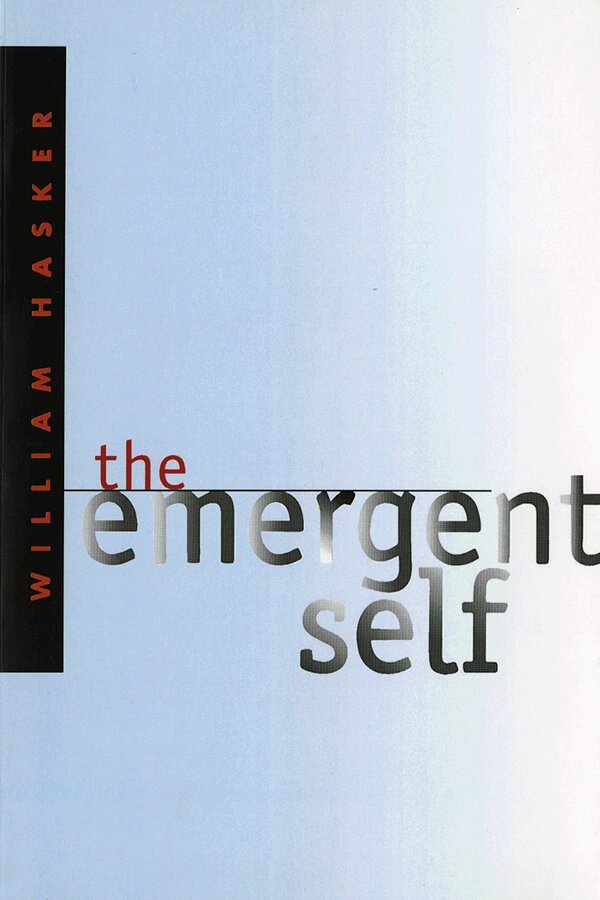
    Emergent Self

    AvWilliam Hasker

    Inbunden, Engelska, 1999

    702 kr

    Beställningsvara. Skickas inom 10-15 vardagar. Fri frakt över 249 kr.

    Fler format och utgåvor

    Häftad

    285 kr

    Beskrivning

    In The Emergent Self, William Hasker joins one of the most heated debates in analytic philosophy, that over the nature of mind. His provocative and clearly written book challenges physicalist views of human mental functioning and advances the concept of mind as an emergent individual.Hasker begins by mounting a compelling critique of the dominant paradigm in philosophy of mind, showing that contemporary forms of materialism are seriously deficient in confronting crucial aspects of experience. He further holds that popular attempts to explain the workings of mind in terms of mechanistic physics cannot succeed. He then criticizes the two versions of substance dualism most widely accepted today—Cartesian and Thomistic—and presents his own theory of emergent dualism. Unlike traditional substance dualisms, Hasker's theory recognizes the critical role of the brain and nervous system for mental processes. It also avoids the mechanistic reductionism characteristic of recent materialism.Hasker concludes by addressing the topic of survival following bodily death. After demonstrating the failure of materialist views to offer a plausible and coherent account of that possibility, he considers the implications of emergentism for notions of resurrection and the afterlife.

    Produktinformation

    • Utgivningsdatum:1999-08-26
    • Mått:152 x 229 x 25 mm
    • Vikt:907 g
    • Format:Inbunden
    • Språk:Engelska
    • Antal sidor:256
    • Förlag:Cornell University Press
    • ISBN:9780801436529

    Utforska kategorier

    • Filosofiska discipliner inom Filosofi och religion

    Mer om författaren

    William Hasker is Professor Emeritus of Philosophy at Huntington College. He is the author of God, Time, and Knowledge, also from Cornell.

    Recensioner i media

    The Emergent Self is valuable not least because it runs so thoroughly against the grain of contemporary philosophy of mind and metaphysics... It will be interesting to see how the internalist Kantians he discusses in this book—Henry Allison, Marcia Baron, David Cummiskey, Barbara Herman, Thomas Hill, Christine Korsgaard, and Onora O'Neill—respond to his challenging arguments.(Philosophy and Phenomenological Research) Hasker presents an engaging and carefully argued account of why most contemporary forms of materialism and dualism fail to explain mind and self. This is the kind of wide-ranging and careful study that deserves a symposium! Highly recommended.(Choice)

    Innehållsförteckning

    • 1. WHAT CAN'T BE ELIMINATEDEliminative MaterialismThe Self-Refutation ArgumentDoes the Self-Refutation Argument Beg the Question?Is Eliminative Materialism Self-Refuting?Do the Contradictions Matter?Austere Eliminativism and Cognitive ParalysisEliminative Materialism: A Diagnosis2. THE LIMITS OF IDENTITYQuasi-Eliminativist Strategies: Analytic Behaviorism and FunctionalismMind-Body Identity TheoriesThe Supervenience of Mind on Body3. WHY THE PHYSICAL ISN'T CLOSEDSupervenience, Causal Closure, and MechanismThe Argument from ReasonMechanism and Datwinist Epistemology4. FREE WILL AND AGENCYLibertarian Free WillThe Frankfurt CounterexamplesFree Will Without an AgentAgent Causation5. THREE ARGUMENTS FOR SUBSTANCE DUALISMDescartes according to SwinburneDescartes according to TaliaferroThe Unity-of-Consciousness Argument6. PROBLEMATIC DUALISMSCartesian DualismObjections to Cartesian DualismThe Swinburne VariationsThomistic DualismCritique of Thomistic Dualism7. EMERGENT DUALISMConcepts of EmergenceTwo Recent EmergentistsEmergent DualismFurther Problems8. PROSPECTS FOR SURVIVALTraditional Dualism and SurvivalMaterialism and Survival: Re-creationMaterialism and Survival: Body-Switching and Body-SplittingEmergent Dualism and SurvivalINDEX