

Enlightenment Aberrations
Error and Revolution in France
Inbunden, Engelska, 2002
1 196 kr
Beställningsvara. Skickas inom 10-15 vardagar. Fri frakt över 249 kr.
Beskrivning
In Enlightenment Aberrations, David W. Bates shows that error was a complex, important, and by no means entirely negative concept in Enlightenment thought, one that had a decisive influence in revolutionary debates on political identity and national history. What can it mean to write a history of error? In Bates's view all philosophy, insofar as its project is the search for truth, begins in error. If truth is posited as a goal to be attained, not as a given of some kind, then error assumes a central role in the quest for truth. Going beyond both liberal celebrations and postmodern critiques of Enlightenment reason, Bates reveals just how crucial the problematic relation between human "wandering" and the mystery of truth was in eighteenth-century thought. The author draws on a wide range of Enlightenment thinkers, including Etienne Bonnot de Condillac, Jean d'Alembert, Marie-Jean-Antoine-Nicolas Caritat, Marquis de Condorcet, Jean-Jacques Rousseau, and Charles Bonnet, showing how they wrestled with the "risk and promise" of error. He then demonstrates how the concept of error and its dialectical relationship to truth played out in the political culture of the French Revolution, particularly in the Terror. In the final chapters, Bates looks at the post-revolutionary transformations of the Enlightenment discourse of error and its subsequent history in modern European thought.
Produktinformation
Utforska kategorier
Mer om författaren
Recensioner i media
Hoppa över listan


Mer från samma författare
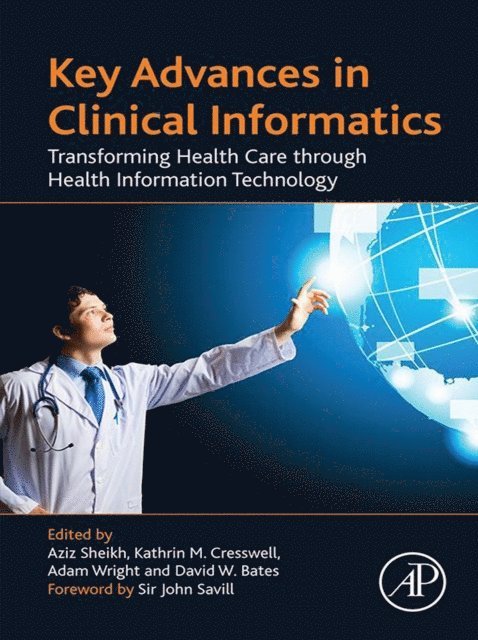
Key Advances in Clinical Informatics
Aziz Sheikh, David W. Bates, Adam Wright, Kathrin Cresswell
Häftad, 2017
1 028 kr
Key Advances in Clinical Informatics
Kathrin Cresswell, Adam Wright, David W. Bates, Aziz Sheikh
E-bok
20171 459 kr
Optimizing Strategies for Clinical Decision Support
The Learning Health System Series, National Academy of Medicine, James E. Tcheng, Suzanne Bakken, David W. Bates, Hugh Bonner III, Tejal K. Gandhi, Meredith Josephs, Kensaku Kawamoto, Edwin A. Lomotan, Erin Mackay, Blackford Middleton, Jonathan M. Teich, Scott Weingarten, Marianne Hamilton Lopez
E-bok
2023297 kr
Hoppa över listan



Du kanske också är intresserad av
Key Advances in Clinical Informatics
Kathrin Cresswell, Adam Wright, David W. Bates, Aziz Sheikh
E-bok
20171 459 kr
Optimizing Strategies for Clinical Decision Support
The Learning Health System Series, National Academy of Medicine, James E. Tcheng, Suzanne Bakken, David W. Bates, Hugh Bonner III, Tejal K. Gandhi, Meredith Josephs, Kensaku Kawamoto, Edwin A. Lomotan, Erin Mackay, Blackford Middleton, Jonathan M. Teich, Scott Weingarten, Marianne Hamilton Lopez
E-bok
2023297 kr
Key Advances in Clinical Informatics
Aziz Sheikh, David W. Bates, Adam Wright, Kathrin Cresswell
Häftad, 2017
1 028 kr
- -21%
- -16%
- Signerad!
Del 3
- Nyhet
Del 11