• Fri frakt över 249 kr
  • •
  • Snabba leveranser
  • •
  • Billiga böcker
Kundservice

Du är på sajten för privatpersoner.

Företag, bibliotek eller offentlig verksamhet?

Du handlar på classic.bokus.com, där alla dina funktioner finns intakta.
Till classic.bokus.com
Bokus logotyp. Gå till startsidan.
  • Erbjudanden
  • Nyheter
  • Student
  • Topplistor
  • Barn & ungdom
  • Bokus Play
  • E-böcker
  • Pocketböcker
  • Spel & pussel

10% rabatt på allt med kod: NYSTART10 →

Sidfot

Mina sidor

    Hjälp

    • Kundservice
    • Vanliga frågor och svar
    • Frakt och leverans
    • Retur vid ångerrätt
    • Reklamera vara
    • Betalning
    • Köpvillkor
    • Allmänna villkor
    • Information om webbplatsens tillgänglighet

    Om Bokus

    • Om oss
    • Pressrum
    • För studenter
    • För företag
    • För bibliotek och offentlig verksamhet
    • För leverantörer
    • Hållbarhet

    Populärt

    • Aktuella erbjudanden
    • Presentkort
    • Studentlitteratur
    • Nya böcker
    • Topplistor
    • Signerade böcker
    • Engelska böcker

    Inspiration

    • Boktips
    • BookTok
    • Populära bokserier
    • Barnbokskaraktärer
    • Populära författare
    Logotyp för Bokus
    Följ oss på Facebook (extern länk)Följ oss på Instagram (extern länk)Följ oss på YouTube (extern länk)Följ oss på TikTok (extern länk)
    bokus @ CookiesAnpassa cookiesIntegritetspolicyKöpvillkor
    Till Citymail hemsida (extern länk)Till Budbee hemsida (extern länk)Till Postnord hemsida (extern länk)Till Schenker hemsida (extern länk)Till Early Bird hemsida (extern länk)Till Walleys hemsida (extern länk)
    1. Historia och arkeologi
    2. Historia
    3. Asiens historia

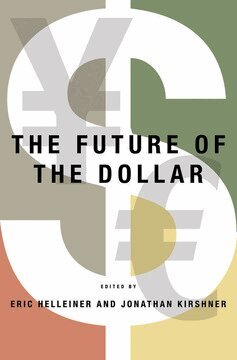
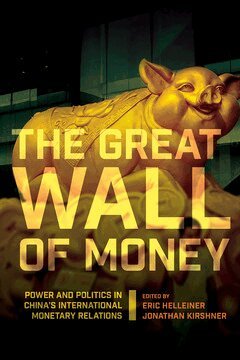
    Great Wall of Money

    Power and Politics in China's International Monetary Relations

    AvEric Helleiner,Jonathan Kirshner

    Inbunden, Engelska, 2014

    Del i serien Cornell Studies in Money

    907 kr

    Beställningsvara. Skickas inom 10-15 vardagar. Fri frakt över 249 kr.

    Beskrivning

    As an economic superpower, China has become an increasingly important player in the international monetary system. Its foreign exchange reserves are the largest in the world and its exchange rate policy has become a major subject of international economic diplomacy. The internationalization of the renminbi (RMB) raises critical questions in international policy circles: What kinds of power is China acquiring in international monetary relations? What are the priorities of the Chinese government? What explains its preferences? In The Great Wall of Money, a distinguished group of contributors addresses these questions from distinct perspectives, revealing the extent to which China's choices, and global monetary affairs, will be shaped by internal political factors and affect world politics. The RMB is a likely competitor for the dollar in the next couple of decades; its emergence as an important international currency would have substantial effects on the balance of power between the United States and China. By illuminating the politics of China's international monetary relations, this book provides a timely account of the global economy, the role of the renminbi in international relations, and the trajectory of China's continuing ascendency in the coming decades.
    Produktinformation

    • Utgivningsdatum:2014-09-08
    • Mått:152 x 229 x 27 mm
    • Vikt:907 g
    • Format:Inbunden
    • Språk:Engelska
    • Serie:Cornell Studies in Money
    • Antal sidor:288
    • Förlag:Cornell University Press
    • ISBN:9780801453090

    Utforska kategorier

    • Asiens historia inom Historia och arkeologi
    • Ekonomisk politik inom Ekonomi och Ledarskap
    • Internationella relationer inom Samhälle och politik

    Mer om författaren

    Eric Helleiner is Professor and Faculty of Arts Chair in International Political Economy, Department of Political Science and Balsillie School of International Affairs, University of Waterloo. He is the author of Forgotten Foundations of Bretton Woods, States and the Reemergence of Global Finance, and The Making of National Money, all from Cornell, and Towards North American Monetary Union? Jonathan Kirshner is Stephen and Barbara Friedman Professor of International Political Economy at Cornell University. He is the author most recently of Hollywood's Last Golden Age and American Power after the Financial Crisis, both from Cornell. Helleiner and Kirshner are coeditors of The Future of the Dollar, also from Cornell.

    Recensioner i media

    As Helleiner (Univ. of Waterloo, Canada) and Kirshner (Cornell Univ.) affirm, discussions of China's contemporary and potential future roles in global monetary relations have usually been framedthrough the narrow lens of economic analysis. By stressing power and politics as essential determinants of Chinese monetary policies, the contributors to this timely volume's eight chapters seek to redress this deficiency, approaching the subject from a wide range of perspectives. The essayists include both China scholars and international monetary specialists, and they focus widely on the various types of international monetary power the People's Republic of China (PRC) party-state is acquiring. These include financing payment imbalances; steadily gaining greater influence in key institutions, such as the International Monetary Fund; and fostering the global status of China's currency (renminbi). At issue is whether China will basically accept the existing rules of the international monetary game, demand significant changes in those rules, or breakcompletely with the current system. The divergent explanations in these essays of the PRC's priorities and preferencesmirror Beijing's own policy ambivalence. They suggest that although China has cautiously accepted but frequently critiqued the status quo, it has thus far conspicuously failed to offer any grand scheme to replace it.- R.P. Gardella (Choice) Eric Helleiner and Jonathan Kirshner's edited volume, which examines the role, rationale, and impact of decisionmaking in China's monetary and financial sectors, represents an important contribution to the literature on Chinese political economy. Offering readers an accessible examination of the nexus of political economy and power politics in China, this is a valuable addition to a rather under-researched field (though published material on business and management is quite extensive). While industry stakeholders and commentators have written extensively on China's currency reform, exchange rate policy, and IMF's Special Drawing Rights Basket, they offer little insight into the why—the motivations, players, andpriorities—behind China's approach to monetary policy and relations. In this volume, each chapter blends an impressive combination of research methods, expertise, and critical insights, filling this gap effectively.- Winnie King (H-Diplo) This excellent collection of essays, derived from a conference held in 2012, centres on the question posed by its editors, Eric Helleiner and Jonathan Kirshner, in the introduction: broadly speaking, will the world's second largest economy prove to be a 'taker', 'maker' or 'breaker'?- Kerry Brown (International Affairs) The Great Wall of Money is a timely and rigorous study on the role that power and politics play in forging China's international monetary relations.... [It] is highly recommended for scholars of international political economy of money and China specialists. As the book examines both international and domestic sources of China's international monetary policy, it will leave the reader with a deep sense of carefulness when it comes to the temptation to make sweeping judgements about China's rising monetary power.- Zhaohui Wang (China Review)

    Innehållsförteckning

    • Introduction: The Politics of China's International Monetary Relationsby Eric Helleiner and Jonathan Kirshner1. The China Question: Can Its Rise Be Accommodated?by Benjamin J. Cohen2. The Hidden History of China and the IMFby Eric Helleiner and Bessma Momani3. Why Has China Accumulated Such Large Foreign Reserves?by David A. Steinberg4. Global Imbalances and the Limits of the Exchange Rate Weaponby Hongying Wang5. China's Engagement with International Macroeconomic Policy Surveillanceby Andrew Walter6. The Limits of China's Monetary Diplomacyby Yang Jiang7. China's Rising Monetary Powerby Gregory Chin8. Regional Hegemony and an Emerging RMB Zoneby Jonathan KirshnerReferencesIndex