• Fri frakt över 249 kr
  • •
  • Snabba leveranser
  • •
  • Billiga böcker
Kundservice

Du är på sajten för privatpersoner.

Företag, bibliotek eller offentlig verksamhet?

Du handlar på classic.bokus.com, där alla dina funktioner finns intakta.
Till classic.bokus.com
Bokus logotyp. Gå till startsidan.
  • Erbjudanden
  • Nyheter
  • Student
  • Topplistor
  • Barn & ungdom
  • Bokus Play
  • E-böcker
  • Pocketböcker
  • Spel & pussel

10% rabatt på allt med kod NYSTART10 →

Sidfot

Mina sidor

    Hjälp

    • Kundservice
    • Vanliga frågor och svar
    • Frakt och leverans
    • Retur vid ångerrätt
    • Reklamera vara
    • Betalning
    • Köpvillkor
    • Allmänna villkor
    • Information om webbplatsens tillgänglighet

    Om Bokus

    • Om oss
    • Pressrum
    • För studenter
    • För företag
    • För bibliotek och offentlig verksamhet
    • För leverantörer
    • Hållbarhet

    Populärt

    • Aktuella erbjudanden
    • Presentkort
    • Studentlitteratur
    • Nya böcker
    • Topplistor
    • Signerade böcker
    • Engelska böcker

    Inspiration

    • Boktips
    • BookTok
    • Populära bokserier
    • Barnbokskaraktärer
    • Populära författare
    Logotyp för Bokus
    Följ oss på Facebook (extern länk)Följ oss på Instagram (extern länk)Följ oss på YouTube (extern länk)Följ oss på TikTok (extern länk)
    bokus @ CookiesAnpassa cookiesIntegritetspolicyKöpvillkor
    Till Citymail hemsida (extern länk)Till Budbee hemsida (extern länk)Till Postnord hemsida (extern länk)Till Schenker hemsida (extern länk)Till Early Bird hemsida (extern länk)Till Walleys hemsida (extern länk)
    1. Samhälle och politik
    2. Sociologi och antropologi
    3. Antropologi

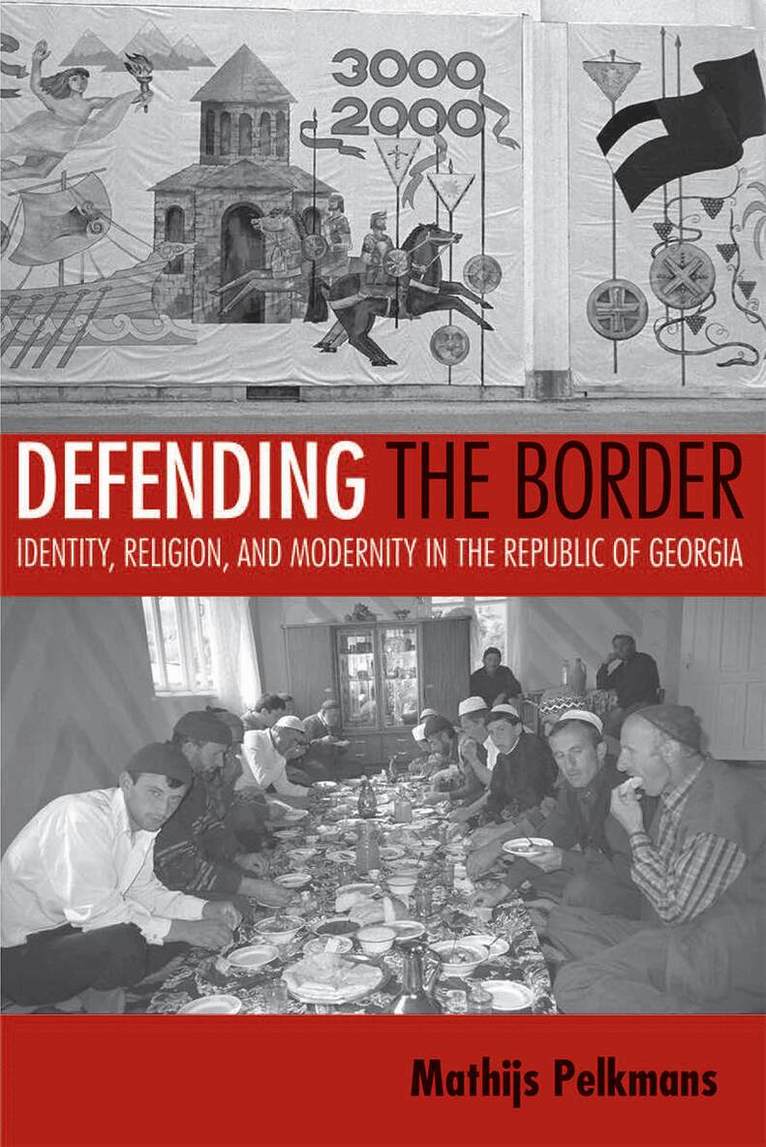
    Defending the Border

    Identity, Religion, and Modernity in the Republic of Georgia

    AvMathijs Pelkmans

    Häftad, Engelska, 2006

    Del i serien Culture and Society After Socialism

    307 kr

    Beställningsvara. Skickas inom 10-15 vardagar. Fri frakt över 249 kr.

    Fler format och utgåvor

    Inbunden

    1 666 kr

    Beskrivning

    This book, one of the first in English about everyday life in the Republic of Georgia, describes how people construct identity in a rapidly changing border region. Based on extensive ethnographic research, it illuminates the myriad ways residents of the Caucasus have rethought who they are since the collapse of the Soviet Union.Through an exploration of three towns in the southwest corner of Georgia, all of which are situated close to the Turkish frontier, Mathijs Pelkmans shows how social and cultural boundaries took on greater importance in the years of transition, when such divisions were expected to vanish. By tracing the fears, longings, and disillusionment that border dwellers projected on the Iron Curtain, Pelkmans demonstrates how elements of culture formed along and in response to territorial divisions, and how these elements became crucial in attempts to rethink the border after its physical rigidities dissolved in the 1990s.The new boundary-drawing activities had the effect of grounding and reinforcing Soviet constructions of identity, even though they were part of the process of overcoming and dismissing the past. Ultimately, Pelkmans finds that the opening of the border paradoxically inspired a newfound appreciation for the previously despised Iron Curtain as something that had provided protection and was still worth defending.

    Produktinformation

    • Utgivningsdatum:2006-09-20
    • Mått:152 x 229 x 19 mm
    • Vikt:454 g
    • Format:Häftad
    • Språk:Engelska
    • Serie:Culture and Society After Socialism
    • Antal sidor:256
    • Förlag:Cornell University Press
    • ISBN:9780801473302
    • Utmärkelser:Cowinner of the 2007 William A. Douglass Book Priz

    Utforska kategorier

    • Antropologi inom Samhälle och politik
    • Europas historia inom Historia och arkeologi

    Mer om författaren

    Mathijs Pelkmans is a Research Fellow at the Max Planck Institute for Social Anthropology.

    Recensioner i media

    "This book's careful, measured, and rich treatments of the everyday dilemmas faced by the residents of Ajaria provide a welcome and important counterpoint to the abstractions of geopolitics and transition economics that predominate in scholarship on Georgia. But it is no mere compilation of stories and narratives, nor is it of interest only to specialists in the Caucasus region. Pelkmans deftly theorizes borders throughout by attending to recent anthropological thinking on cultural objects and display, religious identities and conversions, and market transformations. Near the border, he suggests, culture, identity, religion, and economy refract in curious and analytically significant ways. To study these issues in one borderland, then, is also to grapple with the entire region behind the iron curtain and its postsocialist trajectories. Borders are of intense interest to all of us."—Douglas Rogers, Slavic Review, Winter 2007