• Fri frakt över 249 kr
  • •
  • Snabba leveranser
  • •
  • Billiga böcker
Kundservice

Du är på sajten för privatpersoner.

Företag, bibliotek eller offentlig verksamhet?

Du handlar på classic.bokus.com, där alla dina funktioner finns intakta.
Till classic.bokus.com
Bokus logotyp. Gå till startsidan.
  • Erbjudanden
  • Nyheter
  • Student
  • Topplistor
  • Barn & ungdom
  • Bokus Play
  • E-böcker
  • Pocketböcker
  • Spel & pussel

10% rabatt på allt med kod NYSTART10 →

Sidfot

Mina sidor

    Hjälp

    • Kundservice
    • Vanliga frågor och svar
    • Frakt och leverans
    • Retur vid ångerrätt
    • Reklamera vara
    • Betalning
    • Köpvillkor
    • Allmänna villkor
    • Information om webbplatsens tillgänglighet

    Om Bokus

    • Om oss
    • Pressrum
    • För studenter
    • För företag
    • För bibliotek och offentlig verksamhet
    • För leverantörer
    • Hållbarhet

    Populärt

    • Aktuella erbjudanden
    • Presentkort
    • Studentlitteratur
    • Nya böcker
    • Topplistor
    • Signerade böcker
    • Engelska böcker

    Inspiration

    • Boktips
    • BookTok
    • Populära bokserier
    • Barnbokskaraktärer
    • Populära författare
    Logotyp för Bokus
    Följ oss på Facebook (extern länk)Följ oss på Instagram (extern länk)Följ oss på YouTube (extern länk)Följ oss på TikTok (extern länk)
    bokus @ CookiesAnpassa cookiesIntegritetspolicyKöpvillkor
    Till Citymail hemsida (extern länk)Till Budbee hemsida (extern länk)Till Postnord hemsida (extern länk)Till Schenker hemsida (extern länk)Till Early Bird hemsida (extern länk)Till Walleys hemsida (extern länk)
    1. Samhälle och politik
    2. Samhälle och kultur
    3. Sociala och etiska frågor

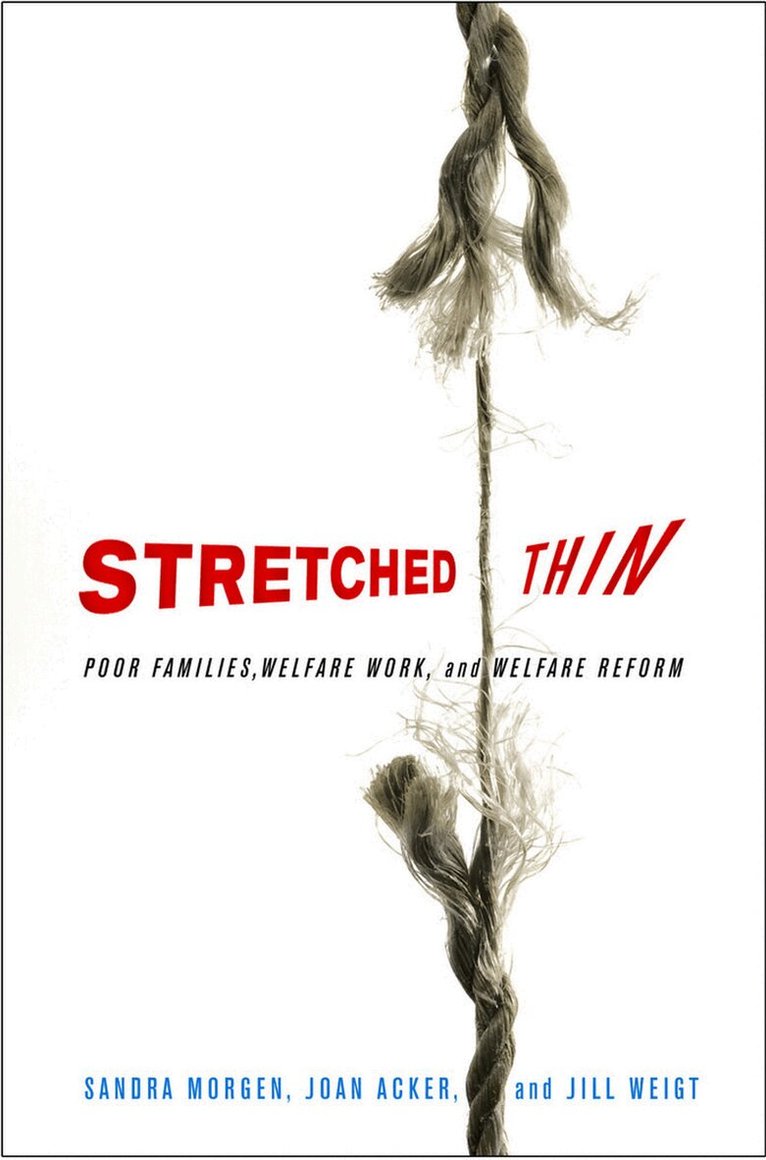
    Stretched Thin

    Poor Families, Welfare Work, and Welfare Reform

    AvSandra L. Morgen,Joan Acker

    Häftad, Engelska, 2010

    354 kr

    Beställningsvara. Skickas inom 10-15 vardagar. Fri frakt över 249 kr.

    Fler format och utgåvor

    Inbunden

    1 618 kr

    Beskrivning

    When the Personal Responsibility and Work Opportunity Reconciliation Act became law in 1996, the architects of welfare reform celebrated what they called the new "consensus" on welfare: that cash assistance should be temporary and contingent on recipients' seeking and finding employment. However, assessments about the assumptions and consequences of this radical change to the nation's social safety net were actually far more varied and disputed than the label "consensus" suggests. By examining the varied realities and accountings of welfare restructuring, Stretched Thin looks back at a critical moment of policy change and suggests how welfare policy in the United States can be changed to better address the needs of poor families and the nation. Using ethnographic observations, in-depth interviews with poor families and welfare workers, survey data tracking more than 750 families over two years, and documentary evidence, Sandra Morgen, Joan Acker, and Jill Weigt question the validity of claims that welfare reform has been a success. They show how poor families, welfare workers, and welfare administrators experienced and assessed welfare reform differently based on gender, race, class, and their varying positions of power and control within the welfare state. The authors document the ways that, despite the dramatic drop in welfare rolls, low-wage jobs and inadequate social supports left many families struggling in poverty. Revealing how the neoliberal principles of a drastically downsized welfare state and individual responsibility for economic survival were implemented through policies and practices of welfare provision and nonprovision, the authors conclude with new recommendations for reforming welfare policy to reduce poverty, promote economic security, and foster shared prosperity.


    Produktinformation

    • Utgivningsdatum:2010-01-15
    • Mått:155 x 235 x 16 mm
    • Vikt:454 g
    • Format:Häftad
    • Språk:Engelska
    • Antal sidor:256
    • Förlag:Cornell University Press
    • ISBN:9780801475108

    Utforska kategorier

    • Sociala och etiska frågor inom Samhälle och politik
    • Sociologi inom Samhälle och politik
    • Socialt arbete och välfärd inom Samhälle och politik

    Mer om författaren

    Sandra Morgen is Professor of Anthropology and Associate Dean of the Graduate School at the University of Oregon. She is author of books including Into Our Own Hands: The Women's Health Movement in the United States, 1969–1990 and coeditor most recently of Security Disarmed: Critical Perspectives on Gender, Race, and Militarization. Joan Acker is Professor Emerita of Sociology at the University of Oregon and author of Class Questions: Feminist Answers and Doing Comparable Worth: Gender, Class, and Pay Equity. Jill Weigt is Associate Professor of Sociology at California State University–San Marcos.

    Recensioner i media

    "This is a wonderfully thoughtful and illuminating book. For more than a decade, Sandra Morgen, Joan Acker, and Jill Weigt peered into the workings of the Oregon welfare system after the implementation of the draconian reform of 1996. The result is a closely observant picture of just what went on. We learn about the real human costs to mothers and children of the much-heralded shift to 'work first' and 'personal responsibility.' We also learn about the pressures on the staff of the local agencies as they tried to adapt a neoliberal policy designed in Washington to the exigencies of the lives of the poor and troubled people they were mandated to help."—Frances Fox Piven, Graduate Center of the City University of New York, coauthor (with Richard Cloward) of Regulating the Poor and Poor People's Movements

    Innehållsförteckning

    • PrologueIntroduction: Questioning the Success of Welfare Reform1. History and Political Economy of Welfare in the United States and Oregon2. Velvet Gloves, Iron Fists, and Rose-Colored Glasses: Welfare Administrators and the Official Story of Welfare Restructuring3. Doing the Work of Welfare: Enforcing "Self-Sufficiency" on the Front Lines4. Negotiating Neoliberal Ideology and "On the Ground" Reality in Welfare Work5. The Other Side of the Desk: Client Experiences and Perspectives on Welfare Restructuring6. Life after Welfare: The Costs of Low-Wage EmploymentConclusion: Reforming Welfare "Reform"Appendix: Situating OurselvesNotesBibliographyIndex