• Fri frakt över 249 kr
  • •
  • Snabba leveranser
  • •
  • Billiga böcker
Kundservice

Du är på sajten för privatpersoner.

Företag, bibliotek eller offentlig verksamhet?

Du handlar på classic.bokus.com, där alla dina funktioner finns intakta.
Till classic.bokus.com
Bokus logotyp. Gå till startsidan.
  • Erbjudanden
  • Student
  • Topplistor
  • Barn & ungdom
  • Bokus Play
  • E-böcker
  • Ljudböcker
  • Pocketböcker
  • Spel & pussel

Upp till 25% på utvalda nyheter →

Sidfot

Mina sidor

    Hjälp

    • Kundservice
    • Vanliga frågor och svar
    • Frakt och leverans
    • Retur vid ångerrätt
    • Reklamera vara
    • Betalning
    • Köpvillkor
    • Allmänna villkor
    • Information om webbplatsens tillgänglighet

    Om Bokus

    • Om oss
    • Pressrum
    • För studenter
    • För företag
    • För bibliotek och offentlig verksamhet
    • För leverantörer
    • Hållbarhet

    Populärt

    • Aktuella erbjudanden
    • Presentkort
    • Studentlitteratur
    • Nya böcker
    • Topplistor
    • Signerade böcker
    • Engelska böcker

    Inspiration

    • Boktips
    • BookTok
    • Populära bokserier
    • Barnbokskaraktärer
    • Populära författare
    Logotyp för Bokus
    Följ oss på Facebook (extern länk)Följ oss på Instagram (extern länk)Följ oss på YouTube (extern länk)Följ oss på TikTok (extern länk)
    bokus @ CookiesAnpassa cookiesIntegritetspolicyKöpvillkor
    Till Citymail hemsida (extern länk)Till Budbee hemsida (extern länk)Till Postnord hemsida (extern länk)Till Schenker hemsida (extern länk)Till Early Bird hemsida (extern länk)Till Walleys hemsida (extern länk)
    1. Samhälle och politik
    2. Krig och försvar
    3. Vapen och utrustning
    4. Kärnvapen

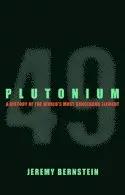
    Plutonium

    A History of the World's Most Dangerous Element

    AvJeremy Bernstein

    Häftad, Engelska, 2009

    235 kr

    Beställningsvara. Skickas inom 10-15 vardagar. Fri frakt över 249 kr.

    Beskrivning

    When plutonium was first manufactured at Berkeley in the spring of 1941, there was so little of it that it was not visible to the naked eye. It took a year to accumulate enough so that one could actually see it. Now so much has been produced that we don't know what to do to get rid of it. We have created a monster.The history of plutonium is as strange as the element itself. When scientists began looking for it, they did so simply in the spirit of inquiry, not certain whether there were still spots to fill on the periodic table. But the discovery of fission made it clear that this still-hypothetical element would be more than just a scientific curiosity—it could be the main ingredient of a powerful nuclear weapon. As it turned out, it is good for almost nothing else. Plutonium's nuclear potential put it at the heart of the World War II arms race—the Russians found out about it through espionage, the Germans through independent research, and everybody wanted some. Now it is warehoused around the world—the United States alone possesses about forty-seven metric tons—but it has almost no practical use outside its role in nuclear weaponry. How did the product of scientific curiosity become such a dangerous burden?In his history of this complex and dangerous element, noted physicist Jeremy Bernstein describes the steps that were taken to transform plutonium from a laboratory novelty into the nuclear weapon that destroyed Nagasaki. This is the first book to weave together the many strands of plutonium's story, explaining not only the science but also the people involved.

    Produktinformation

    • Utgivningsdatum:2009-05-15
    • Mått:130 x 216 x 13 mm
    • Vikt:454 g
    • Format:Häftad
    • Språk:Engelska
    • Antal sidor:216
    • Förlag:Cornell University Press
    • ISBN:9780801475177

    Utforska kategorier

    • Kärnvapen inom Samhälle och politik
    • Militärhistoria inom Historia och arkeologi
    • Naturvetenskapens historia inom Naturvetenskap och teknik

    Mer om författaren

    Jeremy Bernstein was a staff writer at the New Yorker for thirty-five years and is Professor Emeritus of Physics at the Stevens Institute of Technology. His books include Oppenheimer: Portrait of an Enigma.

    Recensioner i media

    Bernstein spins an accessible, insightful description of how the great scientists Curie, Bohr, Rutherford, and Fermi, among others, deconstructed the atom through a combination of individual brilliance, a spirit of collaboration, and serendipity.

    Innehållsförteckning

    • I. PreambleII. The History of UraniumIII. The Periodic TableIV. Frau Röntgen's HandV. Close CallsVI. FissionsVII. TransuranicsVIII. Plutonium Goes to WarIX. Los AlamosX. ElectronsXI. Now What?NotesCreditsIndex

    Betyg & recensioner

    4/5