• Fri frakt över 249 kr
  • •
  • Snabba leveranser
  • •
  • Billiga böcker
Kundservice

Du är på sajten för privatpersoner.

Företag, bibliotek eller offentlig verksamhet?

Du handlar på classic.bokus.com, där alla dina funktioner finns intakta.
Till classic.bokus.com
Bokus logotyp. Gå till startsidan.
  • Erbjudanden
  • Nyheter
  • Student
  • Topplistor
  • Barn & ungdom
  • Bokus Play
  • E-böcker
  • Pocketböcker
  • Spel & pussel

10% rabatt på allt med kod: NYSTART10 →

Sidfot

Mina sidor

    Hjälp

    • Kundservice
    • Vanliga frågor och svar
    • Frakt och leverans
    • Retur vid ångerrätt
    • Reklamera vara
    • Betalning
    • Köpvillkor
    • Allmänna villkor
    • Information om webbplatsens tillgänglighet

    Om Bokus

    • Om oss
    • Pressrum
    • För studenter
    • För företag
    • För bibliotek och offentlig verksamhet
    • För leverantörer
    • Hållbarhet

    Populärt

    • Aktuella erbjudanden
    • Presentkort
    • Studentlitteratur
    • Nya böcker
    • Topplistor
    • Signerade böcker
    • Engelska böcker

    Inspiration

    • Boktips
    • BookTok
    • Populära bokserier
    • Barnbokskaraktärer
    • Populära författare
    Logotyp för Bokus
    Följ oss på Facebook (extern länk)Följ oss på Instagram (extern länk)Följ oss på YouTube (extern länk)Följ oss på TikTok (extern länk)
    bokus @ CookiesAnpassa cookiesIntegritetspolicyKöpvillkor
    Till Citymail hemsida (extern länk)Till Budbee hemsida (extern länk)Till Postnord hemsida (extern länk)Till Schenker hemsida (extern länk)Till Early Bird hemsida (extern länk)Till Walleys hemsida (extern länk)
    1. Historia och arkeologi
    2. Historia
    3. Europas historia

    Birth of the Despot

    Venice and the Sublime Porte

    AvLucette Valensi

    Häftad, Engelska, 2009

    408 kr

    Beställningsvara. Skickas inom 10-15 vardagar. Fri frakt över 249 kr.

    Beskrivning

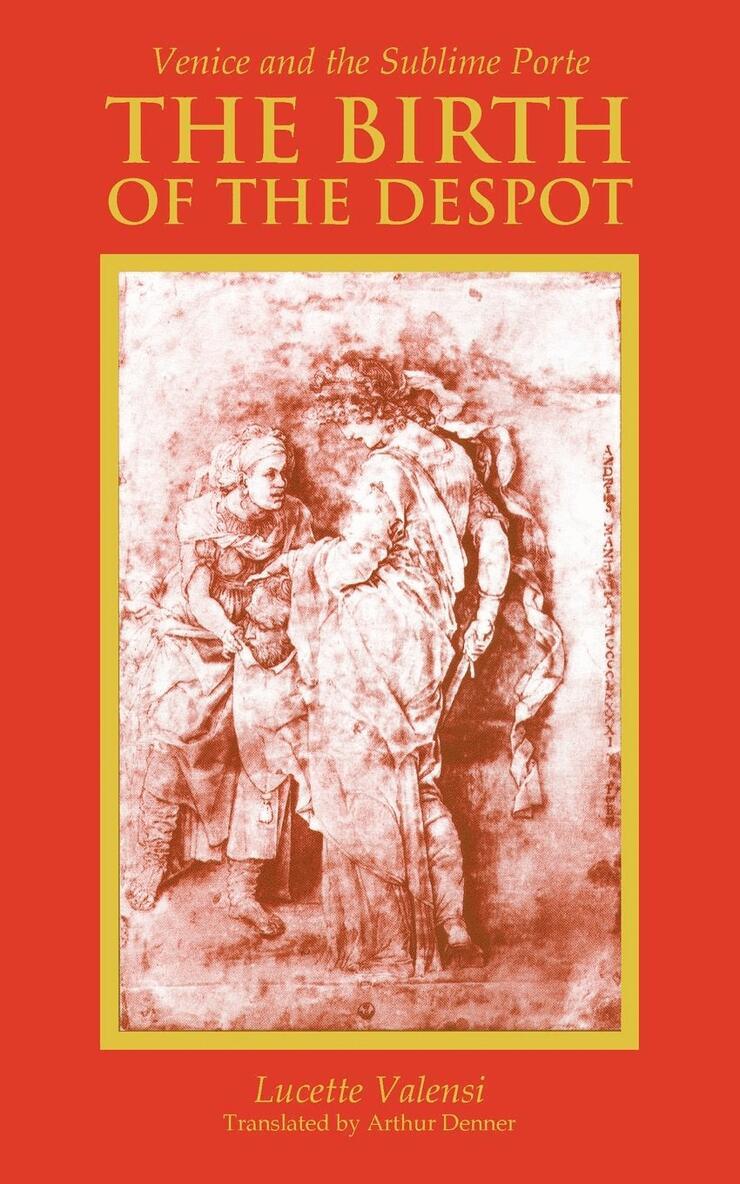
    In her graceful account of the transformation of European attitudes toward the Ottoman empire during the sixteenth and seventeenth centuries, Lucette Valensi follows the genealogy of the concept of Oriental despotism. The Birth of the Despot examines a crucial moment in the long and ambiguous encounter between the Christian and Islamic worlds: the period after the fall of Constantinople to the Turks, when Venice's pursuit of its commercial and maritime interests brought two powerful protagonists—Venice and the Sublime Porte—face-to-face.Vivaldi's oratorio Juditha Triumphans, in which Judith liberates her besieged town by killing the Turk Holofernes, serves as the organizing metaphor in Valensi's study of how Venice's perceptions of its rival changed. Valensi shows how Venice's initial admiration for the sultan and his orderly empire metamorphosed into revulsion at a monstrous tyrant.

    Produktinformation

    • Utgivningsdatum:2009-02-12
    • Mått:127 x 203 x 11 mm
    • Vikt:454 g
    • Format:Häftad
    • Språk:Engelska
    • Antal sidor:132
    • Förlag:Cornell University Press
    • ISBN:9780801475436
    • Översättare:Arthur Denner

    Utforska kategorier

    • Europas historia inom Historia och arkeologi
    • Politisk aktivism inom Samhälle och politik

    Mer om författaren

    Lucette Valensi is Director of the Center for Historical Research at the University of Cambridge, and Fellow of Emmanuel College.

    Recensioner i media

    In The Birth of the Despot, Lucette Valensi argues that the developing discourse on the Oriental despot indicated both disquiet at the prospect that that the Turks were more likely than any Christian king to reunite Europe, and reaction against domestic shifts in power from the nobility to kings and signori.... Her book is beautifully organized and written. Shaped like an oratorio, it follows a simple narrative line in intricate melodies that are pristine and classical in form.(Middle East Journal) Lucette Valensi's essay is an elegant, almost lyrical historical study.... Her study makes some important corrections to traditional assumptions of how Venetians perceived and appropriated the image of the Ottoman Empire in the early modern era.(Sixteenth Century Journal) Using reports read to the doge and senate by ambassadors and envoys extraordinary to the Porte on their return home, Lucette Valensi analyzes their portrayals of Sultans within the context of Renaissance literary traditions. The origins and etymological evolution of the word 'despot,' its attachment to the Sultans, and its emigration into contemporary usage in modern European languages form a central theme. Valensi tells a fascinating story, using the structure of Vivaldi's operatic rendition of the biblical parable of Judith and Holofernes as the organizing principle. She offers important historical insights as well, for Venice was surely better informed about the Turk than any other western polity. The story begins with visions of the Sultan as the model of an enlightened Renaissance prince in all but religion, and ends with an arbitrary and bloodthirsty Mehmet IV driven by strange appetites and unknowable impulses, the very image of Montesquieu's Oriental despot. The style is polished; the organization effective; the insights into the educational methods, rhetoric, and modes of thought of late Renaissance Venice fascinating.(The International History Review)