• Fri frakt över 249 kr
  • •
  • Snabba leveranser
  • •
  • Billiga böcker
Kundservice

Du är på sajten för privatpersoner.

Företag, bibliotek eller offentlig verksamhet?

Du handlar på classic.bokus.com, där alla dina funktioner finns intakta.
Till classic.bokus.com
Bokus logotyp. Gå till startsidan.
  • Erbjudanden
  • Nyheter
  • Student
  • Topplistor
  • Barn & ungdom
  • Bokus Play
  • E-böcker
  • Pocketböcker
  • Spel & pussel

10% rabatt på allt med kod NYSTART10 →

Sidfot

Mina sidor

    Hjälp

    • Kundservice
    • Vanliga frågor och svar
    • Frakt och leverans
    • Retur vid ångerrätt
    • Reklamera vara
    • Betalning
    • Köpvillkor
    • Allmänna villkor
    • Information om webbplatsens tillgänglighet

    Om Bokus

    • Om oss
    • Pressrum
    • För studenter
    • För företag
    • För bibliotek och offentlig verksamhet
    • För leverantörer
    • Hållbarhet

    Populärt

    • Aktuella erbjudanden
    • Presentkort
    • Studentlitteratur
    • Nya böcker
    • Topplistor
    • Signerade böcker
    • Engelska böcker

    Inspiration

    • Boktips
    • BookTok
    • Populära bokserier
    • Barnbokskaraktärer
    • Populära författare
    Logotyp för Bokus
    Följ oss på Facebook (extern länk)Följ oss på Instagram (extern länk)Följ oss på YouTube (extern länk)Följ oss på TikTok (extern länk)
    bokus @ CookiesAnpassa cookiesIntegritetspolicyKöpvillkor
    Till Citymail hemsida (extern länk)Till Budbee hemsida (extern länk)Till Postnord hemsida (extern länk)Till Schenker hemsida (extern länk)Till Early Bird hemsida (extern länk)Till Walleys hemsida (extern länk)
    1. Filosofi och religion
    2. Filosofi
    3. Filosofiska discipliner

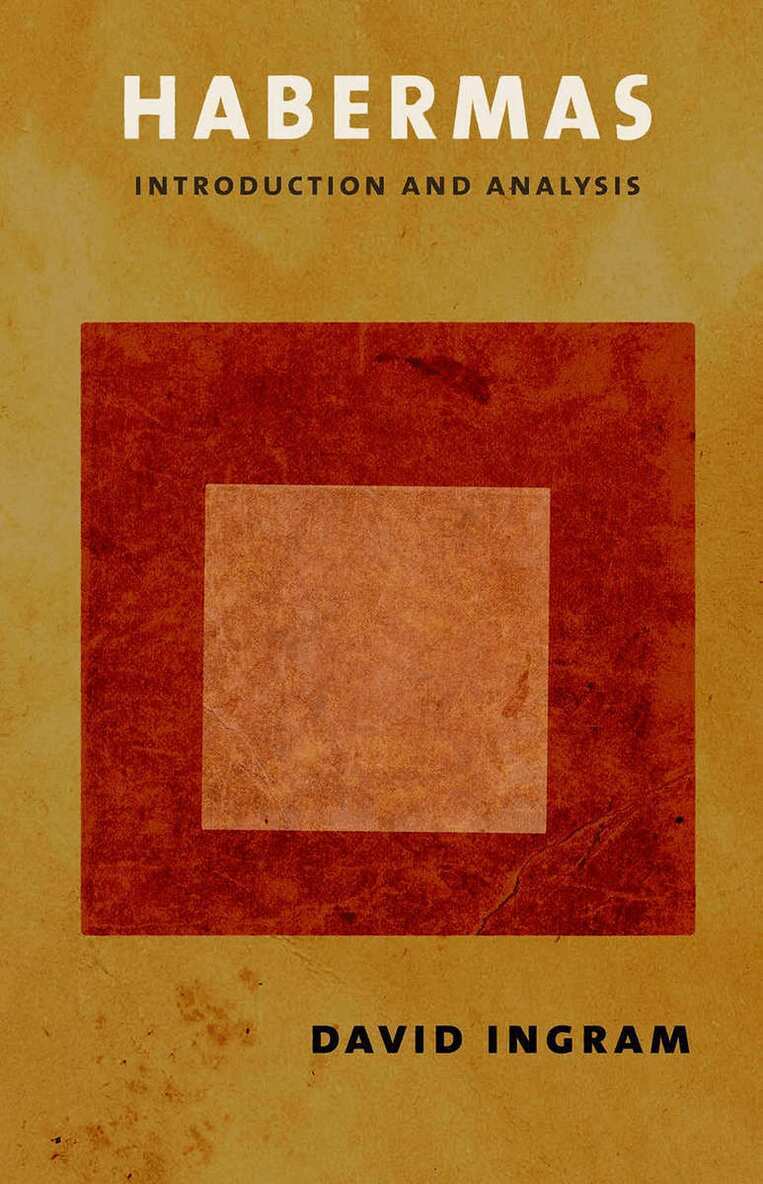
    Habermas

    Introduction and Analysis

    AvDavid Ingram

    Häftad, Engelska, 2010

    340 kr

    Beställningsvara. Skickas inom 10-15 vardagar. Fri frakt över 249 kr.

    Fler format och utgåvor

    Inbunden

    1 618 kr

    Beskrivning

    The work of Jürgen Habermas (b. 1929) has been highly influential both in philosophy and across many disciplines in the social sciences. David Ingram here provides an accessible introduction to Habermas's complex thought as it has evolved from 1953 to the present, spanning philosophy, religion, political science, social science, and law. One of today's most intriguing thinkers, Habermas is also notably prolific; for students and other readers who wish to navigate the philosopher's more than thirty books, the lucid and precise Habermas: Introduction and Analysis is a welcome starting point rich in insights.Ingram's book addresses the entire range of Habermas's social theory, including his most recent and widely discussed contributions to religion, freedom and determinism, global democracy, and the consolidation of the European Union. Recognizing Habermas's position as a highly public intellectual, Ingram discusses how Habermas applies his own theory to pressing problems such as abortion, terrorism, genetic engineering, immigration, multiculturalism, separation of religion and state, technology and mass media, feminism, and human rights. He also presents a detailed critical analysis of Habermas's key claims and arguments. Separate appendixes introduce and clarify such important concepts as causal, teleological, and narrative paradigms of explanation in action theory; contextualism versus rationalism in social scientific methods of interpretation; systems theory and functionalist explanation in social science; and decision and collective choice theory.

    Produktinformation

    • Utgivningsdatum:2010-09-15
    • Mått:155 x 235 x 22 mm
    • Vikt:907 g
    • Format:Häftad
    • Språk:Engelska
    • Antal sidor:384
    • Förlag:Cornell University Press
    • ISBN:9780801476013

    Utforska kategorier

    • Filosofiska discipliner inom Filosofi och religion

    Mer om författaren

    David Ingram is Professor of Philosophy at Loyola University Chicago. He is the author of many books, including Habermas and the Dialectic of Reason, Critical Theory and Philosophy, and Law: Key Concepts in Philosophy.

    Recensioner i media

    David Ingram has provided us with what is unquestionably the most comprehensive introduction to one of the most demanding systems of thought, without sacrificing critical distance.... The book not only explains Habermas but places him on the map of modern philosophy. The book is a versatile toolbox, which will make it a must for anyone aiming to teach Habermas or the transformations of Critical Theory in the last decades. Above all, however, it is also a substantive contribution to the tradition to which Habermas belongs, for it is a critique of reason by way of an immanent critique of communicative rationality itself.- Eduardo Mendieta (Notre Dame Philosophical Reviews)

    Innehållsförteckning

    • 1: A Public Intellectual Committed to ReasonHabermas's LifeFrom the Critique of Ideology to the Dialectic of EnlightenmentOutline of Chapters2: Habermas's Defense of Psychoanalytic Social ScienceThe Positivism Debate in German Social ScienceModern Nihilism: The Crisis of Science and the Theory/ Practice ProblemKnowledge and Human InterestsA Critique of Knowledge and Human Interests3: The Linguistic TurnTCA and the Dialectic of EnlightenmentSituating Habermas's Philosophy of LanguageTranscendental Philosophy of Language as Rational ReconstructionUniversal Pragmatics and Formal SemanticsFormal Pragmatics and Speech Act TheoryDiscourseCommunicative and Strategic Speech ActsA Critique of Universal Pragmatics4: Knowledge and Truth RevisitedSubject-Object Paradigms of KnowledgeInternal RealismReference and MeaningKnowledge and EvolutionMoral RealismIs Formal Pragmatism a Defensible Alternative to Realism and Contextualism?5: Discourse EthicsPractical Reason: Delimiting the Domain of the MoralThe Priority of the Right over the GoodModernity and Moral DevelopmentDeontological Moral Theory and Universalizability: Kant and RawlsMoral Cognitivism versus Moral SkepticismMoral Argumentation as DiscourseNeo-Aristotelian Objections and the Abortion ControversyJustification and ApplicationDiscourse Ethics Applied: Genetic Testing and the Future of Human NatureProblems and ParadoxesHabermas's Ideal of Argumentation: A Final Assessment6: Law and Democracy: Part I: The Foundational RightsModern Law and Morality: A Paradoxical Wedding of Facts and NormsSituating Habermas's Theory of Law and Democracy: Some Contemporary DebatesThe Sociological Genesis of Modern LawThe System of RightsNegative and Positive Rights (Duties)Constitutional FoundationsHuman Rights: Subsistence as a Test Case for a Juridical Conception of RightsFinal Thoughts on the Procedural Ideal of Deliberative Democracy7: Law and Democracy: Part II: Power and the Clash of ParadigmsDemocracy and the Powers of GovernmentThe Separation of PowersThe Transmission of Communicative Power: From Public Sphere to Government AdministrationDiscourse and AdjudicationThe Proceduralist Paradigm of Law and DemocracyA Concluding Assessment8: Law and Democracy: Part III: Applying the Proceduralist ParadigmSeparation of Church and State: The Public/ Private DistinctionGender Difference and the LawMulticulturalismImmigration9: Law and Democracy: Part IV: Social Complexity and a Critical AssessmentQuestioning the Proceduralist ParadigmSubstantive Economic Justice and Workplace DemocracyThe Technological Dimension of DemocracyRevolution and Democracy10: Crisis and Pathology: The Future of Democracy in a Global AgeCapitalism and the Crisis of DemocracySocial Pathologies and the Colonization of the LifeworldGlobalization: The New ChallengeCosmopolitan Democracy and Global Politics as a Response to Global CrisisPolitics and the Rule of Law in International RelationsThe Constitutionalization of International RelationsThe Limits of Democratization: A Critical Assessment11: Postsecular Postscript: Modernity and Its DiscontentsMarx on the Evolution of Modern SocietyWeber on Modernization and the Problem of MeaningSecularization and the Rationalization of the LifeworldBetween Past and Future: Art, Religion, and the Dialectic of Enlightenment RevisitedAppendix A: Explaining Action Appendix B: Understanding ActionAppendix C: Habermas and BrandomAppendix D: Developmental PsychologyAppendix E: Rational Choice TheoryAppendix F: Systems TheoryIndex