• Fri frakt över 249 kr
  • •
  • Snabba leveranser
  • •
  • Billiga böcker
Kundservice

Du är på sajten för privatpersoner.

Företag, bibliotek eller offentlig verksamhet?

Du handlar på classic.bokus.com, där alla dina funktioner finns intakta.
Till classic.bokus.com
Bokus logotyp. Gå till startsidan.
  • Erbjudanden
  • Nyheter
  • Student
  • Topplistor
  • Barn & ungdom
  • Bokus Play
  • E-böcker
  • Pocketböcker
  • Spel & pussel

10% rabatt på allt med kod: NYSTART10 →

Sidfot

Mina sidor

    Hjälp

    • Kundservice
    • Vanliga frågor och svar
    • Frakt och leverans
    • Retur vid ångerrätt
    • Reklamera vara
    • Betalning
    • Köpvillkor
    • Allmänna villkor
    • Information om webbplatsens tillgänglighet

    Om Bokus

    • Om oss
    • Pressrum
    • För studenter
    • För företag
    • För bibliotek och offentlig verksamhet
    • För leverantörer
    • Hållbarhet

    Populärt

    • Aktuella erbjudanden
    • Presentkort
    • Studentlitteratur
    • Nya böcker
    • Topplistor
    • Signerade böcker
    • Engelska böcker

    Inspiration

    • Boktips
    • BookTok
    • Populära bokserier
    • Barnbokskaraktärer
    • Populära författare
    Logotyp för Bokus
    Följ oss på Facebook (extern länk)Följ oss på Instagram (extern länk)Följ oss på YouTube (extern länk)Följ oss på TikTok (extern länk)
    bokus @ CookiesAnpassa cookiesIntegritetspolicyKöpvillkor
    Till Citymail hemsida (extern länk)Till Budbee hemsida (extern länk)Till Postnord hemsida (extern länk)Till Schenker hemsida (extern länk)Till Early Bird hemsida (extern länk)Till Walleys hemsida (extern länk)
    1. Ekonomi och Ledarskap
    2. Nationalekonomi
    3. Ekonomisk politik

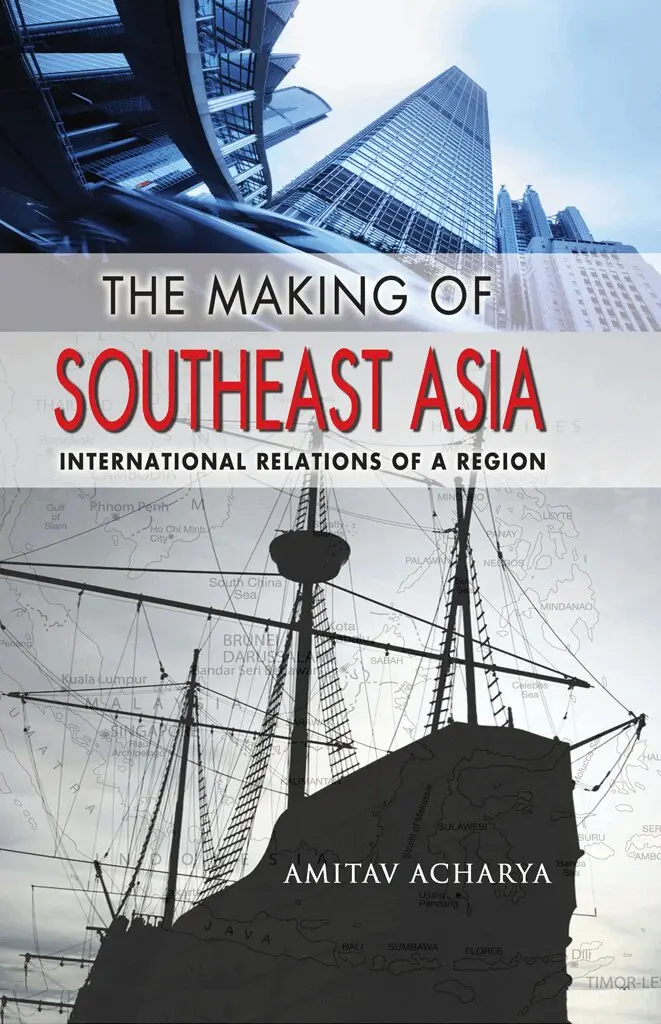
    Making of Southeast Asia

    International Relations of a Region

    AvAmitav Acharya

    Häftad, Engelska, 2013

    298 kr

    Beställningsvara. Skickas inom 10-15 vardagar. Fri frakt över 249 kr.

    Fler format och utgåvor

    E-bok

    926 kr

    Beskrivning

    Developing a framework to study "what makes a region," Amitav Acharya investigates the origins and evolution of Southeast Asian regionalism and international relations. He views the Association of Southeast Asian Nations (ASEAN) "from the bottom up" as not only a U.S.-inspired ally in the Cold War struggle against communism but also an organization that reflects indigenous traditions. Although Acharya deploys the notion of "imagined community" to examine the changes, especially since the Cold War, in the significance of ASEAN dealings for a regional identity, he insists that "imagination" is itself not a neutral but rather a culturally variable concept. The regional imagination in Southeast Asia imagines a community of nations different from NAFTA or NATO, the OAU, or the European Union.In this new edition of a book first published as The Quest for Identity in 2000, Acharya updates developments in the region through the first decade of the new century: the aftermath of the financial crisis of 1997, security affairs after September 2001, the long-term impact of the 2004 tsunami, and the substantial changes wrought by the rise of China as a regional and global actor. Acharya argues in this important book for the crucial importance of regionalism in a different part of the world.

    Produktinformation

    • Utgivningsdatum:2013-03-15
    • Mått:155 x 235 x 23 mm
    • Vikt:907 g
    • Format:Häftad
    • Språk:Engelska
    • Antal sidor:408
    • Förlag:Cornell University Press
    • ISBN:9780801477362

    Utforska kategorier

    • Ekonomisk politik inom Ekonomi och Ledarskap
    • Internationella relationer inom Samhälle och politik

    Mer om författaren

    Amitav Acharya is Professor of International Affairs at American University, Washington, D.C. He was Professor of Global Governance at the University of Bristol. He is the author of Whose Ideas Matter?: Agency and Power in Asian Regionalism, also from Cornell, and Constructing a Security Community in Southeast Asia and coeditor of Crafting Cooperation.

    Recensioner i media

    "As an introduction to the region, there is no better-written or more comprehensive volume available."-Robert H. Taylor, Asian Affairs "The book highHghts patterns of interaction and socialization among key actors in the region, along with those actors' perceptions of factors and forces external to the region that must be managed by the individual states and by the principal regional organization, ASEAN, which, understandably, continues to be marked by stress and strain. Well written and readable."-Choice (December 2013) "This comprehensive study is an updated and expanded version of the author's The Quest for Identity: International Relations of Southeast Asia (Oxford University Press, 2000). It adds to the original a solid overview of the international-relations policies that have shaped Southeast Asia since 1945, and an account of the developments since the Asian crisis of the late 1990s... [It]should be read by every student of Southeast Asia."-Vincent Houben, Bulletin of Indonesian Economic Studies(2013) "The debates that the book will engender promise to be fierce and constructive. Making is quickly becoming required reading for graduate courses around the Pacific. It can also be used in undergraduate teaching... And it is just the libretto that often-puzzled Western diplomats and political leaders need for understanding the history, players, and motives they encounter in a frenetic world of ASEAN diplomacy, of which they are a welcome but peripheral part."-Paul Evans, Pacific Affairs (March 2014) "This timely and important volume definitely adds something new to the existing academic discourse... [T]his book is systematically developed, theoretically sophisticated and richly documented. Its goals have been achieved as well"-Monir Hossain Moni, Political Studies Review (2015:457)

    Innehållsförteckning

    • Preface to the Second EditionForeword to the First Edition (The Quest for Identity)Chapter 1: Introduction: Region and Regionalism in the Making of Southeast AsiaChapter 2: Imagined Communities and Socially Constructed RegionsChapter 3: Imagining Southeast AsiaChapter 4: Nationalism, Regionalism, and the Cold War OrderChapter 5: The Evolution of Regional OrganizationChapter 6: Southeast Asia Divided: Polarization and ReconciliationChapter 7: Constructing "One Southeast Asia"Chapter 8: Globalization and the Crisis of Regional IdentityChapter 9: Whither Southeast Asia?Bibliography