• Fri frakt över 249 kr
  • •
  • Snabba leveranser
  • •
  • Billiga böcker
Kundservice

Du är på sajten för privatpersoner.

Företag, bibliotek eller offentlig verksamhet?

Du handlar på classic.bokus.com, där alla dina funktioner finns intakta.
Till classic.bokus.com
Bokus logotyp. Gå till startsidan.
  • Erbjudanden
  • Nyheter
  • Student
  • Topplistor
  • Barn & ungdom
  • Bokus Play
  • E-böcker
  • Pocketböcker
  • Spel & pussel

10% rabatt på allt med kod NYSTART10 →

Sidfot

Mina sidor

    Hjälp

    • Kundservice
    • Vanliga frågor och svar
    • Frakt och leverans
    • Retur vid ångerrätt
    • Reklamera vara
    • Betalning
    • Köpvillkor
    • Allmänna villkor
    • Information om webbplatsens tillgänglighet

    Om Bokus

    • Om oss
    • Pressrum
    • För studenter
    • För företag
    • För bibliotek och offentlig verksamhet
    • För leverantörer
    • Hållbarhet

    Populärt

    • Aktuella erbjudanden
    • Presentkort
    • Studentlitteratur
    • Nya böcker
    • Topplistor
    • Signerade böcker
    • Engelska böcker

    Inspiration

    • Boktips
    • BookTok
    • Populära bokserier
    • Barnbokskaraktärer
    • Populära författare
    Logotyp för Bokus
    Följ oss på Facebook (extern länk)Följ oss på Instagram (extern länk)Följ oss på YouTube (extern länk)Följ oss på TikTok (extern länk)
    bokus @ CookiesAnpassa cookiesIntegritetspolicyKöpvillkor
    Till Citymail hemsida (extern länk)Till Budbee hemsida (extern länk)Till Postnord hemsida (extern länk)Till Schenker hemsida (extern länk)Till Early Bird hemsida (extern länk)Till Walleys hemsida (extern länk)
    1. Ekonomi och Ledarskap
    2. Nationalekonomi
    3. Internationell ekonomi

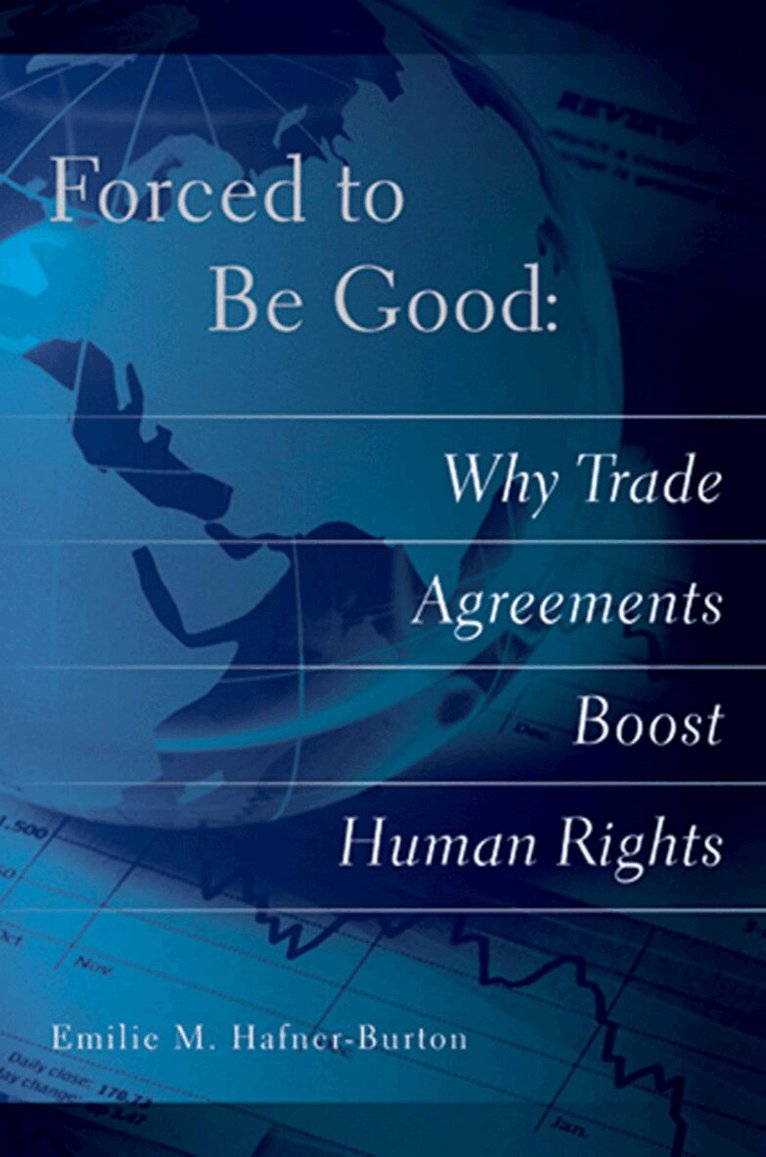
    Forced to Be Good

    Why Trade Agreements Boost Human Rights

    AvEmilie M. Hafner-Burton

    Häftad, Engelska, 2013

    423 kr

    Beställningsvara. Skickas inom 10-15 vardagar. Fri frakt över 249 kr.

    Fler format och utgåvor

    Inbunden

    729 kr

    Beskrivning

    Preferential trade agreements have become common ways to protect or restrict access to national markets in products and services. The United States has signed trade agreements with almost two dozen countries as close as Mexico and Canada and as distant as Morocco and Australia. The European Union has done the same. In addition to addressing economic issues, these agreements also regulate the protection of human rights. In Forced to Be Good Emilie M. Hafner-Burton tells the story of the politics of such agreements and of the ways in which governments pursue market integration policies that advance their own political interests, including human rights.How and why do global norms for social justice become international regulations linked to seemingly unrelated issues, such as trade? Hafner-Burton finds that the process has been unconventional. Efforts by human rights advocates and labor unions to spread human rights ideals, for example, do not explain why American and European governments employ preferential trade agreements to protect human rights. Instead, most of the regulations protecting human rights are codified in global moral principles and laws only because they serve policymakers' interests in accumulating power or resources or solving other problems. Otherwise, demands by moral advocates are tossed aside.And, as Hafner-Burton shows, even the inclusion of human rights protections in trade agreements is no guarantee of real change, because many of the governments that sign on to fair trade regulations oppose such protections and do not intend to force their implementation. Ultimately, Hafner-Burton finds that, despite the difficulty of enforcing good regulations and the less-than-noble motives for including them, trade agreements that include human rights provisions have made a positive difference in the lives of some of the people they are intended-on paper, at least-to protect.

    Produktinformation

    • Utgivningsdatum:2013-09-05
    • Mått:152 x 229 x 18 mm
    • Vikt:454 g
    • Format:Häftad
    • Språk:Engelska
    • Antal sidor:240
    • Förlag:Cornell University Press
    • ISBN:9780801479250

    Utforska kategorier

    • Internationell ekonomi inom Ekonomi och Ledarskap
    • Filosofiska discipliner inom Filosofi och religion
    • Politiskt förtryck inom Samhälle och politik

    Mer om författaren

    Emilie M. Hafner-Burton is Professor at the School of International Relations and Pacific Studies and the Department of Political Science and director of the Laboratory on International Law and Regulation at the University of California, San Diego.

    Recensioner i media

    "Forced to Be Good is fascinating and important. Emilie M. Hafner-Burton provides a compelling account of how the United States and Europe have used preferential trade arrangements to protect human rights in foreign countries. Her book poses a key challenge to the conventional wisdom on how norms of justice spread, and it will be of substantial interest to scholars and policymakers alike."—Edward D. Mansfield, Hum Rosen Professor of Political Science, University of Pennsylvania

    Innehållsförteckning

    • AcknowledgmentsAbbreviationsIntroductionChapter 1. Coercing Human RightsChapter 2. A Path to AnswersChapter 3. PreferencesChapter 4. InstitutionsChapter 5. PowerChapter 6. EffectsChapter 7. The FutureAppendix