• Fri frakt över 249 kr
  • •
  • Snabba leveranser
  • •
  • Billiga böcker
Kundservice

Du är på sajten för privatpersoner.

Företag, bibliotek eller offentlig verksamhet?

Du handlar på classic.bokus.com, där alla dina funktioner finns intakta.
Till classic.bokus.com
Bokus logotyp. Gå till startsidan.
  • Erbjudanden
  • Nyheter
  • Student
  • Topplistor
  • Barn & ungdom
  • Bokus Play
  • E-böcker
  • Pocketböcker
  • Spel & pussel

10% rabatt på allt med kod NYSTART10 →

Sidfot

Mina sidor

    Hjälp

    • Kundservice
    • Vanliga frågor och svar
    • Frakt och leverans
    • Retur vid ångerrätt
    • Reklamera vara
    • Betalning
    • Köpvillkor
    • Allmänna villkor
    • Information om webbplatsens tillgänglighet

    Om Bokus

    • Om oss
    • Pressrum
    • För studenter
    • För företag
    • För bibliotek och offentlig verksamhet
    • För leverantörer
    • Hållbarhet

    Populärt

    • Aktuella erbjudanden
    • Presentkort
    • Studentlitteratur
    • Nya böcker
    • Topplistor
    • Signerade böcker
    • Engelska böcker

    Inspiration

    • Boktips
    • BookTok
    • Populära bokserier
    • Barnbokskaraktärer
    • Populära författare
    Logotyp för Bokus
    Följ oss på Facebook (extern länk)Följ oss på Instagram (extern länk)Följ oss på YouTube (extern länk)Följ oss på TikTok (extern länk)
    bokus @ CookiesAnpassa cookiesIntegritetspolicyKöpvillkor
    Till Citymail hemsida (extern länk)Till Budbee hemsida (extern länk)Till Postnord hemsida (extern länk)Till Schenker hemsida (extern länk)Till Early Bird hemsida (extern länk)Till Walleys hemsida (extern länk)
    1. Samhälle och politik
    2. Politik och statsskick
    3. Centralt styre och förvaltning

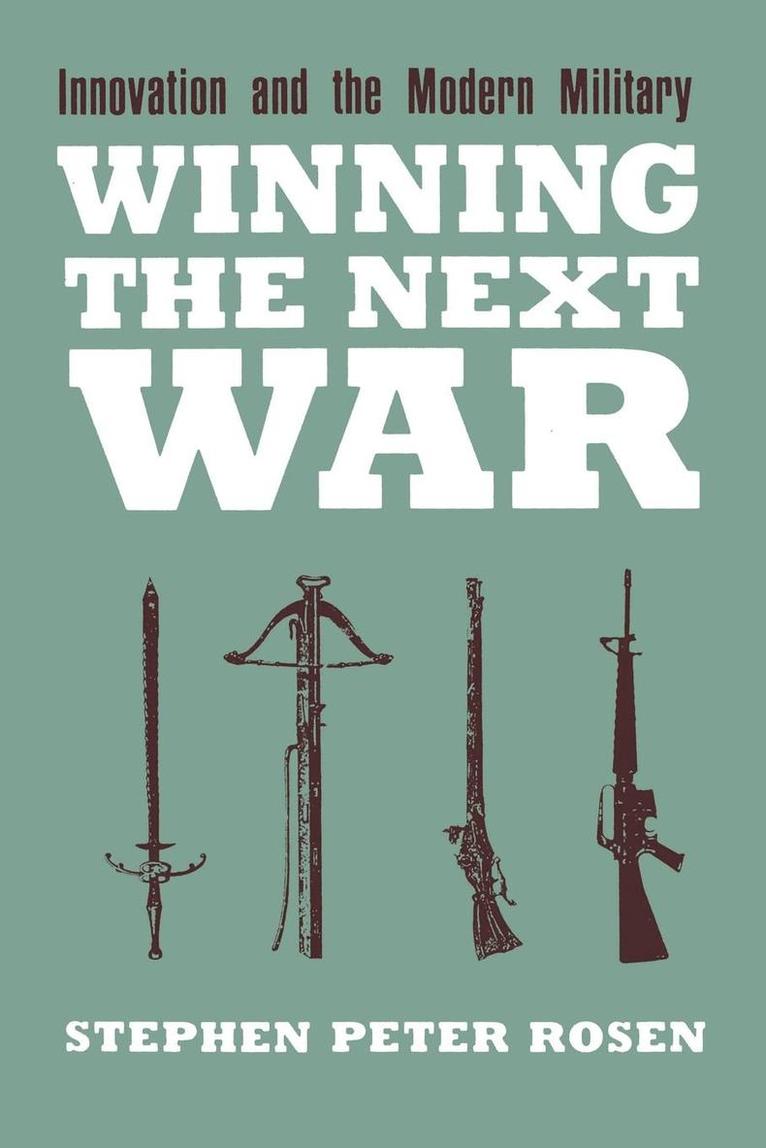
    Winning the Next War

    Innovation and the Modern Military

    AvStephen Peter Rosen

    Häftad, Engelska, 1994

    Del i serien Cornell Studies in Security Affairs

    396 kr

    Beställningsvara. Skickas inom 10-15 vardagar. Fri frakt över 249 kr.

    Fler format och utgåvor

    Inbunden

    729 kr

    Beskrivning

    How and when do military innovations take place? Do they proceed differently during times of peace and times of war? In Winning the Next War, Stephen Peter Rosen argues that armies and navies are not forever doomed to "fight the last war." Rather, they are able to respond to shifts in the international strategic situation. He also discusses the changing relationship between the civilian innovator and the military bureaucrat.In peacetime, Rosen finds, innovation has been the product of analysis and the politics of military promotion, in a process that has slowly but successfully built military capabilities critical to American military success. In wartime, by contrast, innovation has been constrained by the fog of war and the urgency of combat needs. Rosen draws his principal evidence from U.S. military policy between 1905 and 1960, though he also discusses the British army's experience with the battle tank during World War I.

    Produktinformation

    • Utgivningsdatum:1994-05-03
    • Mått:154 x 235 x 19 mm
    • Vikt:400 g
    • Format:Häftad
    • Språk:Engelska
    • Serie:Cornell Studies in Security Affairs
    • Antal sidor:288
    • Förlag:Cornell University Press
    • ISBN:9780801481963
    • Utmärkelser:Winner, 1992 Edgar S. Furniss Book Award (Mershon

    Utforska kategorier

    • Centralt styre och förvaltning inom Samhälle och politik
    • Militär strategi inom Samhälle och politik

    Mer om författaren

    Stephen Peter Rosen is Harvard College Professor and Beton Michael Kaneb Professor of National Security and Military Affairs at Harvard University. He is the author of Societies and Military Power: India and Its Armies, also from Cornell.

    Recensioner i media

    Professionals interested in national security will find it hard to ignore this book.... Rosen recounts how major innovations in the twentieth century changed the way wars were fought. His underlying message is that understanding the process of innovation holds more importance to winning future wars than focusing on any particular change in weapons, organizations, or tactics.... Rosen crafts his book with a historian's eye for the facts and a political scientist's willingness to draw conclusions.(Military Review) What makes for innovations in war-making? The answers of this careful study, based primarily on American military experiences in the twentieth century, run refreshingly against intuition: innovation seems easier in peacetime than war, for the fog of the latter covers all; it is no harder during periods of budgetary austerity than in flusher times; it is neither much connected to better intelligence about would-be foes nor much influenced by civilian leaders or thinkers. Those answers bear heeding now that the United States can no longer afford to build everything and then see what works.(Foreign Affairs)