• Fri frakt över 249 kr
  • •
  • Snabba leveranser
  • •
  • Billiga böcker
Kundservice

Du är på sajten för privatpersoner.

Företag, bibliotek eller offentlig verksamhet?

Du handlar på classic.bokus.com, där alla dina funktioner finns intakta.
Till classic.bokus.com
Bokus logotyp. Gå till startsidan.
  • Erbjudanden
  • Nyheter
  • Student
  • Topplistor
  • Barn & ungdom
  • Bokus Play
  • E-böcker
  • Pocketböcker
  • Spel & pussel

10% rabatt på allt med kod: NYSTART10 →

Sidfot

Mina sidor

    Hjälp

    • Kundservice
    • Vanliga frågor och svar
    • Frakt och leverans
    • Retur vid ångerrätt
    • Reklamera vara
    • Betalning
    • Köpvillkor
    • Allmänna villkor
    • Information om webbplatsens tillgänglighet

    Om Bokus

    • Om oss
    • Pressrum
    • För studenter
    • För företag
    • För bibliotek och offentlig verksamhet
    • För leverantörer
    • Hållbarhet

    Populärt

    • Aktuella erbjudanden
    • Presentkort
    • Studentlitteratur
    • Nya böcker
    • Topplistor
    • Signerade böcker
    • Engelska böcker

    Inspiration

    • Boktips
    • BookTok
    • Populära bokserier
    • Barnbokskaraktärer
    • Populära författare
    Logotyp för Bokus
    Följ oss på Facebook (extern länk)Följ oss på Instagram (extern länk)Följ oss på YouTube (extern länk)Följ oss på TikTok (extern länk)
    bokus @ CookiesAnpassa cookiesIntegritetspolicyKöpvillkor
    Till Citymail hemsida (extern länk)Till Budbee hemsida (extern länk)Till Postnord hemsida (extern länk)Till Schenker hemsida (extern länk)Till Early Bird hemsida (extern länk)Till Walleys hemsida (extern länk)
    1. Filosofi och religion
    2. Filosofi
    3. Filosofiska discipliner

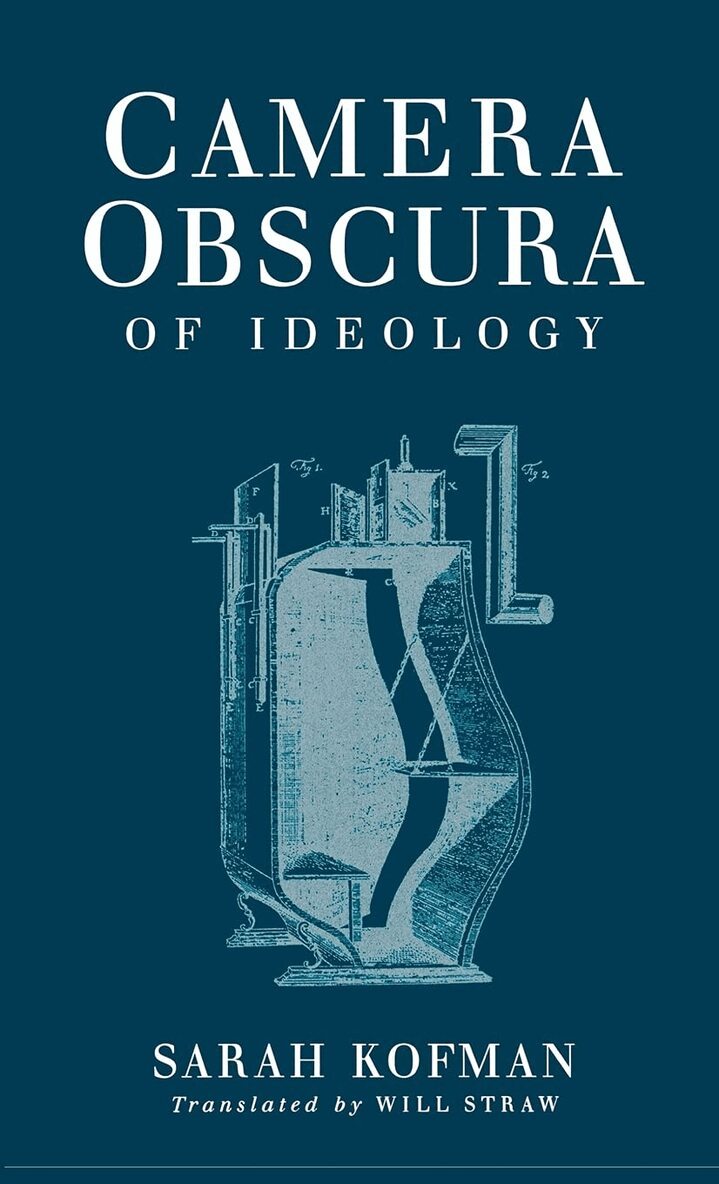
    Camera Obscura

    Of Ideology

    AvSarah Kofman

    Häftad, Engelska, 1998

    726 kr

    Beställningsvara. Skickas inom 3-6 vardagar. Fri frakt över 249 kr.

    Fler format och utgåvor

    Inbunden

    2 211 kr

    Beskrivning

    Marx, Freud, Nietzsche—in vastly different ways all three employed the metaphor of the camera obscura in their work. In this classic book—at last available in an English translation—the distinguished French philosopher Sarah Kofman offers an extended reflection on this metaphor. She contrasts the mechanical function of the camera obscura as a kind of copy machine, rendering a mirror-image of the work, with its use in the writings of master thinkers. In her opening chapter on Marx, Kofman provides a reading of inversion as necessary to the ideological process. She then explores the metaphor of the camera obscura in Freud's description of the unconscious. For Nietzsche the camera obscura is a "metaphor for forgetting." Kofman asks here whether the "magical apparatus" of the camera obscura, rather than bringing about clarity, serves some thinkers as fetish. Camera Obscura is a powerful discussion of a metaphor that dominates contemporary theory from philosophy to film.

    Produktinformation

    • Utgivningsdatum:1998-12-10
    • Mått:203 x 140 x undefined mm
    • Vikt:170 g
    • Format:Häftad
    • Språk:Engelska
    • Antal sidor:112
    • Förlag:Cornell University Press
    • ISBN:9780801485930
    • Översättare:Will Straw

    Utforska kategorier

    • Filosofiska discipliner inom Filosofi och religion

    Mer om författaren

    SARAH KOFMAN held the Chair of Philosophy at the University of Paris I. Among her numerous books are Socrates: Fictions of a Philosopher and The Enigma of Woman: Woman in Freud's Writings, both published by Cornell. WILL STRAW is Associate Professor in the Graduate Program in Communications at McGill University.

    Recensioner i media

    "The first English translation of Camera Obscura, de l'ideology (originally published in Paris in 1973), Kofman discusses the use of the image of the camera obscura in the work of Marx, Freud, and Nietzsche. . . .Kofman provides an insightful look at Marx's use of the idea of inversion—as this is supposed to occur both in a camera obscura and in ideology. She interprets Marx to hold that religion is not only a form of ideology, but 'the form of every ideology.' Kofman draws useful connections among Marx, Freud, and Nietzsche, who all draw attention to something—ideology or the unconscious or perspective—as a powerful (but often unrecognized) part of human life."—Choice, November 1999, Vol. 37, No. 3