• Fri frakt över 249 kr
  • •
  • Snabba leveranser
  • •
  • Billiga böcker
Kundservice

Du är på sajten för privatpersoner.

Företag, bibliotek eller offentlig verksamhet?

Du handlar på classic.bokus.com, där alla dina funktioner finns intakta.
Till classic.bokus.com
Bokus logotyp. Gå till startsidan.
  • Erbjudanden
  • Nyheter
  • Student
  • Topplistor
  • Barn & ungdom
  • Bokus Play
  • E-böcker
  • Pocketböcker
  • Spel & pussel

Må bättre, för mindre! Upp till 50% rabatt på hälsoböcker

Sidfot

Mina sidor

    Hjälp

    • Kundservice
    • Vanliga frågor och svar
    • Frakt och leverans
    • Retur vid ångerrätt
    • Reklamera vara
    • Betalning
    • Köpvillkor
    • Allmänna villkor
    • Information om webbplatsens tillgänglighet

    Om Bokus

    • Om oss
    • Pressrum
    • För studenter
    • För företag
    • För bibliotek och offentlig verksamhet
    • För leverantörer
    • Hållbarhet

    Populärt

    • Aktuella erbjudanden
    • Presentkort
    • Studentlitteratur
    • Nya böcker
    • Topplistor
    • Signerade böcker
    • Engelska böcker

    Inspiration

    • Boktips
    • BookTok
    • Populära bokserier
    • Barnbokskaraktärer
    • Populära författare
    Logotyp för Bokus
    Följ oss på Facebook (extern länk)Följ oss på Instagram (extern länk)Följ oss på YouTube (extern länk)Följ oss på TikTok (extern länk)
    bokus @ CookiesAnpassa cookiesIntegritetspolicyKöpvillkor
    Till Citymail hemsida (extern länk)Till Budbee hemsida (extern länk)Till Postnord hemsida (extern länk)Till Schenker hemsida (extern länk)Till Early Bird hemsida (extern länk)Till Walleys hemsida (extern länk)
    1. Historia och arkeologi
    2. Historia
    3. Historia: särskilda händelser och ämnen
    4. Socialhistoria och kulturhistoria

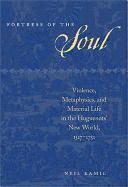
    Fortress of the Soul

    Violence, Metaphysics, and Material Life in the Huguenots' New World, 1517-1751

    AvNeil Kamil

    Inbunden, Engelska, 2005

    Del i serien Early America: History, Context, Culture

    894 kr

    Tillfälligt slut

    Beskrivning

    French Huguenots made enormous contributions to the life and culture of colonial New York during the seventeenth and eighteenth centuries. Huguenot craftsmen were the city's most successful artisans, turning out unrivaled works of furniture which were distinguished by unique designs and arcane details. More than just decorative flourishes, however, the visual language employed by Huguenot artisans reflected a distinct belief system shaped during the religious wars of sixteenth-century France. In Fortress of the Soul, historian Neil Kamil traces the Huguenots' journey to New York from the Aunis-Saintonge region of southwestern France. There, in the sixteenth century, artisans had created a subterranean culture of clandestine workshops and meeting places inspired by the teachings of Bernard Palissy, a potter, alchemist, and philosopher who rejected the communal, militaristic ideology of the Huguenot majority which was centered in the walled city of La Rochelle.Palissy and his followers instead embraced a more fluid, portable, and discrete religious identity that encouraged members to practice their beliefs in secret while living safely-even prospering-as artisans in hostile communities. And when these artisans first fled France for England and Holland, then left Europe for America, they carried with them both their skills and their doctrine of artisanal security. Drawing on significant archival research and fresh interpretations of Huguenot material culture, Kamil offers an exhaustive and sophisticated study of the complex worldview of the Huguenot community. From the function of sacred violence and alchemy in the visual language of Huguenot artisans, to the impact among Protestants everywhere of the destruction of La Rochelle in 1628, to the ways in which New York's Huguenots interacted with each other and with other communities of religious dissenters and refugees, Fortress of the Soul brilliantly places American colonial history and material life firmly within the larger context of the early modern Atlantic world.

    Produktinformation

    • Utgivningsdatum:2005-04-08
    • Mått:178 x 254 x 54 mm
    • Vikt:2 404 g
    • Format:Inbunden
    • Språk:Engelska
    • Serie:Early America: History, Context, Culture
    • Antal sidor:1 088
    • Förlag:Johns Hopkins University Press
    • ISBN:9780801873904

    Utforska kategorier

    • Socialhistoria och kulturhistoria inom Historia och arkeologi
    • Religion: allmänt inom Filosofi och religion

    Mer om författaren

    Neil Kamil is an associate professor of history at the University of Texas at Austin.

    Recensioner i media

    Well-researched tome that is 'the story of a subterranean culture on the move, its membership fragmented by chronic warfare, exclusion, and political instability and actively in search of new modes of security.' Maine Antique Digest 2005 Imaginative and innovative treatment of the French Reformation. Renaissance Quarterly 2006 This lavish volume presents a wide-ranging and complex reading of its rather amorphous subject. -- Carla Gardina Pestana Journal of American History 2006 Fortress of the Soul demands deep respect from its readers... quite evidently the product of decades of scholarly labor. -- Glenn Adamson Studies in the Decorative Arts 2007 Ambitious in its goals, complex in its interpretation and methodology, and groundbreaking in its approach. -- Gayle K. Brunelle Itinerario: European Journal of Overseas History 2006 Fortress of the Soul... opens up prospects for new directions in early American scholarship. -- Mark A. Peterson William and Mary Quarterly 2007 Throughout, the Fortress of the Soul displays considerable erudition and substantial energy. -- Raymond A. Mentzer Sixteenth Century Journal 2007 It is clear that this study will be a landmark study, a monument in the intellectual and material history of the early modern Atlantic world. -- John L. Brooke Winterthur Portfolio 2007 Kamil's innovative historical monograph richly deserves to be described as interdisciplinary. Journal of Interdisciplinary History 2007 A monumental work on a number of levels. -- Mary Henninger-Voss Technology and Culture 2007 A brilliant, controversial book, full of fireworks, some real Huguenot rockets, and some metaphysical damp squibs. -- Mark Greengrass Proceedings of the Huguenot Society of Great Britain & Ireland 2006

    Innehållsförteckning

    • List of Figures and MapsPrefaceIntroductionPart I: The Art of the EarthChapter 1. A Risky Gift: The Entrance of Charles IX into La Rochelle in 1565Chapter 2. Palissy's Fortress: The Construction of Artisanal SecurityChapter 3. Personal History and "Spiritual Honor": Philibert Hamelin's Consideration of Straight Lines and the Rehabilitation of the Nicodemite as Huguenot Artisan of SecurityChapter 4. War and Sûreté: The Context of Artisanal Enthusiasm in Aunis-SaintongeChapter 5. Scenes of Reading: Rustic Artisans and the Diffusion of Paracelsian Discourses to New WorldsChapter 6. American Rustic Scenes: Bernard Palissy, John Winthrop the Younger, and Benjamin FranklinChapter 7. The River and Nebuchadnezzar's Dream: War, Separation, "the Sound," and the Materiality of TimeChapter 8. The Art of the EarthPart II: The Fragmentation of the BodyChapter 9. "In Patientia Sauvitas," or, The Invisible Fortress DepartsChapter 10. Being "at the Île of Rue": Science, Secrecy, and Security at the Siege of La Rochelle, 1627–1635Chapter 11. The Geography of "Your Native Country": Relocation of Spatial Identity to the New World, 1628–1787Chapter 12. La Rochelle's Transatlantic Body: The Commons Debates of 1628Chapter 13. "Fraudulent father-Frenchmen": The Huguenot Counterfeit and the Threat to England's Internal SecurityChapter 14. "The destruction that wasteth at noonday": Hogarth's Hog Lane and the Huguenot Fortress of MemoryPart III: The Secrets of the CraftChapter 15. Hidden in Plain Sight: Disappearance and Material Life in Colonial New YorkChapter 16. Fragments of Huguenot-Quaker Convergence in New York: Little Histories (Avignon, France, 1601–1602; Flushing, Long Island, 1657–1726)Chapter 17. Reflections on a Three-Legged Chair: Sundials, "Family Pieces," and Political Culture in Pre-Revolutionary New YorkNotesIndex