• Fri frakt över 249 kr
  • •
  • Snabba leveranser
  • •
  • Billiga böcker
Kundservice

Du är på sajten för privatpersoner.

Företag, bibliotek eller offentlig verksamhet?

Du handlar på classic.bokus.com, där alla dina funktioner finns intakta.
Till classic.bokus.com
Bokus logotyp. Gå till startsidan.
  • Erbjudanden
  • Nyheter
  • Student
  • Topplistor
  • Barn & ungdom
  • Bokus Play
  • E-böcker
  • Pocketböcker
  • Spel & pussel

10% rabatt på allt med kod: NYSTART10 →

Sidfot

Mina sidor

    Hjälp

    • Kundservice
    • Vanliga frågor och svar
    • Frakt och leverans
    • Retur vid ångerrätt
    • Reklamera vara
    • Betalning
    • Köpvillkor
    • Allmänna villkor
    • Information om webbplatsens tillgänglighet

    Om Bokus

    • Om oss
    • Pressrum
    • För studenter
    • För företag
    • För bibliotek och offentlig verksamhet
    • För leverantörer
    • Hållbarhet

    Populärt

    • Aktuella erbjudanden
    • Presentkort
    • Studentlitteratur
    • Nya böcker
    • Topplistor
    • Signerade böcker
    • Engelska böcker

    Inspiration

    • Boktips
    • BookTok
    • Populära bokserier
    • Barnbokskaraktärer
    • Populära författare
    Logotyp för Bokus
    Följ oss på Facebook (extern länk)Följ oss på Instagram (extern länk)Följ oss på YouTube (extern länk)Följ oss på TikTok (extern länk)
    bokus @ CookiesAnpassa cookiesIntegritetspolicyKöpvillkor
    Till Citymail hemsida (extern länk)Till Budbee hemsida (extern länk)Till Postnord hemsida (extern länk)Till Schenker hemsida (extern länk)Till Early Bird hemsida (extern länk)Till Walleys hemsida (extern länk)
    1. Naturvetenskap och teknik
    2. Matematik och naturvetenskap
    3. Biologi
    4. Däggdjur

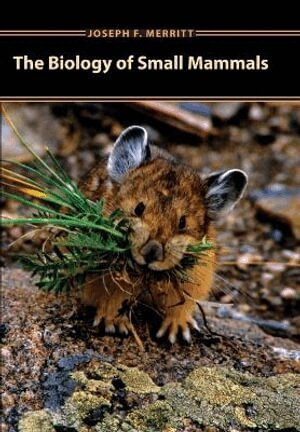
    Biology of Small Mammals

    AvJoseph F. Merritt

    Inbunden, Engelska, 2010

    820 kr

    Beställningsvara. Skickas inom 5-8 vardagar. Fri frakt över 249 kr.

    Beskrivning

    The Biology of Small Mammals is the first exploration of the lives of small mammals undertaken in decades. Mammalogist Joseph F. Merritt offers an engaging, in-depth discussion about a diverse array of small mammals, from the rare Kitti's hog-nosed bat of Southeast Asia to the bizarre aye-aye of Madagascar to the familiar woodchuck of North America. Small mammals include those mammals weighing under five kilograms (approximately eleven pounds). Merritt introduces the various species that fall under this heading, then follows with chapters that cover such topics as behavior, modes of feeding, locomotion, habitat use, reproduction, and coping with heat loss. Animals of this size face different physiological and ecological challenges than larger mammals. Merritt describes in rich detail how mammals across the globe have adapted to compensate for their small stature, showing how they contribute to and survive in diverse environments in many fascinating ways. For example, arctic foxes, weighing just 3 to 4.3 kilograms, are champion survivors in the cold.They cope with their harsh environs by decreasing activity, seeking shelter in temporary dens and snow burrows, growing a lush winter fur, and undergoing complex physiological changes to insulate themselves from chilling temperatures. Beautifully illustrated throughout, The Biology of Small Mammals provides a valuable and updated reference on nature's more diminutive creatures.

    Produktinformation

    • Utgivningsdatum:2010-05-04
    • Mått:156 x 235 x 27 mm
    • Vikt:703 g
    • Format:Inbunden
    • Språk:Engelska
    • Antal sidor:336
    • Förlag:Johns Hopkins University Press
    • ISBN:9780801879500

    Utforska kategorier

    • Däggdjur inom Naturvetenskap och teknik
    • Däggdjur inom Djur och Natur

    Mer om författaren

    Joseph F. Merritt is a senior mammalogist with the Illinois Natural History Survey, University of Illinois Urbana-Champaign, holding courtesy academic appointments at the University of Colorado, Indiana State University, and SUNY's College of Environmental Science and Forestry. He is the coauthor of Mammalogy: Adaptation, Diversity, Ecology, also published by Johns Hopkins.

    Recensioner i media

    Any college-level natural history library needs this survey. Midwest Book Review 2010 Highly recommended. Choice 2010 Utilizing fossil records and extant small mammals, the author provides an interesting look into their physical make up and way of life. Wildlife Activist 2010 Where Dr. Merritt's book shines and separates itself from other mammalogy books is when he adds the details, examples, and colorful commentary allowing readers to share his passion and enthusiasm for small mammals... Dr. Merritt manages to keep these passages both rigorous and entertaining, the true mark of a fine teacher. -- Robert McCleery Journal of Wildlife Management 2010 Merritt writes with evident enthusiasm for his subject, he is impressively up to date on most topics, and the book is copiously illustrated. -- William Z. Likicker Jr. Bioscience 2011

    Innehållsförteckning

    • PrefaceAcknowledgments1. IntroductionWhat Is a Small Mammal?Advantages and Disadvantages of Being a Small MammalThe ProtagonistsMonotremes and MarsupialsAfrosoricida, Erinaceomorpha, Soricomorpha, Macroscelidea, Scandentia, and DermopteraChiropteraPrimatesCarnivoraRodentiaLagomorphaHyracoideaPart I: Modes of Feeding2. InsectivoryGeneral CharacteristicsDilambdodont DentitionTerrestrial InsectivoresVenomous SalivaLong, Protrusile TongueArboreal InsectivoresElongated DigitsSemiaquatic and Fossorial InsectivoresSensory Mucous GlandsEimer's OrgansUnderwater SniffingSubterranean InsectivoresSeismic SensitivityAerial InsectivoresWingsEcholocation3. HerbivoryGeneral CharacteristicsEver-Growing IncisorsCoprophagyGranivoresFood HoardingCheek PouchesFrugivoresPiercing TeethPrehensile Tail and Protrusile TongueNectarivoresBrush-Tipped TongueGummivoresFolivoresForegut versus Hindgut FermentationGliding Membranes and Pectinate TeethCase Study: Rock Badgers: Gutsy Cliff-Dwellers4. CarnivoryGeneral CharacteristicsCarnassial TeethFlesh-Eating CarnivoresFelidsMustelidsCanidsPiscivoresClaws, Cheek Pouches, and a Sixth FingerSanguinivoresKnifelike Teeth and Heat-Sensitive Nasal Pits5. OmnivoryOmnivorous CarnivoresProcyonidsHerpestidsViverridsEupleridsCase Studies: The Hero Shrew: Mysterious InsectivoreDietary NonconformistsGleaning, Hawking, Hovering, and Perch-HuntingPart II: Environmental Adaptations6. Endothermy7. HeterothermyTorporHibernation8. Coping with ColdInsulatory ChangesCountercurrent Heat Exchange: The Miraculous NetReduced Level of ActivityReduction of Body Mass (Dehnel's Phenomenon)Fat TailsSocial ThermoregulationIncreased Heat Production9. Coping with Heat and AridityConserving WaterDietary Water IntakeEvaporative CoolingSweating, Panting, and Saliva SpreadingRespiratory Heat ExchangePelage InsulationBehavioral Avoidance of Heat10. Ecogeographic RulesModified Size of Appendages (Allen's Rule)Seasonal Color Dimorphism (Gloger's Rule)Body Mass and Latitude (Bergmann's Rule)Case Studies: Communal NestingHedgehogs: Spiny HibernatorsPart III: Reproduction11. Reproductive VariationsDelayed FertilizationDelayed ImplantationDelayed DevelopmentEmbryonic Diapause12. Mating Systems and Reproductive StrategiesHigh FecundityMonogamy, Housekeeping, and Mate GuardingAbsentee Maternal CareLek BehaviorEusocialitySemelparity: Breeding and Sudden Death13. Population Cycles: Lemmings and Snowshoes HaresAppendix: Useful Web SitesGlossaryReferencesIndex