• Fri frakt över 249 kr
  • •
  • Snabba leveranser
  • •
  • Billiga böcker
Kundservice

Du är på sajten för privatpersoner.

Företag, bibliotek eller offentlig verksamhet?

Du handlar på classic.bokus.com, där alla dina funktioner finns intakta.
Till classic.bokus.com
Bokus logotyp. Gå till startsidan.
  • Erbjudanden
  • Nyheter
  • Student
  • Topplistor
  • Barn & ungdom
  • Bokus Play
  • E-böcker
  • Pocketböcker
  • Spel & pussel

10% studentrabatt med kod TERM26

Sidfot

Mina sidor

    Hjälp

    • Kundservice
    • Vanliga frågor och svar
    • Frakt och leverans
    • Retur vid ångerrätt
    • Reklamera vara
    • Betalning
    • Köpvillkor
    • Allmänna villkor
    • Information om webbplatsens tillgänglighet

    Om Bokus

    • Om oss
    • Pressrum
    • För studenter
    • För företag
    • För bibliotek och offentlig verksamhet
    • För leverantörer
    • Hållbarhet

    Populärt

    • Aktuella erbjudanden
    • Presentkort
    • Studentlitteratur
    • Nya böcker
    • Topplistor
    • Signerade böcker
    • Engelska böcker

    Inspiration

    • Boktips
    • BookTok
    • Populära bokserier
    • Barnbokskaraktärer
    • Populära författare
    Logotyp för Bokus
    Följ oss på Facebook (extern länk)Följ oss på Instagram (extern länk)Följ oss på YouTube (extern länk)Följ oss på TikTok (extern länk)
    bokus @ CookiesAnpassa cookiesIntegritetspolicyKöpvillkor
    Till Citymail hemsida (extern länk)Till Budbee hemsida (extern länk)Till Postnord hemsida (extern länk)Till Schenker hemsida (extern länk)Till Early Bird hemsida (extern länk)Till Walleys hemsida (extern länk)
    1. Medicin
    2. Medicin: allmänt
    3. Medicinhistoria

    Self, Senility, and Alzheimer's Disease in Modern America

    A History

    AvJesse F. Ballenger

    Inbunden, Engelska, 2006

    497 kr

    Tillfälligt slut

    Beskrivning

    Historian Jesse F. Ballenger traces the emergence of senility as a cultural category from the late nineteenth century to the 1980s, a period in which Alzheimer's disease became increasingly associated with the terrifying prospect of losing one's self. Changes in American society and culture have complicated the notion of selfhood, Ballenger finds. No longer an ascribed status, selfhood must be carefully and willfully constructed. Thus, losing one's ability to sustain a coherent self-narrative is considered one of life's most dreadful losses. As Ballenger writes "senility haunts the landscape of the self-made man." Stereotypes of senility and Alzheimer's disease are related to anxiety about the coherence, stability, and agency of the self-stereotypes that are transforming perceptions of old age in modern America. Drawing on scientific, clinical, policy, and popular discourses on aging and dementia, Ballenger explores early twentieth-century concepts of aging and the emergence of gerontology to understand and distinguish normal aging from disease.In addition, he examines American psychiatry's approaches to the treatment of senility and scientific attempts to understand the brain pathology of dementia. Ballenger's work contributes to our understanding of the emergence and significance of dementia as a major health issue.

    Produktinformation

    • Utgivningsdatum:2006-05-26
    • Mått:152 x 229 x 20 mm
    • Vikt:499 g
    • Format:Inbunden
    • Språk:Engelska
    • Antal sidor:256
    • Förlag:Johns Hopkins University Press
    • ISBN:9780801882760

    Utforska kategorier

    • Medicinhistoria inom Medicin
    • Geriatrik inom Medicin
    • Allmän historia och världshistoria inom Historia och arkeologi

    Mer om författaren

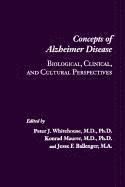
    Jesse F. Ballenger is an assistant professor in the Science, Technology, and Society Program at Pennsylvania State University and coeditor of Concepts of Alzheimer Disease: Biological, Clinical, and Cultural Perspectives (Johns Hopkins University Press, 2000).

    Recensioner i media

    Both science and history blend in a survey of aging and dementia, making for a broad discussion not just of changing American attitudes and culture, but changing health system responses. California Bookwatch This work is a major contribution to the history of dementia and Alzheimer disease. JAMA 2006 Ballenger has done the field a great service in tracing the historical roots of this problem. -- Benjamin T. Mast PsycCRITIQUES 2006 An important book that deserves a wide readership. -- Gerald N. Grob Journal of American History 2006 Give[s] the reader a vibrant and provocative account of how to think about Alzheimer's disease in anything but settled or conventional terms. -- Martha Holstein Healthcare and Aging Newsletter 2007 A substantial contribution to our knowledge... We are grateful to Ballenger for making a contribution to creating such wisdom and helping advance our culture's moral imagination. -- Danny George and Peter Whitehouss Medical Humanities Review 2005 A powerful, lucid account... Ballenger can be congratulated for a truly fascinating exploration of aging and senility. This book will appeal to physicians and historians, and the author (or the publishers) should consider marketing it to a broader public audience. -- Stephen Casper Medical History 2008 Ballenger aims not only to provide a cultural history of the disease but also to make ethical and epistemological claims about whether a human being with advanced Alzheimer's disease is still a person. These ambitions impose unusually high scholarly standards. Ballenger is up to the task. -- Thomas R. Cole American Historical Review 2007 A lucid and thoughtful history and a timely contribution... will appeal to readers from all professional backgrounds. -- Stephen Katz Ageing and Society 2008 This revealing and informative account is worth reading. -- Chris Ball History of Psychiatry 2008 Ballenger has written a persuasive account of a complicated subject, confronting the problem of dementia compassionately but unflinchingly... His writing is clear, graceful, and unburdened by jargon. This book deserves to be widely read by both historians and people dealing directly with dementia, including health care providers and family members. -- Lisa Boult Bulletin of the History of Medicine 2010

    Innehållsförteckning

    • PrefaceAcknowledgmentsIntroduction1. The Stereotype of Senility in Late-Nineteenth-Century America2. Beyond the Characteristic Plaques and Tangles3. From Senility to Successful Aging4. The Renaissance of Pathology5. The Health Politics of Anguish6. The Preservation of Selfhood in the Culture of DementiaNotesIndex