• Fri frakt över 249 kr
  • •
  • Snabba leveranser
  • •
  • Billiga böcker
Kundservice

Du är på sajten för privatpersoner.

Företag, bibliotek eller offentlig verksamhet?

Du handlar på classic.bokus.com, där alla dina funktioner finns intakta.
Till classic.bokus.com
Bokus logotyp. Gå till startsidan.
  • Erbjudanden
  • Nyheter
  • Student
  • Topplistor
  • Barn & ungdom
  • Bokus Play
  • E-böcker
  • Pocketböcker
  • Spel & pussel

10% rabatt på allt med kod NYSTART10 →

Sidfot

Mina sidor

    Hjälp

    • Kundservice
    • Vanliga frågor och svar
    • Frakt och leverans
    • Retur vid ångerrätt
    • Reklamera vara
    • Betalning
    • Köpvillkor
    • Allmänna villkor
    • Information om webbplatsens tillgänglighet

    Om Bokus

    • Om oss
    • Pressrum
    • För studenter
    • För företag
    • För bibliotek och offentlig verksamhet
    • För leverantörer
    • Hållbarhet

    Populärt

    • Aktuella erbjudanden
    • Presentkort
    • Studentlitteratur
    • Nya böcker
    • Topplistor
    • Signerade böcker
    • Engelska böcker

    Inspiration

    • Boktips
    • BookTok
    • Populära bokserier
    • Barnbokskaraktärer
    • Populära författare
    Logotyp för Bokus
    Följ oss på Facebook (extern länk)Följ oss på Instagram (extern länk)Följ oss på YouTube (extern länk)Följ oss på TikTok (extern länk)
    bokus @ CookiesAnpassa cookiesIntegritetspolicyKöpvillkor
    Till Citymail hemsida (extern länk)Till Budbee hemsida (extern länk)Till Postnord hemsida (extern länk)Till Schenker hemsida (extern länk)Till Early Bird hemsida (extern länk)Till Walleys hemsida (extern länk)
    1. Naturvetenskap och teknik
    2. Matematik och naturvetenskap
    3. Matematik
    4. Matematisk statistik

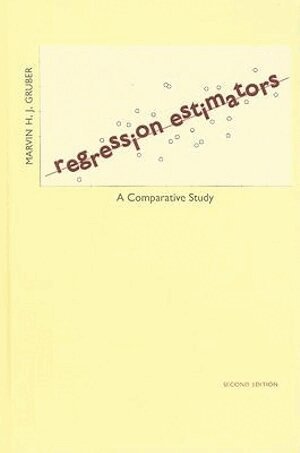
    Regression Estimators

    A Comparative Study

    AvMarvin H. J. Gruber

    Inbunden, Engelska, 2010

    1 341 kr

    Beställningsvara. Skickas inom 5-8 vardagar. Fri frakt över 249 kr.

    Fler format och utgåvor

    E-bok

    781 kr

    Beskrivning

    An examination of mathematical formulations of ridge-regression-type estimators points to a curious observation: estimators can be derived by both Bayesian and Frequentist methods. In this updated and expanded edition of his 1990 treatise on the subject, Marvin H. J. Gruber presents, compares, and contrasts the development and properties of ridge-type estimators from these two philosophically different points of view. The book is organized into five sections. Part I gives a historical survey of the literature and summarizes basic ideas in matrix theory and statistical decision theory. Part II explores the mathematical relationships between estimators from both Bayesian and Frequentist points of view. Part III considers the efficiency of estimators with and without averaging over a prior distribution. Part IV applies the methods and results discussed in the previous two sections to the Kalman Filter, analysis of variance models, and penalized splines. Part V surveys recent developments in the field. These include efficiencies of ridge-type estimators for loss functions other than squared error loss functions and applications to information geometry.Gruber also includes an updated historical survey and bibliography. With more than 150 exercises, Regression Estimators is a valuable resource for graduate students and professional statisticians.

    Produktinformation

    • Utgivningsdatum:2010-08-25
    • Mått:152 x 229 x 29 mm
    • Vikt:680 g
    • Format:Inbunden
    • Språk:Engelska
    • Antal sidor:424
    • Upplaga:2
    • Förlag:Johns Hopkins University Press
    • ISBN:9780801894268

    Utforska kategorier

    • Matematisk statistik inom Naturvetenskap och teknik

    Mer om författaren

    Marvin H. J. Gruber is a professor of mathematics and statistics at the Rochester Institute of Technology.

    Recensioner i media

    "A comprehensive treatment... valuable to statisticians who would like to know more about the analytical properties of ridge-type estimators." - Journal of the American Statistical Association "Highly recommended to anyone working on advanced applications or research in estimation in linear models." - Technometrics"

    Innehållsförteckning

    • PrefacePart I: Introduction and Mathematical Preliminaries1. Introduction1.1. The Purpose of This Book1.2. Least Square Estimators and the Need for Alternatives1.3. Historical Survey1.4. The Structure of the Book2. Mathematical and Statistical Preliminaries2.0. Introduction2.1. Matrix Theory Results2.2. The Bayes Estimator (BE)2.3. Admissible Estimators2.4. The Minimax Estimator2.5. Criterion for Comparing Estimators: Theobald's 1974 Result2.6. Some Useful Inequalities: Some Miscellaneous Useful Matrix Results2.7. SummaryPart II: The Estimators, Their Derivations, and Their Relationships3. The Estimators3.0. The Least Square Estimator and Its Properties3.1. The Generalized Ridge Regression Estimator3.2. The Mixed Estimators3.3. The Linear Minimax Estimator3.4. The Bayes Estimator3.6. Summary4. How the Different Estimators Are Related4.0. Introduction4.1. Alternative Forms of the Bayes Estimator Full-Rank Case4.2. Alternative Forms of the Bayes Estimator Non-Full-Rank Case Estimable Parametric Functions4.3. Equivalence of the Generalized Ridge Estimator and the BayesEstimator4.4. Equivalence of the Mixed Estimator and the Bayes Estimator4.5. Ridge Estimators in the Literature as Special Cases of the BE, Minimax Estimators, or Mixed Estimators4.6. An Extension of the Gauss-Markov Theorem4.7. Generalities4.8. SummaryPart III: Comparing the Efficiency of the Estimators5. Measures of Efficiency of the Estimators5.0. Introduction5.1. The Different Kinds of Mean Square Error5.2. Zellner's Balanced Loss Function5.3. The LINEX Loss Function5.4. Linear Admissibility5.5. Summary6. The Average Mean Square Error6.0. Introduction6.1. The Forms of the MSE for the Minimax, Bayes, and Mixed Estimators6.2. The Relationship between the Average Variance and the MSE6.3. The Average MSE of the Bayes Estimator6.4. Alternative Forms of the MSE of the Mixed Estimator6.5. Comparison of the MSE of Different BEs6.6. Comparison of the MSE of the Ridge and Contraction Estimators6.7. Comparison of the Average MSE of the Two-Parameter Liu Estimator and the Ordinary Ridge Regression Estimator6.8. Summary7. The MSE Neglecting the Prior Assumptions7.0. Introduction7.1. The MSE of the BE7.2. The MSE of the Mixed Estimators Neglecting PriorAssumptions7.3. Comparison of the Conditional MSE of the Bayes and Least Square Estimators and Comparison of the Conditional and Average MSE7.4. Comparison of the MSE of a Mixed Estimator with That of the LS Estimators7.5. Comparison of the MSE of Two Bayes Estimators7.6. Summary8. The MSE for Incorrect Prior Assumptions8.0. Introduction8.1. The Bayes Estimator and Its MSE8.2. The Minimax Estimator8.3. The Mixed Estimator8.4. Contaminated Priors8.5. Contaminated (Mixed) Bayes Estimators8.6. SummaryPart IV: Applications9. The Kalman Filter9.0. Introduction9.1. The Kalman Filter as a Bayes Estimator9.2. The Kalman Filter as a Recursive Least Square Estimator,and the Connection with the Mixed Estimator9.3. The Minimax Estimator9.4. The Generalized Ridge Estimator9.5. The Average Mean Square Error9.6. The MSE for Incorrect Initial Prior Assumptions9.7. Applications9.8. Recursive Ridge Regression9.9. Summary10. Experimental Design Models10.0. Introduction10.1. The One-Way ANOVA Model10.2. The Bayes and Empirical Bayes Estimators10.3. The Two- Way Classification10.4. The Bayes and Empirical Bayes Estimators10.5. SummaryAppendix to Section 10.2. Calculation of the MSE of Section 10.211. How Penalized Splines and Ridge- Type EstimatorsAre Related11.0. Introduction11.1. Splines as a Special Kind of Regression Model11.2. Penalized Splines11.3. The Best Linear Unbiased Predictor (BLUP)11.4. Two Examples11.5. SummaryPart V: Alternative Measures of Efficiency12. Estimation Using Zellner's Balanced Loss Function12.0. Introduction12.1. Zellner's Balanced Loss Function12.2. The Estimators from Different Points of View12.3. The Average Mean Square Error12.4. The Risk without Averaging over a Prior Distribution12.5. Some Optimal Ridge Estimators12.6. Summary13. The LINEX and Other Asymmetric Loss Functions13.0. Introduction13.1. The LINEX Loss Function13.2. The Bayes Risk for a Regression Estimator13.3. The Frequentist Risk13.4. Summary14. Distances between Ridge-Type Estimators, andInformation Geometry14.0. Introduction14.1. The Relevant Differential Geometry14.2. The Distance between Two Linear Bayes Estimators, Based on the Prior Distributions14.3. The Distance between Distributions of Ridge-Type Estimators from a Non-Bayesian Point of View14.4. Distances between the Mixed Estimators14.5. An Example Using the Kalman Filter14.6. SummaryReferencesAuthor IndexSubject Index