• Fri frakt över 249 kr
  • •
  • Snabba leveranser
  • •
  • Billiga böcker
Kundservice

Du är på sajten för privatpersoner.

Företag, bibliotek eller offentlig verksamhet?

Du handlar på classic.bokus.com, där alla dina funktioner finns intakta.
Till classic.bokus.com
Bokus logotyp. Gå till startsidan.
  • Erbjudanden
  • Nyheter
  • Student
  • Topplistor
  • Barn & ungdom
  • Bokus Play
  • E-böcker
  • Pocketböcker
  • Spel & pussel

10% rabatt på allt med kod: NYSTART10 →

Sidfot

Mina sidor

    Hjälp

    • Kundservice
    • Vanliga frågor och svar
    • Frakt och leverans
    • Retur vid ångerrätt
    • Reklamera vara
    • Betalning
    • Köpvillkor
    • Allmänna villkor
    • Information om webbplatsens tillgänglighet

    Om Bokus

    • Om oss
    • Pressrum
    • För studenter
    • För företag
    • För bibliotek och offentlig verksamhet
    • För leverantörer
    • Hållbarhet

    Populärt

    • Aktuella erbjudanden
    • Presentkort
    • Studentlitteratur
    • Nya böcker
    • Topplistor
    • Signerade böcker
    • Engelska böcker

    Inspiration

    • Boktips
    • BookTok
    • Populära bokserier
    • Barnbokskaraktärer
    • Populära författare
    Logotyp för Bokus
    Följ oss på Facebook (extern länk)Följ oss på Instagram (extern länk)Följ oss på YouTube (extern länk)Följ oss på TikTok (extern länk)
    bokus @ CookiesAnpassa cookiesIntegritetspolicyKöpvillkor
    Till Citymail hemsida (extern länk)Till Budbee hemsida (extern länk)Till Postnord hemsida (extern länk)Till Schenker hemsida (extern länk)Till Early Bird hemsida (extern länk)Till Walleys hemsida (extern länk)
    1. Samhälle och politik
    2. Sociologi och antropologi
    3. Antropologi

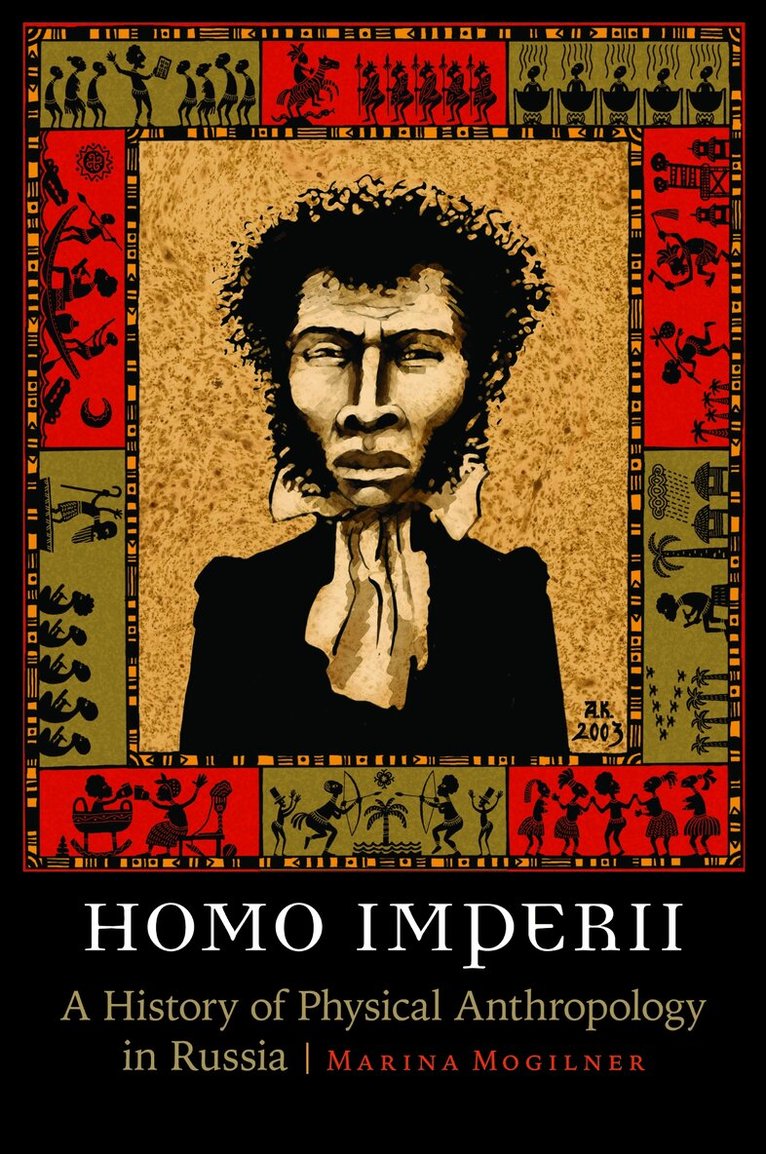
    Homo Imperii

    A History of Physical Anthropology in Russia

    AvMarina Mogilner

    Inbunden, Engelska, 2013

    Del i serien Critical Studies in the History of Anthropology

    951 kr

    Beställningsvara. Skickas inom 10-15 vardagar. Fri frakt över 249 kr.

    Beskrivning

    It is widely assumed that the "nonclassical" nature of the Russian empire and its equally "nonclassical" modernity made Russian intellectuals immune to the racial obsessions of Western Europe and the United States. Homo Imperii corrects this perception by offering the first scholarly history of racial science in prerevolutionary Russia and the early Soviet Union. Marina Mogilner places this story in the context of imperial self-modernization, political and cultural debates of the epoch, different reformist and revolutionary trends, and the growing challenge of modern nationalism. By focusing on the competing centers of race science in different cities and regions of the empire, Homo Imperii introduces to English-language scholars the institutional nexus of racial science in Russia that exhibits the influence of imperial strategic relativism. Reminiscent of the work of anthropologists of empire such as Ann Stoler and Benedict Anderson, Homo Imperii reveals the complex imperial dynamics of Russian physical anthropology and contributes an important comparative perspective from which to understand the emergence of racial science in nineteenth- and twentieth-century Europe and America.

    Produktinformation

    • Utgivningsdatum:2013-07-01
    • Mått:152 x 229 x 43 mm
    • Vikt:902 g
    • Format:Inbunden
    • Språk:Engelska
    • Serie:Critical Studies in the History of Anthropology
    • Antal sidor:504
    • Förlag:University of Nebraska Press
    • ISBN:9780803239784
    • Översättare:Marina Mogilner

    Utforska kategorier

    • Antropologi inom Samhälle och politik

    Mer om författaren

    Marina Mogilner is the academic director at the Center for the Studies of Nationalism and Empire in Kazan, Russia, and coeditor of the international quarterly Ab Imperio. She is the author of several books, chapters, and articles on late imperial history in Russia.

    Recensioner i media

    "This is a brave, well-written, and scholarly excavation of an important and contested episode in the history of Russian thought that highlights and begins to challenge some of the distortions of the intervening Soviet and post-socialist ideology and historiography."—Dominic Martin, Journal of the Royal Anthropological Institute

    Innehållsförteckning

    • List of IllustrationsIntroduction: The Science of Imperial ModernityPart 1. Paradoxes of Institutionalization1. Academic Genealogy and Social Contexts of the “Atypical Science”2. Anthropology as a “Regular Science”: Kafedra3. Anthropology as a Network Science: SocietyPart 2. The Liberal Anthropology of Imperial Diversity: Apolitical Politics4. Aleksei Ivanovskii’s Anthropological Classification of the Family of “Racial Relatives”5. “Russians” in the Language of Liberal Anthropology6. Dmitrii Anuchin’s Liberal AnthropologyPart 3. Anthropology of Russian Imperial Nationalism7. Ivan Sikorsky and His “Imperial Situation”8. Academic Racism and “Russian National Science”Part 4. Anthropology of Russian Multinationalism9. The Space between “Empire” and “Nation”10. “Jewish Physiognomy,” the “Jewish Question,” and Russian Race Science between Inclusion and Exclusion11. A “Dysfunctional” Colonial Anthropology of Imperial BrainsPart 5. Russian Military Anthropology: From Army-as-Empire to Army-as-Nation12. Military Mobilization of Diversity Studies13. The Imperial Army through National Lenses14. Nation Instead of EmpirePart 6. Race and Social Imagination15. The Discovery of Population Politics and Sociobiological Discourses in Russia16. Meticization as Modernization, or the Sociobiological Utopias of Ivan Ivanovich Pantiukhov17. The Criminal Anthropology of Imperial SocietyConclusion: Did Russian Physical Anthropology Become Soviet?NotesIndex