• Fri frakt över 249 kr
  • •
  • Snabba leveranser
  • •
  • Billiga böcker
Kundservice

Du är på sajten för privatpersoner.

Företag, bibliotek eller offentlig verksamhet?

Du handlar på classic.bokus.com, där alla dina funktioner finns intakta.
Till classic.bokus.com
Bokus logotyp. Gå till startsidan.
  • Erbjudanden
  • Nyheter
  • Student
  • Topplistor
  • Barn & ungdom
  • Bokus Play
  • E-böcker
  • Pocketböcker
  • Spel & pussel

10% rabatt på allt med kod: NYSTART10 →

Sidfot

Mina sidor

    Hjälp

    • Kundservice
    • Vanliga frågor och svar
    • Frakt och leverans
    • Retur vid ångerrätt
    • Reklamera vara
    • Betalning
    • Köpvillkor
    • Allmänna villkor
    • Information om webbplatsens tillgänglighet

    Om Bokus

    • Om oss
    • Pressrum
    • För studenter
    • För företag
    • För bibliotek och offentlig verksamhet
    • För leverantörer
    • Hållbarhet

    Populärt

    • Aktuella erbjudanden
    • Presentkort
    • Studentlitteratur
    • Nya böcker
    • Topplistor
    • Signerade böcker
    • Engelska böcker

    Inspiration

    • Boktips
    • BookTok
    • Populära bokserier
    • Barnbokskaraktärer
    • Populära författare
    Logotyp för Bokus
    Följ oss på Facebook (extern länk)Följ oss på Instagram (extern länk)Följ oss på YouTube (extern länk)Följ oss på TikTok (extern länk)
    bokus @ CookiesAnpassa cookiesIntegritetspolicyKöpvillkor
    Till Citymail hemsida (extern länk)Till Budbee hemsida (extern länk)Till Postnord hemsida (extern länk)Till Schenker hemsida (extern länk)Till Early Bird hemsida (extern länk)Till Walleys hemsida (extern länk)
    1. Historia och arkeologi
    2. Historia
    3. Historia: särskilda händelser och ämnen
    4. Socialhistoria och kulturhistoria

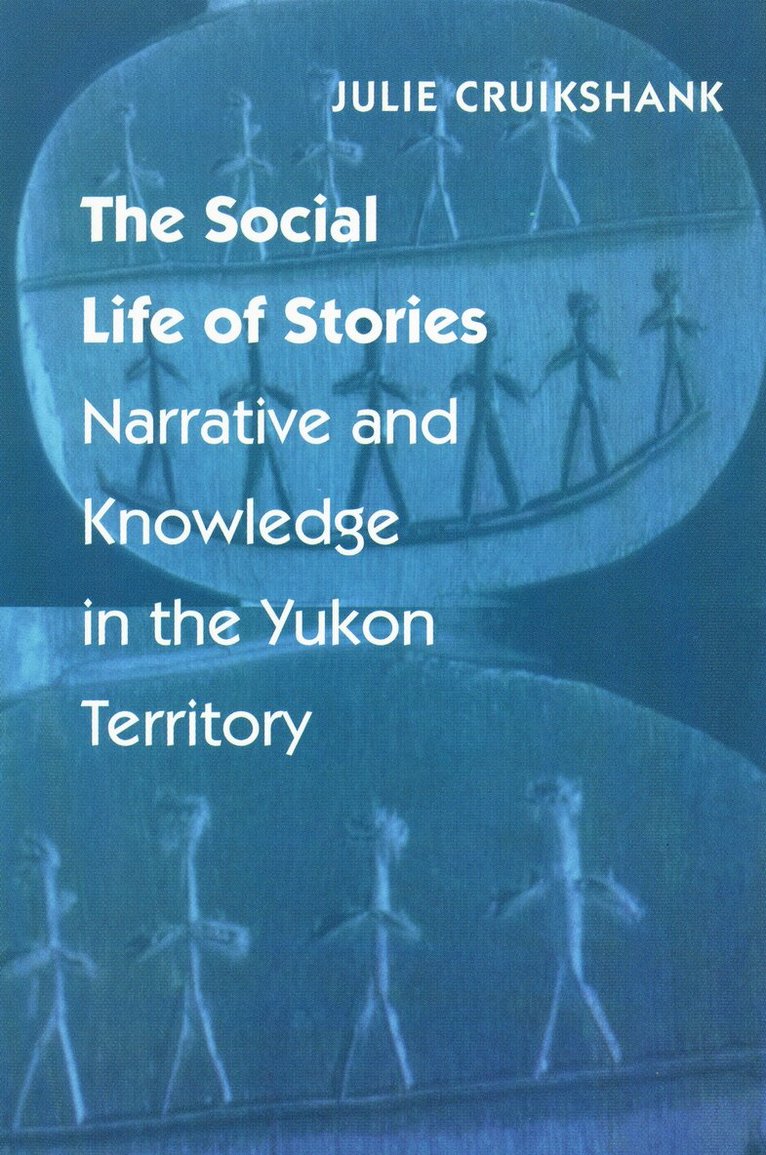
    Social Life of Stories

    Narrative and Knowledge in the Yukon Territory

    AvJulie Cruikshank

    Häftad, Engelska, 2000

    250 kr

    Beställningsvara. Skickas inom 10-15 vardagar. Fri frakt över 249 kr.

    Beskrivning

    In this theoretically sophisticated study of indigenous oral narratives, Julie Cruikshank moves beyond the text to explore the social significance of storytelling. Circumpolar Native peoples today experience strikingly different and often competing systems of narrative and knowledge. These systems include traditional oral stories; the authoritative, literate voice of the modern state; and the narrative forms used by academic disciplines to represent them to outsiders. Pressured by other systems of narrative and truth, how do Native peoples use their stories and find them still meaningful in the late twentieth century? Why does storytelling continue to thrive? What can anthropologists learn from the structure and performance of indigenous narratives to become better academic storytellers themselves? Cruikshank addresses these questions by deftly blending the stories gathered from her own fieldwork with interdisciplinary theoretical perspectives on dialogue and storytelling, including the insights of Walter Benjamin, Mikhail Bakhtin, and Harold Innis. Her analysis reveals the many ways in which the artistry and structure of storytelling mediate between social action and local knowledge in indigenous northern communities.

    Produktinformation

    • Utgivningsdatum:2000-08-01
    • Mått:152 x 229 x 15 mm
    • Vikt:340 g
    • Format:Häftad
    • Språk:Engelska
    • Antal sidor:221
    • Förlag:University of Nebraska Press
    • ISBN:9780803264090

    Utforska kategorier

    • Socialhistoria och kulturhistoria inom Historia och arkeologi
    • Antropologi inom Samhälle och politik
    • Sociala och etiska frågor inom Samhälle och politik

    Mer om författaren

    Julie Cruikshank is a professor of anthropology at the University of British Columbia. She is the author of Life Lived Like a Story: Life Stories of Three Yukon Native Elders (Nebraska 1990), winner of the 1992 MacDonald Prize.

    Recensioner i media

    "The Social Life of Stories establishes a powerful argument about the legitimacy and viability of the distinctive intellectual traditions of modern Native peoples. One of the strengths of this book is that Cruikshank extends her thesis to carve out a position that challenges the dominance of non-Native intellectual systems."-American Indian Quarterly American Indian Quarterly