• Fri frakt över 249 kr
  • •
  • Snabba leveranser
  • •
  • Billiga böcker
Kundservice

Du är på sajten för privatpersoner.

Företag, bibliotek eller offentlig verksamhet?

Du handlar på classic.bokus.com, där alla dina funktioner finns intakta.
Till classic.bokus.com
Bokus logotyp. Gå till startsidan.
  • Erbjudanden
  • Nyheter
  • Student
  • Topplistor
  • Barn & ungdom
  • Bokus Play
  • E-böcker
  • Pocketböcker
  • Spel & pussel

10% studentrabatt med kod TERM26

Sidfot

Mina sidor

    Hjälp

    • Kundservice
    • Vanliga frågor och svar
    • Frakt och leverans
    • Retur vid ångerrätt
    • Reklamera vara
    • Betalning
    • Köpvillkor
    • Allmänna villkor
    • Information om webbplatsens tillgänglighet

    Om Bokus

    • Om oss
    • Pressrum
    • För studenter
    • För företag
    • För bibliotek och offentlig verksamhet
    • För leverantörer
    • Hållbarhet

    Populärt

    • Aktuella erbjudanden
    • Presentkort
    • Studentlitteratur
    • Nya böcker
    • Topplistor
    • Signerade böcker
    • Engelska böcker

    Inspiration

    • Boktips
    • BookTok
    • Populära bokserier
    • Barnbokskaraktärer
    • Populära författare
    Logotyp för Bokus
    Följ oss på Facebook (extern länk)Följ oss på Instagram (extern länk)Följ oss på YouTube (extern länk)Följ oss på TikTok (extern länk)
    bokus @ CookiesAnpassa cookiesIntegritetspolicyKöpvillkor
    Till Citymail hemsida (extern länk)Till Budbee hemsida (extern länk)Till Postnord hemsida (extern länk)Till Schenker hemsida (extern länk)Till Early Bird hemsida (extern länk)Till Walleys hemsida (extern länk)
    1. Samhälle och politik
    2. Sociologi och antropologi
    3. Antropologi

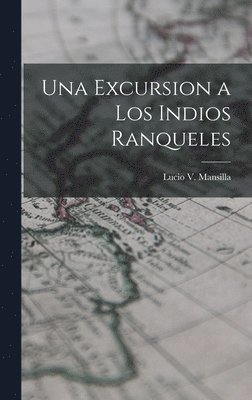
    Visit to the Ranquel Indians

    AvLucio V. Mansilla

    Häftad, Engelska, 1997

    346 kr

    Beställningsvara. Skickas inom 10-15 vardagar. Fri frakt över 249 kr.

    Beskrivning

    Lucio V. Mansilla (1831–1913), the widely traveled and cultured scion of a famous family, was a colonel in the Argentine army when he undertook an "excursion" to the Argentine interior in 1870 to visit natives in areas then largely unknown. Mansilla's uncle, dictator Juan Manuel de Rosas, dominated most of Argentina from 1829 to 1852 and had led successful military expeditions against the frontier Indians in 1852. Mansilla set out for a reconnaissance into the tense border region just after a peace treaty had been signed with the Indians. Over the course of this expedition, Mansilla sent to a friend in the capital a series of letters which were then serially published in a leading Buenos Aires newspaper. His careful observations offer valuable ethnographic data, as Argentina's Indians were almost totally extinguished or assimilated within a few generations of Mansilla's expedition. Furthermore, his account, which contains thoughtful perspectives on the "Indian question" and the dichotomy of civilization and barbarism, stands as a lasting contribution to Argentine and Spanish-American literature. Mansilla's work both in this account and elsewhere made him a leading figure in the Argentina "Generation of 1880," a group crucial in the development of Argentine literary and intellectual life.
    Produktinformation

    • Utgivningsdatum:1997-08-01
    • Mått:152 x 229 x 39 mm
    • Vikt:766 g
    • Format:Häftad
    • Språk:Engelska
    • Antal sidor:467
    • Förlag:University of Nebraska Press
    • ISBN:9780803282353
    • Översättare:Eva Gillies

    Utforska kategorier

    • Antropologi inom Samhälle och politik
    • Amerikas historia inom Historia och arkeologi
    • Biografier inom Biografier

    Mer om författaren

    Translator Eva Gillies, who was born in Argentina, is retired from a lectureship at the University of London.

    Recensioner i media

    "One of the finest and subtlest books ever written on an American frontier. . . . [A] many layered and ironical masterpiece."—Malcolm Deas, Times Literary Supplement "I find Eva Gillies's translation of Mansilla's work simply superb. . . . [It] provides an excellent reconstruction of Mansilla's momentous journey as well as of his times."—Saul Sosnowski, University of Maryland