• Fri frakt över 249 kr
  • •
  • Snabba leveranser
  • •
  • Billiga böcker
Kundservice

Du är på sajten för privatpersoner.

Företag, bibliotek eller offentlig verksamhet?

Du handlar på classic.bokus.com, där alla dina funktioner finns intakta.
Till classic.bokus.com
Bokus logotyp. Gå till startsidan.
  • Erbjudanden
  • Nyheter
  • Student
  • Topplistor
  • Barn & ungdom
  • Bokus Play
  • E-böcker
  • Pocketböcker
  • Spel & pussel

Må bättre, för mindre! Upp till 50% rabatt på hälsoböcker

Sidfot

Mina sidor

    Hjälp

    • Kundservice
    • Vanliga frågor och svar
    • Frakt och leverans
    • Retur vid ångerrätt
    • Reklamera vara
    • Betalning
    • Köpvillkor
    • Allmänna villkor
    • Information om webbplatsens tillgänglighet

    Om Bokus

    • Om oss
    • Pressrum
    • För studenter
    • För företag
    • För bibliotek och offentlig verksamhet
    • För leverantörer
    • Hållbarhet

    Populärt

    • Aktuella erbjudanden
    • Presentkort
    • Studentlitteratur
    • Nya böcker
    • Topplistor
    • Signerade böcker
    • Engelska böcker

    Inspiration

    • Boktips
    • BookTok
    • Populära bokserier
    • Barnbokskaraktärer
    • Populära författare
    Logotyp för Bokus
    Följ oss på Facebook (extern länk)Följ oss på Instagram (extern länk)Följ oss på YouTube (extern länk)Följ oss på TikTok (extern länk)
    bokus @ CookiesAnpassa cookiesIntegritetspolicyKöpvillkor
    Till Citymail hemsida (extern länk)Till Budbee hemsida (extern länk)Till Postnord hemsida (extern länk)Till Schenker hemsida (extern länk)Till Early Bird hemsida (extern länk)Till Walleys hemsida (extern länk)
    1. Historia och arkeologi
    2. Historia
    3. Europas historia

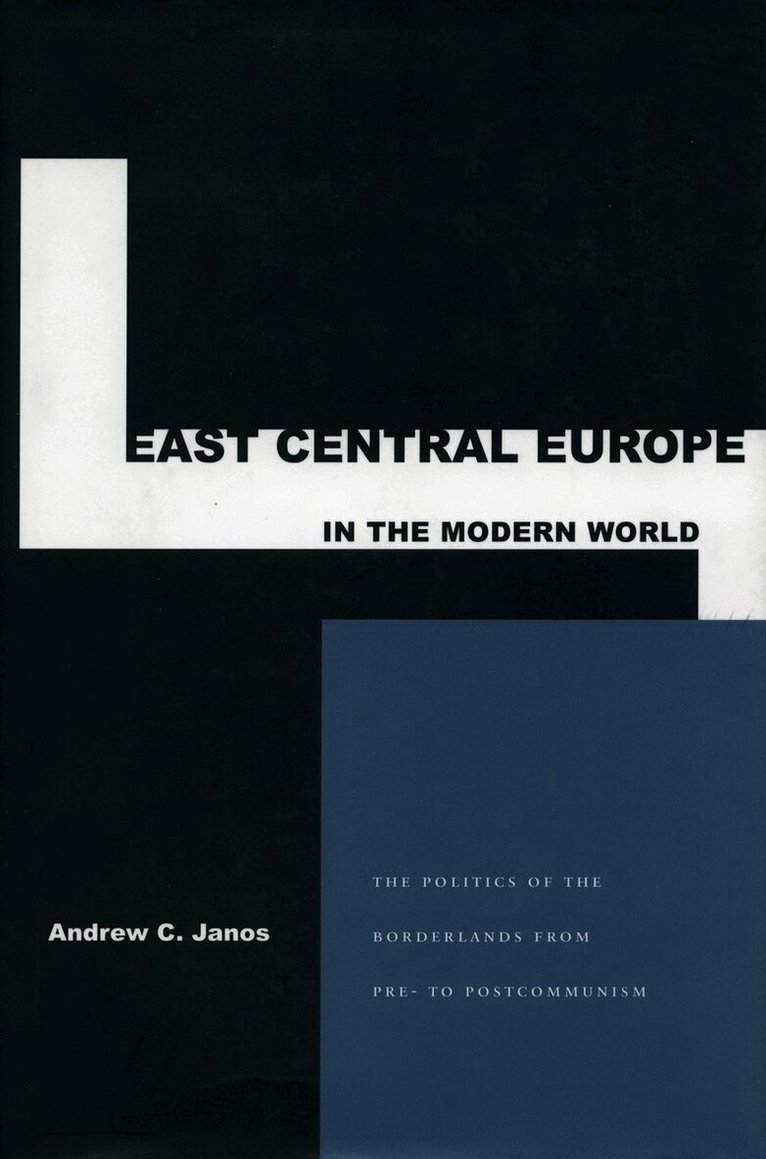
    East Central Europe in the Modern World

    The Politics of the Borderlands from Pre- to Postcommunism

    AvAndrew C. Janos

    Häftad, Engelska, 2002

    422 kr

    Beställningsvara. Skickas inom 10-15 vardagar. Fri frakt över 249 kr.

    Beskrivning

    Combining engaging narrative with analytic power, this book presents the past and present of East Central Europe in the larger context of the political and economic history of the Continent.The central theme of the book is best summarized by the familiar French proverb that the more things change the more they are the same. For while the historical experience of East Central Europe in the modern world may be described as one of endemic political change—from Western liberalism to corrupted parliamentarism, from fascism to state socialism imposed by the Soviet Union, and now to a fledgling new liberalism under Western auspices—all these political systems faced the same stubborn facts of life: the region's economic backwardness vis-à-vis the West, the debilities of small nationhood, and the cultural divide between the lands of eastern and western Christianity.In dealing with this volatile mix of continuity and change, this book provides a new interpretation of the politics of the region in the modern period. At the same time, it also contributes to the ongoing dialogue among disciplines by attempting to strike a better balance between cultural and economic explanations of conflict, between structural and institutional approaches to politics, and, above all, between intra- and extra-societal forces that shape power and politics in national states.For the purposes of this book, East Central Europe is defined as the territory of the historical precursors, and contemporary successors, of the eight lesser member states of the former Soviet Bloc.

    Produktinformation

    • Utgivningsdatum:2002-06-27
    • Mått:160 x 230 x 30 mm
    • Vikt:640 g
    • Format:Häftad
    • Språk:Engelska
    • Antal sidor:512
    • Förlag:Stanford University Press
    • ISBN:9780804746885

    Utforska kategorier

    • Europas historia inom Historia och arkeologi
    • Ekonomisk historia inom Ekonomi och Ledarskap
    • Politik och statsskick inom Samhälle och politik

    Mer om författaren

    Andrew C. Janos is Professor of Political Science at the University of California, Berkeley.

    Recensioner i media

    "[East Central Europe in the Modern World] will not just fascinate the expert but also greatly inform those seeking a more introductory account of the borderlands once again subject to such extensive change."—Canadian Journal of Political Science "This book is the culmination of a lifetime of academic research and thinking by one of the most prominent scholars of East Central European politics. Janos employs an exhaustive historical survey of the region (including present-day Albania, Serbia-Montenegro, Macedonia, Slovenia, Croatia, Bosnia-Herzegovina, Bulgaria, Romania, Hungary, the Czech Republic, Slovakia, Poland, and the former German Democratic Republic) to develop a grand theory of political and economic development of the countries on Europe's periphery. Ambitious in scope and engagingly argued, Janos's book is well worth reading by any serious student of East European or postcommunist politics."—Journal of Interdisciplinary History "Andrew Janos, ever the astute observer of Europe's eastern flank, has done us all a great service by writing a thorough, highly readable, and yet provocative history of the political and economic evolution of east central Europe over the past two hundred years."—Slavic Review "This work constitutes a provocative introduction to the politics and economics of east central Europe, and its interdisciplinary character should make it of interest to a wide audience of political scientists, historians, and economists."—International Affairs "This book is the culmination of a lifetime of academic research and thinking by one of the most prominent scholars of East Central Europe. . . . Ambitious in scope and engagingly argued, Janos's book is well worth reading by any serious student of East European or postcommunist politics."—Journal of Interdisciplinary History

    Innehållsförteckning

    • List of illustrations; Acknowledgments; Introduction; 1. Social science, history, and political change; 2. East Central Europe: a historical overview; 3. Liberalism and the nation-state; 4. The crisis of liberalism; 5. Communism: the Imperial revolution; 6. The Soviet Bloc after Stalin; 7. From Communism to Postcommunism: the return of liberalism; Conclusion; Bibliography; Index.