• Fri frakt över 249 kr
  • •
  • Snabba leveranser
  • •
  • Billiga böcker
Kundservice

Du är på sajten för privatpersoner.

Företag, bibliotek eller offentlig verksamhet?

Du handlar på classic.bokus.com, där alla dina funktioner finns intakta.
Till classic.bokus.com
Bokus logotyp. Gå till startsidan.
  • Erbjudanden
  • Nyheter
  • Student
  • Topplistor
  • Barn & ungdom
  • Bokus Play
  • E-böcker
  • Pocketböcker
  • Spel & pussel

10% rabatt på allt med kod: NYSTART10 →

Sidfot

Mina sidor

    Hjälp

    • Kundservice
    • Vanliga frågor och svar
    • Frakt och leverans
    • Retur vid ångerrätt
    • Reklamera vara
    • Betalning
    • Köpvillkor
    • Allmänna villkor
    • Information om webbplatsens tillgänglighet

    Om Bokus

    • Om oss
    • Pressrum
    • För studenter
    • För företag
    • För bibliotek och offentlig verksamhet
    • För leverantörer
    • Hållbarhet

    Populärt

    • Aktuella erbjudanden
    • Presentkort
    • Studentlitteratur
    • Nya böcker
    • Topplistor
    • Signerade böcker
    • Engelska böcker

    Inspiration

    • Boktips
    • BookTok
    • Populära bokserier
    • Barnbokskaraktärer
    • Populära författare
    Logotyp för Bokus
    Följ oss på Facebook (extern länk)Följ oss på Instagram (extern länk)Följ oss på YouTube (extern länk)Följ oss på TikTok (extern länk)
    bokus @ CookiesAnpassa cookiesIntegritetspolicyKöpvillkor
    Till Citymail hemsida (extern länk)Till Budbee hemsida (extern länk)Till Postnord hemsida (extern länk)Till Schenker hemsida (extern länk)Till Early Bird hemsida (extern länk)Till Walleys hemsida (extern länk)
    1. Filosofi och religion
    2. Filosofi
    3. Filosofiska discipliner

    Jew, the Arab

    A History of the Enemy

    AvGil Anidjar

    Häftad, Engelska, 2003

    Del i serien Cultural Memory in the Present

    322 kr

    Beställningsvara. Skickas inom 5-8 vardagar. Fri frakt över 249 kr.

    Fler format och utgåvor

    Inbunden

    1 339 kr

    Beskrivning

    Is there a concept of the enemy? To what discursive sphere would it belong? Or, if there is no concept of the enemy, what are the factors that could have prevented its articulation? Following the reflections of Carl Schmitt and Jacques Derrida on the theologico-political, and reading canonical texts from the Western philosophical, political, and religious traditions, the author seeks to account for the absence of a history of the enemy.The question of the enemy emerges in this book as contingent on the way Europe has related to both Jew and Arab as concrete enemies. Moreover, the author provocatively argues that the Jew and the Arab constitute the condition of religion and politics. Among the many strengths of the book is the timeliness of its profound study of contemporary actuality: the volume provides a basis for a philosophical understanding of the forces at work that produced and kindled current conflicts in Europe, the U.S., and the Middle East.


    Produktinformation

    • Utgivningsdatum:2003-06-03
    • Mått:152 x 229 x 19 mm
    • Vikt:413 g
    • Format:Häftad
    • Språk:Engelska
    • Serie:Cultural Memory in the Present
    • Antal sidor:296
    • Förlag:Stanford University Press
    • ISBN:9780804748247

    Utforska kategorier

    • Filosofiska discipliner inom Filosofi och religion

    Mer om författaren

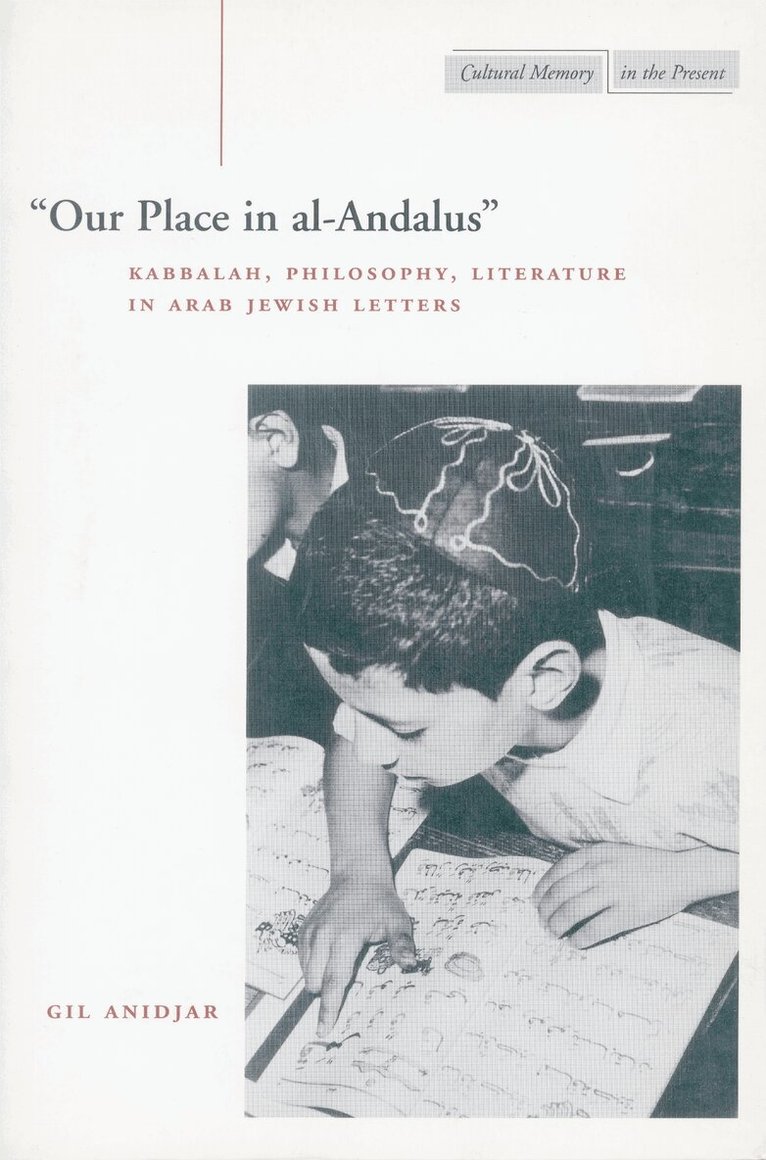
    Gil Anidjar is Associate Professor in the Department of Middle East and Asian Languages and Cultures at Columbia University. He is the author of "Our Place in Al-Andalus": Kabbalah, Philosophy, Literature in Arab Jewish Letters (Stanford, 2002).

    Recensioner i media

    "In this unique, original, and breathtakingly new work, Anidjar follows the figure of the enemy, as it informs arguments in many discursive areas: literature and philosophy to be sure, but also politics, theology, the constructions of race and ethnicity, history, etc. By showing in what ways the figure of the enemy is intertwined with construction of the Jew, the Arab, the Moslem, the Christian, the European, Anidjar continually challenges the reader to rethink concepts of and habitus related to the concept of enemy. Each chapter consists of cogent analyses, an illustration of relations among works and fields, and insightful remarks." -Lawrence R. Schehr,University of Illinois