• Fri frakt över 249 kr
  • •
  • Snabba leveranser
  • •
  • Billiga böcker
Kundservice

Du är på sajten för privatpersoner.

Företag, bibliotek eller offentlig verksamhet?

Du handlar på classic.bokus.com, där alla dina funktioner finns intakta.
Till classic.bokus.com
Bokus logotyp. Gå till startsidan.
  • Erbjudanden
  • Nyheter
  • Student
  • Topplistor
  • Barn & ungdom
  • Bokus Play
  • E-böcker
  • Pocketböcker
  • Spel & pussel

10% rabatt på allt med kod: NYSTART10 →

Sidfot

Mina sidor

    Hjälp

    • Kundservice
    • Vanliga frågor och svar
    • Frakt och leverans
    • Retur vid ångerrätt
    • Reklamera vara
    • Betalning
    • Köpvillkor
    • Allmänna villkor
    • Information om webbplatsens tillgänglighet

    Om Bokus

    • Om oss
    • Pressrum
    • För studenter
    • För företag
    • För bibliotek och offentlig verksamhet
    • För leverantörer
    • Hållbarhet

    Populärt

    • Aktuella erbjudanden
    • Presentkort
    • Studentlitteratur
    • Nya böcker
    • Topplistor
    • Signerade böcker
    • Engelska böcker

    Inspiration

    • Boktips
    • BookTok
    • Populära bokserier
    • Barnbokskaraktärer
    • Populära författare
    Logotyp för Bokus
    Följ oss på Facebook (extern länk)Följ oss på Instagram (extern länk)Följ oss på YouTube (extern länk)Följ oss på TikTok (extern länk)
    bokus @ CookiesAnpassa cookiesIntegritetspolicyKöpvillkor
    Till Citymail hemsida (extern länk)Till Budbee hemsida (extern länk)Till Postnord hemsida (extern länk)Till Schenker hemsida (extern länk)Till Early Bird hemsida (extern länk)Till Walleys hemsida (extern länk)
    1. Historia och arkeologi
    2. Historia
    3. Militärhistoria
    4. Andra världskriget

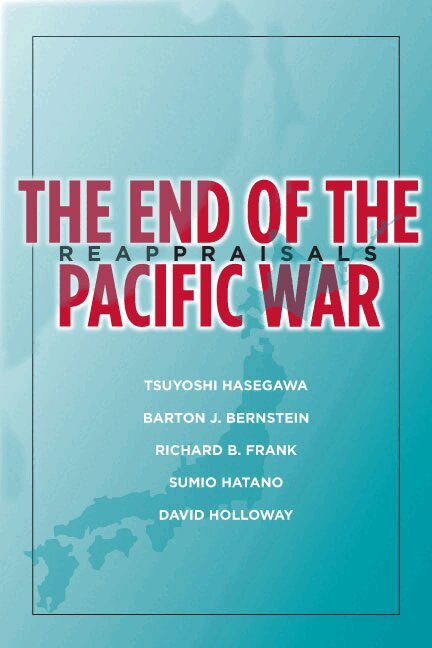
    End of the Pacific War

    Reappraisals

    AvTsuyoshi Hasegawa

    Inbunden, Engelska, 2007

    Del i serien Stanford Nuclear Age Series

    1 495 kr

    Beställningsvara. Skickas inom 10-15 vardagar. Fri frakt över 249 kr.

    Beskrivning

    Over sixty years after the end of the Pacific War, the United States and Japan have still not come to terms with the consequences; despite their postwar alliance, memories of Pearl Harbor and Hiroshima-Nagasaki continue to remind that the decision to drop the bomb remains a contentious issue. While many Americans believe the bombing directly influenced Japan's decision to surrender, the bombing's impact on Japan's decision making, as well as the role of the Soviet Union, have yet to be fully explored. This book offers state-of-the-art reinterpretations of the reasons for Japan's decision to surrender: Which was the critical factor, the atomic bombing of Hiroshima and Nagasaki, or the Soviet Union's entry into the war? Writing from the perspective of three different nationalities and drawing on newly available documents from Japan, the United States, and the former Soviet Union, five distinguished historians review the evidence and the arguments—and agree to disagree. The contributors are Barton J. Bernstein, Richard Frank, Sumio Hatano, Tsuyoshi Hasegawa, and David Holloway.

    Produktinformation

    • Utgivningsdatum:2007-03-01
    • Mått:152 x 229 x 25 mm
    • Vikt:594 g
    • Format:Inbunden
    • Språk:Engelska
    • Serie:Stanford Nuclear Age Series
    • Antal sidor:352
    • Förlag:Stanford University Press
    • ISBN:9780804754279

    Utforska kategorier

    • Andra världskriget inom Historia och arkeologi
    • Asiens historia inom Historia och arkeologi
    • Slag och fälttåg inom Samhälle och politik

    Mer om författaren

    Tsuyoshi Hasegawa is Professor of Modern Russian and Soviet History at the University of California, Santa Barbara. His publications include The Northern Territories Dispute and Russo-Japanese Relations, Vol. 1: Between War and Peace, 1967–1985; Vol. 2: Neither War nor Peace, 1985–1998 (1998); and Racing the Enemy: Stalin, Truman, and the Surrender of Japan (2005).

    Recensioner i media

    "In this excellent collection, authors from the United States and Japan recalculate various aspects of the ongoing debate about the ways in which policy decisions by Japan, the United States, and the USSR intersected around the two world-shaping events of 6-9 August 1945—the two atomic bombings of Japanese cities and the Soviet entry into the Pacific War." - David Wolff (Hokkaido University)