• Fri frakt över 249 kr
  • •
  • Snabba leveranser
  • •
  • Billiga böcker
Kundservice

Du är på sajten för privatpersoner.

Företag, bibliotek eller offentlig verksamhet?

Du handlar på classic.bokus.com, där alla dina funktioner finns intakta.
Till classic.bokus.com
Bokus logotyp. Gå till startsidan.
  • Erbjudanden
  • Nyheter
  • Student
  • Topplistor
  • Barn & ungdom
  • Bokus Play
  • E-böcker
  • Pocketböcker
  • Spel & pussel

10% rabatt på allt med kod: NYSTART10 →

Sidfot

Mina sidor

    Hjälp

    • Kundservice
    • Vanliga frågor och svar
    • Frakt och leverans
    • Retur vid ångerrätt
    • Reklamera vara
    • Betalning
    • Köpvillkor
    • Allmänna villkor
    • Information om webbplatsens tillgänglighet

    Om Bokus

    • Om oss
    • Pressrum
    • För studenter
    • För företag
    • För bibliotek och offentlig verksamhet
    • För leverantörer
    • Hållbarhet

    Populärt

    • Aktuella erbjudanden
    • Presentkort
    • Studentlitteratur
    • Nya böcker
    • Topplistor
    • Signerade böcker
    • Engelska böcker

    Inspiration

    • Boktips
    • BookTok
    • Populära bokserier
    • Barnbokskaraktärer
    • Populära författare
    Logotyp för Bokus
    Följ oss på Facebook (extern länk)Följ oss på Instagram (extern länk)Följ oss på YouTube (extern länk)Följ oss på TikTok (extern länk)
    bokus @ CookiesAnpassa cookiesIntegritetspolicyKöpvillkor
    Till Citymail hemsida (extern länk)Till Budbee hemsida (extern länk)Till Postnord hemsida (extern länk)Till Schenker hemsida (extern länk)Till Early Bird hemsida (extern länk)Till Walleys hemsida (extern länk)
    1. Samhälle och politik
    2. Politik och statsskick
    3. Politisk aktivism

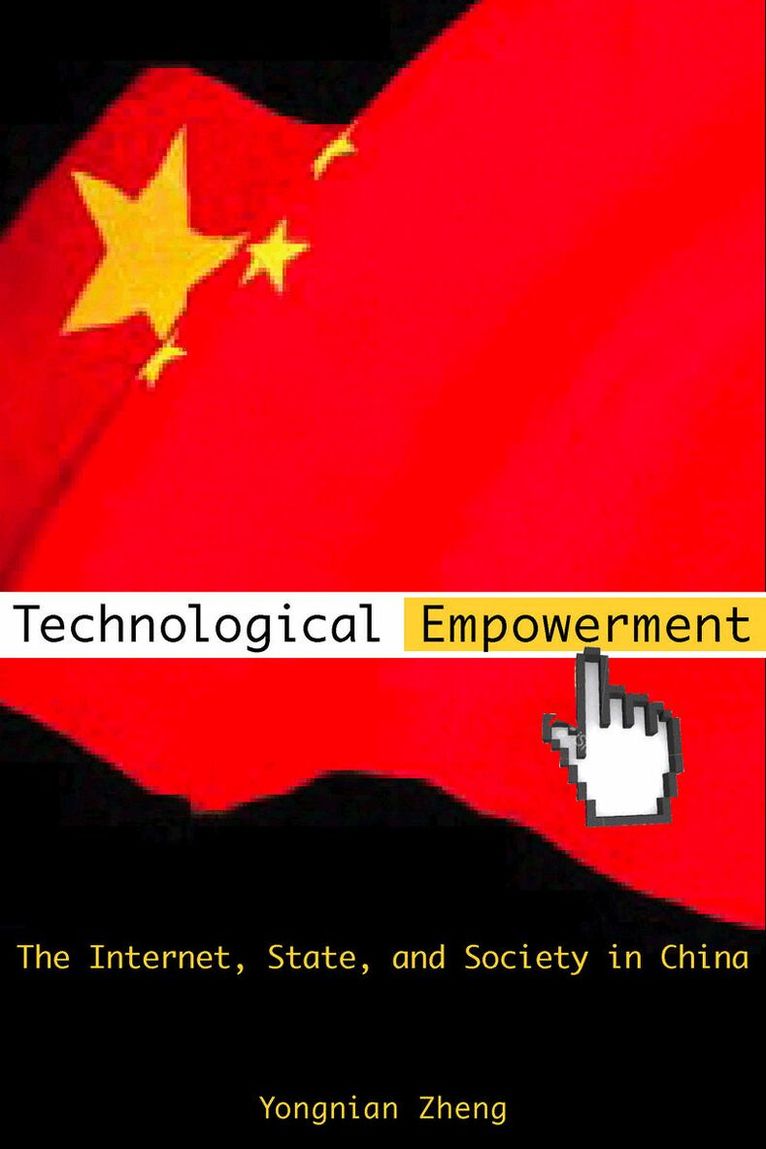
    Technological Empowerment

    The Internet, State, and Society in China

    AvYongnian Zheng

    Inbunden, Engelska, 2007

    840 kr

    Beställningsvara. Skickas inom 10-15 vardagar. Fri frakt över 249 kr.

    Beskrivning

    Will new information technologies, especially the Internet, bring freedom and democracy to authoritarian China? This study argues that the Internet has brought about new dynamics of socio-political changes in China, and that state power and social forces are transforming in Internet-mediated public space. Its findings are fourfold. First, the Internet empowers both the state and society. The Internet has played an important role in facilitating political liberalization, and made government more open, transparent, and accountable. Second, the Internet produces enormous effects which are highly decentralized and beyond the reach of state power. Third, the Internet has created a new infrastructure for the state and society in their engagement with (and disengagement from) each other. Fourth, the Internet produces a recursive relationship between state and society. The interactions between the state and society over the Internet end up reshaping both the state and society.

    Produktinformation

    • Utgivningsdatum:2007-11-07
    • Mått:152 x 229 x 24 mm
    • Vikt:503 g
    • Format:Inbunden
    • Språk:Engelska
    • Antal sidor:272
    • Förlag:Stanford University Press
    • ISBN:9780804757379

    Utforska kategorier

    • Politisk aktivism inom Samhälle och politik
    • Informationsteknik: allmänt inom Data och IT
    • Digital livsstil och datorspel inom Data och IT

    Mer om författaren

    Yongnian Zheng is Professor and Head of Research at The China Policy Institute, Nottingham University. He is also a coeditor of China: An International Journal. His publications include Globalization and State Transformation in China (2004) and Will China Become Democratic? Elite, Class, and Regime Transition (2004).

    Recensioner i media

    "Technological Empowerment is a great contribution to the study of information technology in China. Zheng provides not only a thorough analysis of the origin of the nation-building framework, but also case studies of interactions between the state and society that are facilitated through information technology." - Technology in Culture "As a China expert, Zheng's superior knowledge on China allows him to execute an insightful and balanced analysis of the Internet's impacts on the state-society relations in China . . . Overall, this is a truly well-researched and well-written book. Zheng has successfully provided a conceptual framework to assist our understanding of the political impact of the Internet in China. This book is a must-read for those scholars studying contemporary China. It is useful for relevant graduate courses in the fields of political science, sociology, and business." - Sheng Ding (Journal of Chinese Political Science) "By reviewing the impact of information technology on political development in China, Zheng seeks to explore the dynamics of socio-political changes brought about by the Internet, the transformation of state power and social forces in Internet-mediated public space, and how the Internet provides an arena for the mutual empowerment of the state and society . . . Highly recommended." - S. K. Ma (Choice)

    Innehållsförteckning

    • Contents List of Figuresxxx List of Tables xxx Prefacexxx Acknowledgmentsxxx Chapter 1. Politics of Technological Empowerment: Science vs. Democracy1 Chapter 2. Information Technology, Nation-State Building, and Social Movement00 Chapter 3. Regulatory Regime and Political Control00 Chapter 4. The Internet, Political Liberalization, and Political Democratization00 Chapter 5. The Internet, Civic Engagement, and Public Distrust00 Chapter 6. Interaction Strategies, Collective Action, and Political Consequences00 Chapter 7. Information Technology, State-Society Relations, and Political Changes00 Selected Bibliography000 Notes000 Index000 Figures and Tables Figures 2.1 Number of Computer Hosts in China000 2.2 Growth of Internet Users in China000 2-3Number of Domains Registered under CN, October 1997-January 2004 2-4Internet Users by Occupation, January 2004 2-5Use the Internet at Work among Business Elites 2-6Use the Internet at Home among Business Elites 2-7"I am proficient in using the Internet" 2-8Regional Allocation of Internet Users, October 1997-January 2002 2-9Location of Internet Access, Jan 2004 2-10Monthly Income of Internet Users in China, Jan 2004 3-1Party and State Organizations Responsible for the Media (Central level) 3-2Party and State Organizations Responsible for the Internet (Central level) 3-3Internet Arrests in China 5-1"Using the Internet will enable people to work more efficiently" 5-2"The Internet keeps me up-to-date with world developments." 5-3"Using the Internet will invade one's privacy" 5-4"Using the Internet will enable one to befriend bad company" 5-5"Using the Internet will subject one to bad influence" 5-6The level of trust of the Internet 5-7The Internet and Inter-personal Interaction in China (2003) 5-8"The Internet is a good way to keep in touch with people" 5-9"Do you think by using the Internet people like you can better understand politics?" (all respondents, 18 and above) (2003) 5-10"Do you think by using the Internet people like you can have more say about what the government does?" (all respondents, 18 and above) (2003) 5-11Approval Rate of the Government's Anti-Corruption Performance Tables 2-1Local Switchboard Capacity in China, 1985-2002 2-2Number of Fixed-Line Phone Subscribers in China, 1978-2002 2-3Penetration Rate and Teledensity in China, 1985-2002 2-4Number of Mobile Phone Subscribers in China, 1988-2002 2-5Social Groups that Benefited the Most and Least since the Open Door and Reform Policy (perceptions, 2002) 2-6Fluctuations in the Urban-Rural Income Levels since 1995 2-7The Development of Corruption among Leading Cadres in the 1990s 3-1Heads of the Central Propaganda Department 3-2Major Rules and Regulations on the Internet in China, 1994-2005 4-1Most Important Reasons for Going Online in China (%), 2002-2004 4-2Information Searched for Among Internet Users in China (%), 2002-2004 4-3Services that were used most frequently (multiple choices, %), 2002-2004 5-1Reasons for Not Using the Internet in China (percentage, 2003) 5-2Reasons for Not Using the Internet in urban areas (percentage, N: 1,382) 5-3Trust on information available in the Internet among Internet users and non-users in urban China (by percentage) 5-4Public Opinions of the Internet and Politics in urban China, percentage, 2003 5-5Public Opinions on Corruption in China 6-1Popular concerns about SARS in five Chinese cities on May 24, 2003 (percentage) 6-2The Question: "Were you aware of SARS before such news became available in official news media?" (Percentage) 6-3The Question: "What do you think of the performance of the central government in battling SARS?" (Percentage) 6-4The Question: "Has your confidence towards the government increased or decreased" (Percentage)