• Fri frakt över 249 kr
  • •
  • Snabba leveranser
  • •
  • Billiga böcker
Kundservice

Du är på sajten för privatpersoner.

Företag, bibliotek eller offentlig verksamhet?

Du handlar på classic.bokus.com, där alla dina funktioner finns intakta.
Till classic.bokus.com
Bokus logotyp. Gå till startsidan.
  • Erbjudanden
  • Nyheter
  • Student
  • Topplistor
  • Barn & ungdom
  • Bokus Play
  • E-böcker
  • Pocketböcker
  • Spel & pussel

10% rabatt på allt med kod NYSTART10 →

Sidfot

Mina sidor

    Hjälp

    • Kundservice
    • Vanliga frågor och svar
    • Frakt och leverans
    • Retur vid ångerrätt
    • Reklamera vara
    • Betalning
    • Köpvillkor
    • Allmänna villkor
    • Information om webbplatsens tillgänglighet

    Om Bokus

    • Om oss
    • Pressrum
    • För studenter
    • För företag
    • För bibliotek och offentlig verksamhet
    • För leverantörer
    • Hållbarhet

    Populärt

    • Aktuella erbjudanden
    • Presentkort
    • Studentlitteratur
    • Nya böcker
    • Topplistor
    • Signerade böcker
    • Engelska böcker

    Inspiration

    • Boktips
    • BookTok
    • Populära bokserier
    • Barnbokskaraktärer
    • Populära författare
    Logotyp för Bokus
    Följ oss på Facebook (extern länk)Följ oss på Instagram (extern länk)Följ oss på YouTube (extern länk)Följ oss på TikTok (extern länk)
    bokus @ CookiesAnpassa cookiesIntegritetspolicyKöpvillkor
    Till Citymail hemsida (extern länk)Till Budbee hemsida (extern länk)Till Postnord hemsida (extern länk)Till Schenker hemsida (extern länk)Till Early Bird hemsida (extern länk)Till Walleys hemsida (extern länk)
    1. Ekonomi och Ledarskap
    2. Nationalekonomi
    3. Mikroekonomi

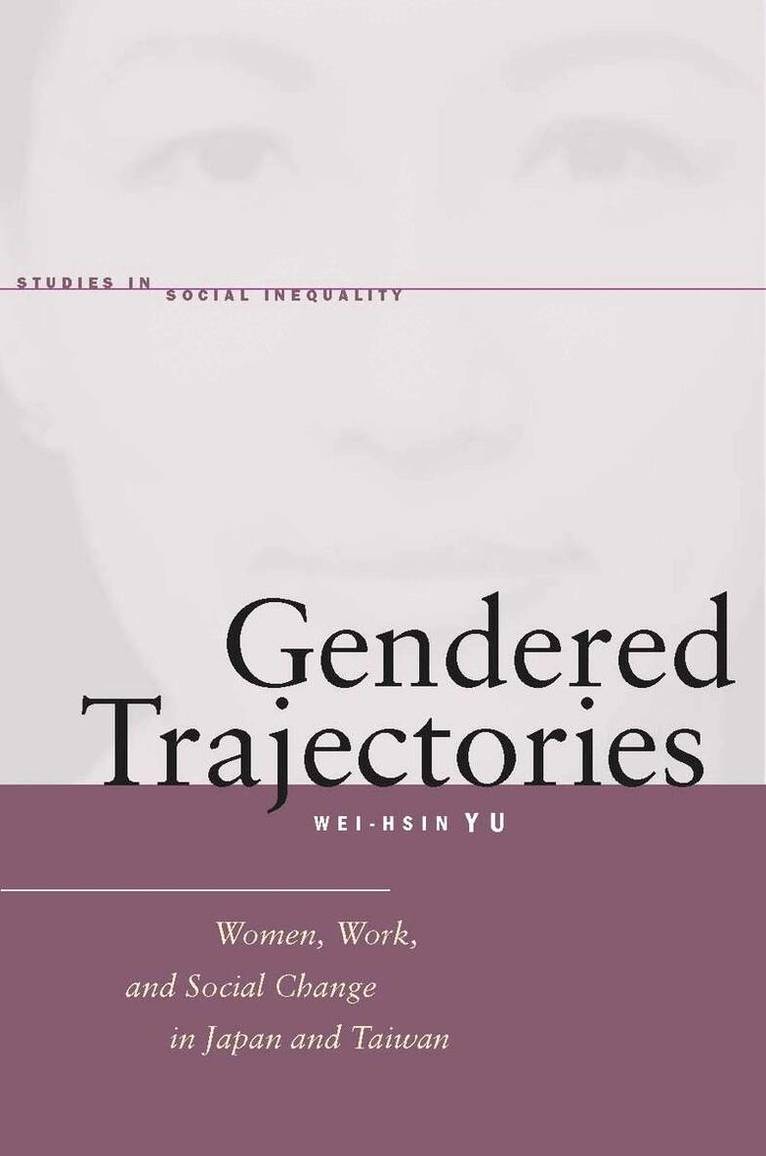
    Gendered Trajectories

    Women, Work, and Social Change in Japan and Taiwan

    AvWei-hsin Yu

    Inbunden, Engelska, 2009

    Del i serien Studies in Social Inequality

    785 kr

    Beställningsvara. Skickas inom 10-15 vardagar. Fri frakt över 249 kr.

    Fler format och utgåvor

    E-bok

    889 kr

    Beskrivning

    Gendered Trajectories explores why industrial societies vary in the pace at which they reduce gender inequality and compares changes in women's employment opportunities in Japan and Taiwan over the last half-century. Japan has undergone much less improvement in women's economic status than Taiwan, despite its more advanced economy and greater welfare provisions. The difference is particularly puzzling because the two countries share many institutional practices and values. Drawing on historical trends, survey statistics, and personal interviews with people in both countries, Yu shows how country-specific organizational arrangements and industrial policies affect women's employment. In particular, the conditions faced by Japanese and Taiwanese women in the workplace have a profound effect on their labor force participation at critical points in their lives. Women's lifetime employment decisions in turn shape the divergent trajectories in gender equality. Few studies documenting the development of women's economic lives are based on non-Western societies and even fewer adopt a comparative perspective. This perceptive work demonstrates and underscores the importance of understanding gender inequality as a long-term, dynamic social process.

    Produktinformation

    • Utgivningsdatum:2009-02-26
    • Mått:155 x 235 x 29 mm
    • Vikt:522 g
    • Format:Inbunden
    • Språk:Engelska
    • Serie:Studies in Social Inequality
    • Antal sidor:280
    • Förlag:Stanford University Press
    • ISBN:9780804760096

    Utforska kategorier

    • Mikroekonomi inom Ekonomi och Ledarskap
    • Sociologi inom Samhälle och politik

    Mer om författaren

    Wei-hsin Yu is Assistant Professor of Sociology at the University of Texas at Austin.

    Recensioner i media

    "Wei-hsin Yu's Gendered Trajectories: Women, Work, and Social Change in Japan and Taiwan, compares two countries with intertwined political histories, similar religious traditions, and shared patriarchal cultures. . . Yu takes a long-term view. Women in Taiwan, she argues, are likely to benefit from the country's increased economic growth, in contrast to Japan, where hierarchical work structures likely will continue to exclude women from 'good jobs.' She predicts that Taiwan's pattern—which is repeated in a number of formerly socialist countries—will have a long-term positive impact on gender equality in employment."—Christine L. Williams, Contemporary Society "Yu's rigorous, engaging, and thought-provoking analysis will make an important contribution to the study of gender, work, and the life course will be welcome addition to the required reading lists for graduate courses in these areas."—Deborah Carr, American Journal of Sociology. "Yu addresses puzzling differences between Japan and Taiwan clearly and thoroughly. Her reasoned consideration of the many factors behind observed cross-national differences makes an important contribution to the study of employment, gender, and the life course in these two societies."—James Raymo, University of Wisconsin-Madison "Gendered Trajectories presents an extraordinarily complete picture of women's employment patterns in Japan and Taiwan. Yu succeeds in providing a convincing explanation of why women's employment histories are so different in the two societies." —Annemette Sorensen, Stanford University "Gendered Trajectories is a valuable contribution to our understanding of gender and social change. Combining quantitative and qualitative analyses, the author links institutions to individuals' experiences to explain why there is greater gender inequality in Japan than Taiwan, despite their similarities in patterns of industrialization." —Arne L. Kalleberg, President, American Sociological Association (2008)

    Innehållsförteckning

    • CONTENTS List of Tables and Figuresxxx Acknowledgmentsxxxs Chapter One Gender Inequality and Social Change in Japan and Taiwan1 Chapter Two The Development of Women's Labor Market Experiences000 Chapter Three Comparing Labor Market Structures and Workplace Dynamics000 Chapter Four Patterns of Labor Exits among Women000 Chapter Five Challenges from the Home Front000 Chapter Six Returning to the Labor Force000 Chapter Seven Higher Education and Gender Inequality000 Chapter Eight Conclusion000 Appendix A Description of the Data Sources000 Appendix B Supplementary Tables000 Notes000 Bibliography000 Index000 [[starts on page vii]] TABLES AND FIGURES Tables 1.1. Comparison of Japan and Taiwan000 2.1. Average number of jobs experienced throughout men's and women's employment careers 000 2.2. Distributions of current labor market locations by gender and frequency of employer changes 3.1. Occupational Distributions of the Female Labor Force in Japan and Taiwan 6.1. Description of Work Trajectories of Homemaking Women, Ages 25-60 B.1. Descriptive Statistics of the SSM and TSC Samples by Gender B.2. Ordinary Least Squares Regression Analysis of Log Annual Earnings B.3. Discrete-Time Event History Models Predicting Labor Force Exits at Any Point of Time B.4. Discrete-Time Event History Models Predicting Labor Force Exit upon Marriage B.5. Discrete-Time Event History Models Predicting Labor Force Exit around First Childbirth B.6. Discrete-Time Event History Models Predicting Labor Force Reentry B.7. Multinomial Logit Models Predicting Married Women's Current Work Status in Japan B.8. Multinomial Logit Models Predicting Women's Current Occupational Status B.9. Multinomial Logit Models Predicting Women's Current Organizational Locations B.10. Multinomial Logit Models Predicting Women's Current Employment Status Figures Annual economic growth rates in Japan and Taiwan, 1956-2005000 Women's Labor Force Participation and Number of Children by Age Group Age Distributions of Brides and Mothers Giving Live Birth in 2004/2005 Attitudes Regarding Gender Roles in Japan and Taiwan Trends in Female Labor Force Participation During the Life Course Distributions of Women's Careers in Japan and Taiwan Proportion of Ever-Married Women Returning to the Labor Force by Various Ages Percentage of Workers with Experience of Within-Organizational Job Shifting by Current Occupation Job Mobility and Percent Changes in Annual Earnings Predicted Annual Earnings by Gender, Country, and Employment Status 3.1. Distribution of the Labor Force by Industry, 1951-2000 3.2. Unemployment and Nonfarm Labor Force Growth Rates, 1950-2000 3.3. Annual Increases in the Male Population of Working Age, 1950-2000 3.4. Comparisons of the Labor Force by Firm Size in Japan and Taiwan 4.1. Explanatory Framework 4.2. Occupational Effects on Ever-Married Women's Labor Force Exits at Various Times 4.3. Effects of Firm Size on Ever-Married Women's Labor Force Exits at Various Times 4.4. Relative Odds of Labor Force Exit of Public- to Private-Sector Employees 4.5. Effects of Individual Characteristics on the Likelihood of Exiting the Labor Force 4.6. Predicted Probabilities for Labor Force Exit in the Marriage Year 5.1. Percentage of Japanese Men at Home by Eight O'Clock on Weekdays 5.2. Percent Approval of Working Mothers with Young Children among Taiwanese Women, by Education 5.3. Trends of Male-Wage-to-Household-Spending Ratio and Family Size, 1965-2000 6.1. Labor Force Participation Rates of Seven Birth Cohorts at Various Ages 6.2. Estimated Probability of Labor Force Reentry, Hypothetical Cases 6.3. Comparison of Occupations before and after a Work Interruption 6.4. Comparison of Firm Size between the Female Labor Force and Women Reentrants 6.5. Comparison of Employment Status between the Female Labor Force and Women Reentrants 6.6. Effects of Postmarital Entry on Women's Current Work Status in Japan 7.1. School Systems in Japan and Taiwan 7.2. Estimated Advancement Rates to Various Educational Institutions among Taiwanese Middle- School Graduates, 1950-1998 7.3. Trends in Percent Female among Students in Tertiary Institutions 7.4. Trends in Percent Female Students Admitted to the University of Tokyo and National Taiwan University 7.5. Percentage of Students in Applied Science Programs by Educational Level in Taiwan 7.6. Percent Female Students in Four-Year Universities by University Ownership 8.1. Likelihood of Job Locations of Married versus Single Women 8.2. Comparisons of Japanese Women's Occupational Distributions 8.3. Percentage of Ever-Married, Working-Age Taiwanese Women in the Labor Force by Their First Occupation 8.4. Job Growth Rates by Gender and Employment Status in Japan, 1996-2007