• Fri frakt över 249 kr
  • •
  • Snabba leveranser
  • •
  • Billiga böcker
Kundservice

Du är på sajten för privatpersoner.

Företag, bibliotek eller offentlig verksamhet?

Du handlar på classic.bokus.com, där alla dina funktioner finns intakta.
Till classic.bokus.com
Bokus logotyp. Gå till startsidan.
  • Erbjudanden
  • Nyheter
  • Student
  • Topplistor
  • Barn & ungdom
  • Bokus Play
  • E-böcker
  • Pocketböcker
  • Spel & pussel

10% rabatt på allt med kod: NYSTART10 →

Sidfot

Mina sidor

    Hjälp

    • Kundservice
    • Vanliga frågor och svar
    • Frakt och leverans
    • Retur vid ångerrätt
    • Reklamera vara
    • Betalning
    • Köpvillkor
    • Allmänna villkor
    • Information om webbplatsens tillgänglighet

    Om Bokus

    • Om oss
    • Pressrum
    • För studenter
    • För företag
    • För bibliotek och offentlig verksamhet
    • För leverantörer
    • Hållbarhet

    Populärt

    • Aktuella erbjudanden
    • Presentkort
    • Studentlitteratur
    • Nya böcker
    • Topplistor
    • Signerade böcker
    • Engelska böcker

    Inspiration

    • Boktips
    • BookTok
    • Populära bokserier
    • Barnbokskaraktärer
    • Populära författare
    Logotyp för Bokus
    Följ oss på Facebook (extern länk)Följ oss på Instagram (extern länk)Följ oss på YouTube (extern länk)Följ oss på TikTok (extern länk)
    bokus @ CookiesAnpassa cookiesIntegritetspolicyKöpvillkor
    Till Citymail hemsida (extern länk)Till Budbee hemsida (extern länk)Till Postnord hemsida (extern länk)Till Schenker hemsida (extern länk)Till Early Bird hemsida (extern länk)Till Walleys hemsida (extern länk)
    1. Historia och arkeologi
    2. Historia
    3. Historia: särskilda händelser och ämnen
    4. Socialhistoria och kulturhistoria

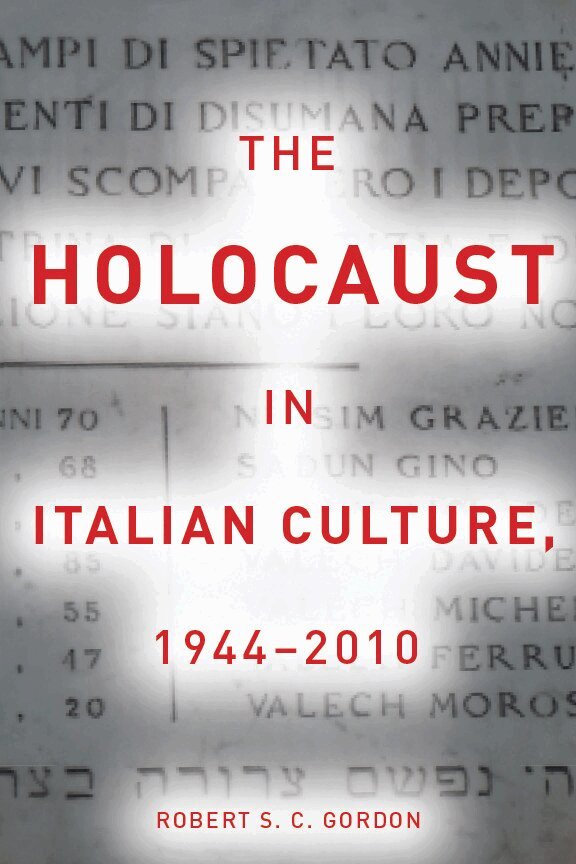
    Holocaust in Italian Culture, 1944–2010

    AvRobert Gordon

    Inbunden, Engelska, 2012

    1 360 kr

    Beställningsvara. Skickas inom 5-8 vardagar. Fri frakt över 249 kr.

    Fler format och utgåvor

    Häftad

    331 kr

    E-bok

    398 kr

    Beskrivning

    The Holocaust in Italian Culture, 1944–2010 is the first major study of how postwar Italy confronted, or failed to confront, the Holocaust. Fascist Italy was the model for Nazi Germany, and Mussolini was Hitler's prime ally in the Second World War. But Italy also became a theater of war and a victim of Nazi persecution after 1943, as resistance, collaboration, and civil war raged. Many thousands of Italians—Jews and others—were deported to concentration camps throughout Europe. After the war, Italian culture produced a vast array of stories, images, and debate through which it came to terms with the Holocaust's difficult legacy. Gordon probes a rich range of cultural material as he paints a picture of this shared encounter with the darkest moment of twentieth-century history. His book explores aspects of Italian national identity and memory, offering a new model for analyzing the interactions between national and international images of the Holocaust.

    Produktinformation

    • Utgivningsdatum:2012-07-11
    • Mått:152 x 229 x 20 mm
    • Vikt:499 g
    • Format:Inbunden
    • Språk:Engelska
    • Antal sidor:296
    • Förlag:Stanford University Press
    • ISBN:9780804763455

    Utforska kategorier

    • Socialhistoria och kulturhistoria inom Historia och arkeologi
    • Andra världskriget inom Historia och arkeologi
    • Sociala grupper och identitet inom Samhälle och politik

    Mer om författaren

    Robert S. C. Gordon is Professor of Modern Italian Culture at the University of Cambridge and a Fellow of Gonville and Caius College. He is the author of Primo Levi's Ordinary Virtues (2001) and 'Outrageous Fortune': Luck and the Holocaust (2010).

    Recensioner i media

    "[A]n outstanding guide to the last 70 years, full of insight, subtle distinctions, and always readable."—David Cesarani, Modern Italy "Gordon's novel contribution to the field of Italian Holocaust studies is a needed overview of the dynamics underscoring the national struggle between the historical position of the witnesses (epitomized in Gordon's work by Levi) and the pull of those ahistorical perceptions that slowly but surely end up constituting, one decade after another, the edifice of what Maurice Halbwachs famously named 'collective memory' (La mémoire collective, Paris: Presses universitaires de France, 1950)."—Federica K. Clementi, CLIO "There can be no doubt about Gordon's erudition or scholarship, and we must be grateful for his having written the first comprehensive account of Italian responses to the Holocaust . . . Ultimately the great value of Gordon's book lies in the fact that he brings some structure to the extremely diverse mosaic of Italian memories of the Holocaust."—Christian Goeschel, European History Quarterly "A major strength of Gordon's book lies in moving smoothly between the different foci of his subject, providing chronology and historical detail where necessary, highlighting debates and, above all, making historical complexity and its cultural manifestations accessible to the general reader through short systematic introductions, summaries and recapitulations of the main points of each of the ten chapters of the book . . . We are all indebted to Professor Robert Gordon for his remarkable elucidation of the interconnected, multifaceted links joining contemporary Italian culture with the Shoa. His book is an indispensable, standard reference and guide to future developments in this area of Italian public life."—Jacques Roumani, Sephardic Horizons "This outstanding book fills a critical gap in the literature and has profound significance for the study of Italy and for the memory of the Holocaust."—Marla Stone, Occidental College "Gordon has written an important book on memorialization of the Shoah for Italians and non-Italians alike."—R.J.B. Bosworth, Jesus College, University of Oxford "This book will change the way the relationship between the Holocaust and Italy is understood. Through the use of a wide range of materials, Robert Gordon analyses the tortuous and complicated ways in which the Shoah was narrated, remembered, misunderstood, forgotten, and then rediscovered. This is a fascinating story, told here with great elegance, verve, and passion, but also with scrupulous attention to detail. Essential reading for all students, researchers and historians working on post-war Italy."—John Foot, University College London