• Fri frakt över 249 kr
  • •
  • Snabba leveranser
  • •
  • Billiga böcker
Kundservice

Du är på sajten för privatpersoner.

Företag, bibliotek eller offentlig verksamhet?

Du handlar på classic.bokus.com, där alla dina funktioner finns intakta.
Till classic.bokus.com
Bokus logotyp. Gå till startsidan.
  • Erbjudanden
  • Nyheter
  • Student
  • Topplistor
  • Barn & ungdom
  • Bokus Play
  • E-böcker
  • Pocketböcker
  • Spel & pussel

10% rabatt på allt med kod: NYSTART10 →

Sidfot

Mina sidor

    Hjälp

    • Kundservice
    • Vanliga frågor och svar
    • Frakt och leverans
    • Retur vid ångerrätt
    • Reklamera vara
    • Betalning
    • Köpvillkor
    • Allmänna villkor
    • Information om webbplatsens tillgänglighet

    Om Bokus

    • Om oss
    • Pressrum
    • För studenter
    • För företag
    • För bibliotek och offentlig verksamhet
    • För leverantörer
    • Hållbarhet

    Populärt

    • Aktuella erbjudanden
    • Presentkort
    • Studentlitteratur
    • Nya böcker
    • Topplistor
    • Signerade böcker
    • Engelska böcker

    Inspiration

    • Boktips
    • BookTok
    • Populära bokserier
    • Barnbokskaraktärer
    • Populära författare
    Logotyp för Bokus
    Följ oss på Facebook (extern länk)Följ oss på Instagram (extern länk)Följ oss på YouTube (extern länk)Följ oss på TikTok (extern länk)
    bokus @ CookiesAnpassa cookiesIntegritetspolicyKöpvillkor
    Till Citymail hemsida (extern länk)Till Budbee hemsida (extern länk)Till Postnord hemsida (extern länk)Till Schenker hemsida (extern länk)Till Early Bird hemsida (extern länk)Till Walleys hemsida (extern länk)
    1. Historia och arkeologi
    2. Historia
    3. Asiens historia

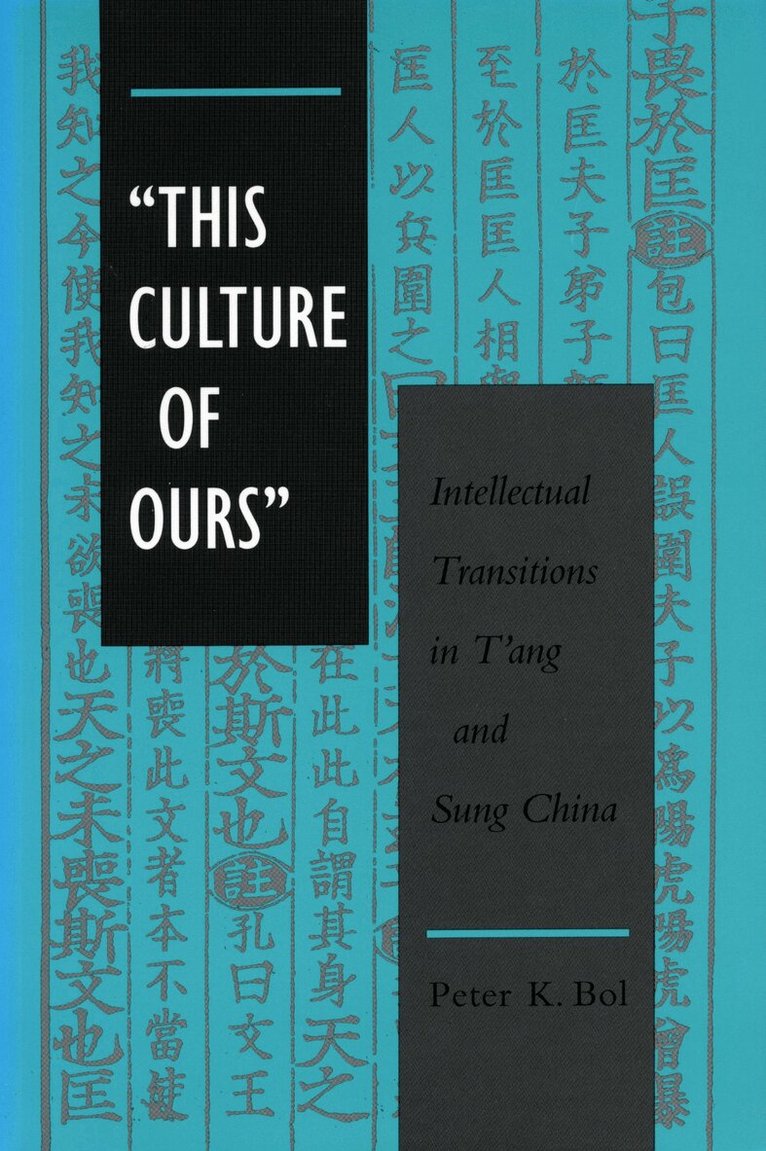
    'This Culture of Ours'

    Intellectual Transitions in T'ang and Sung China

    AvPeter K. Bol

    E-bok
    Engelska, 1994

    587 kr

    Läs direkt i Bokus Reader – eller ladda ned till din enhet

    Fler format och utgåvor

    Inbunden

    2 273 kr

    Häftad

    559 kr

    Beskrivning

    This book traces the shared culture of the Chinese elite from the seventh to the twelfth centuries. The early T'ang definition of 'This Culture of Ours' combined literary and scholarly traditions from the previous five centuries. The late Sung Neo-Confucian movement challenged that definition. The author argues that the Tang-Sung transition is best understood as a transition from a literary view of culture - in which literary accomplishment and mastery of traditional forms were regarded as essential - to the ethical orientation of Neo-Confucianism, in which the cultivation of one's innate moral ability was regarded as the goal of learning. The author shows that this transformation paralleled the collapse of the T'ang order and the restoration of a centralized empire under the Sung, underscoring the connection between elite formation and political institutions.

    Produktinformation

    • Utgivningsdatum:1994-08-01
    • Språk:Engelska
    • Antal sidor:532
    • Filformat:EPUB
    • Kopieringsskydd:LCP
    • ISBN:9780804765756
    • Förlag:Stanford University Press

    Utforska kategorier

    • Asiens historia inom Historia och arkeologi

    Recensioner i media

    "Bol's book is a major accomplishment, intellectual history at its best. Every serious student of the history and the literary and intellectual culture of traditional China will want to read Bol's study and will need to take it into account." —Choice "Bol's book is a major accomplishment, intellectual history at its best. Bol deals with a very large topic as he relates changes in the underlying aims and objects of intellectual activity to the changing historical situation and composition of China's elite. Along with a broad interpretative framework, Bol offers new perspectives on influential figures, and subtle readings from a wide range of sources. He begins in the seventh century with the literary-cultural orientation of early T'ang court scholarship and concludes in the Sung with the Neo-Confucian emphasis on ethics, which met the needs of a new local elite and remained dominant until the 17th century. Every serious student of the history and the literary and intellectual culture of traditional China will want to read Bol's study and will need to take it into account."—Choice