Peter K. Bol - Böcker
Visar alla böcker från författaren Peter K. Bol. Handla med fri frakt och snabb leverans.
6 produkter
6 produkter
234 kr
Skickas inom 10-15 vardagar
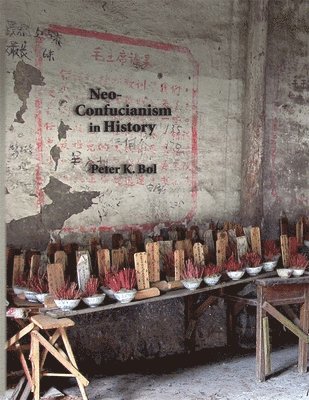
Where does Neo-Confucianism—a movement that from the twelfth to the seventeenth centuries profoundly influenced the way people understood the world and responded to it—fit into our story of China’s history?This interpretive, at times polemical, inquiry into the Neo-Confucian engagement with the literati as the social and political elite, local society, and the imperial state during the Song, Yuan, and Ming dynasties is also a reflection on the role of the middle period in China’s history. The book argues that as Neo-Confucians put their philosophy of learning into practice in local society, they justified a new social ideal in which society at the local level was led by the literati with state recognition and support. The later imperial order, in which the state accepted local elite leadership as necessary to its own existence, survived even after Neo-Confucianism lost its hold on the center of intellectual culture in the seventeenth century but continued as the foundation of local education. It is the contention of this book that Neo-Confucianism made that order possible.
Del 130 - Harvard-Yenching Institute Monograph Series
Localizing Learning
The Literati Enterprise in Wuzhou, 1100–1600
Inbunden, Engelska, 2022
577 kr
Skickas inom 7-10 vardagar
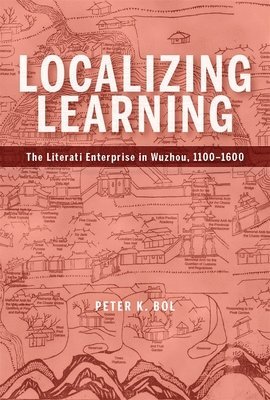
As the first intellectual history of Song, Yuan, and Ming China written from a local perspective, Localizing Learning shows how literati learning in Wuzhou came to encompass examination studies, Neo-Confucian moral philosophy, historical and Classical scholarship, encyclopedic learnedness, and literary writing, and traces how debates over the relative value of moral cultivation, cultural accomplishment, and political service unfolded locally.The book is set in one locality, Wuzhou (later Jinhua), a prefecture in China’s Zhejiang province, from the twelfth through the sixteenth century. Its main actors are literati of the Song, Yuan, and Ming, who created a local tradition of learning as a means of cementing their common identity and their claim to moral, political, and cultural leadership. Close readings of philosophical and literary texts with quantitative analysis of social and kinship networks consider why and how the local literati enterprise was built.By treating learning as the subject, it broadens our perspective, going beyond a history of ideas to investigate the social practices and networks of kinship and collegiality with which literati defined themselves in local, regional, and national contexts.
426 kr
Skickas inom 7-10 vardagar
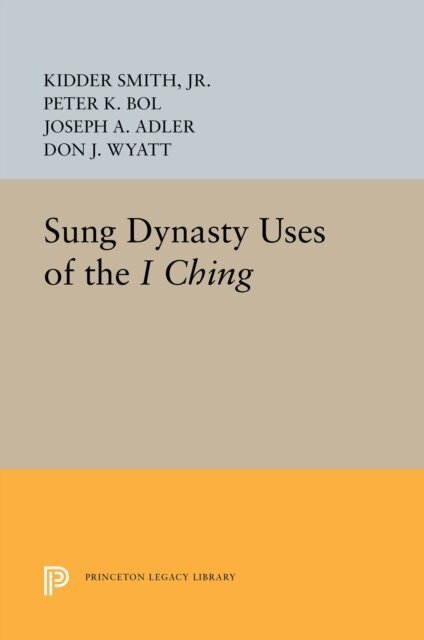
The I Ching, or Book of Changes, has been one of the two or three most influential books in the Chinese canon. It has been used by people on all levels of society, both as a method of divination and as a source of essential ideas about the nature of heaven, earth, and humankind. During the eleventh and twelfth centuries, Sung dynasty literati turned to it for guidance in their fundamental reworking of the classical traditions. This book explores how four leading thinkers--Su Shih, Shao Yung, Ch'eng I, and Chu Hsi--applied the I Ching to these projects. These four men used the Book of Changes in strikingly different ways. Yet each claimed to find in it a sure foundation for human values. Their work established not only new meanings for the text but also new models for governance and moral philosophy that would be debated throughout the next thousand years of Chinese intellectual history. By focusing on their uses of the I Ching, this study casts a unique light on the complex continuity-within-change and rich diversity of Sung culture. Originally published in 1990.The Princeton Legacy Library uses the latest print-on-demand technology to again make available previously out-of-print books from the distinguished backlist of Princeton University Press. These editions preserve the original texts of these important books while presenting them in durable paperback and hardcover editions. The goal of the Princeton Legacy Library is to vastly increase access to the rich scholarly heritage found in the thousands of books published by Princeton University Press since its founding in 1905.
1 817 kr
Skickas inom 3-6 vardagar
The I Ching, or Book of Changes, has been one of the two or three most influential books in the Chinese canon. It has been used by people on all levels of society, both as a method of divination and as a source of essential ideas about the nature of heaven, earth, and humankind. During the eleventh and twelfth centuries, Sung dynasty literati turned to it for guidance in their fundamental reworking of the classical traditions. This book explores how four leading thinkers--Su Shih, Shao Yung, Ch'eng I, and Chu Hsi--applied the I Ching to these projects. These four men used the Book of Changes in strikingly different ways. Yet each claimed to find in it a sure foundation for human values. Their work established not only new meanings for the text but also new models for governance and moral philosophy that would be debated throughout the next thousand years of Chinese intellectual history. By focusing on their uses of the I Ching, this study casts a unique light on the complex continuity-within-change and rich diversity of Sung culture. Originally published in 1990.The Princeton Legacy Library uses the latest print-on-demand technology to again make available previously out-of-print books from the distinguished backlist of Princeton University Press. These editions preserve the original texts of these important books while presenting them in durable paperback and hardcover editions. The goal of the Princeton Legacy Library is to vastly increase access to the rich scholarly heritage found in the thousands of books published by Princeton University Press since its founding in 1905.
2 175 kr
Skickas inom 7-10 vardagar
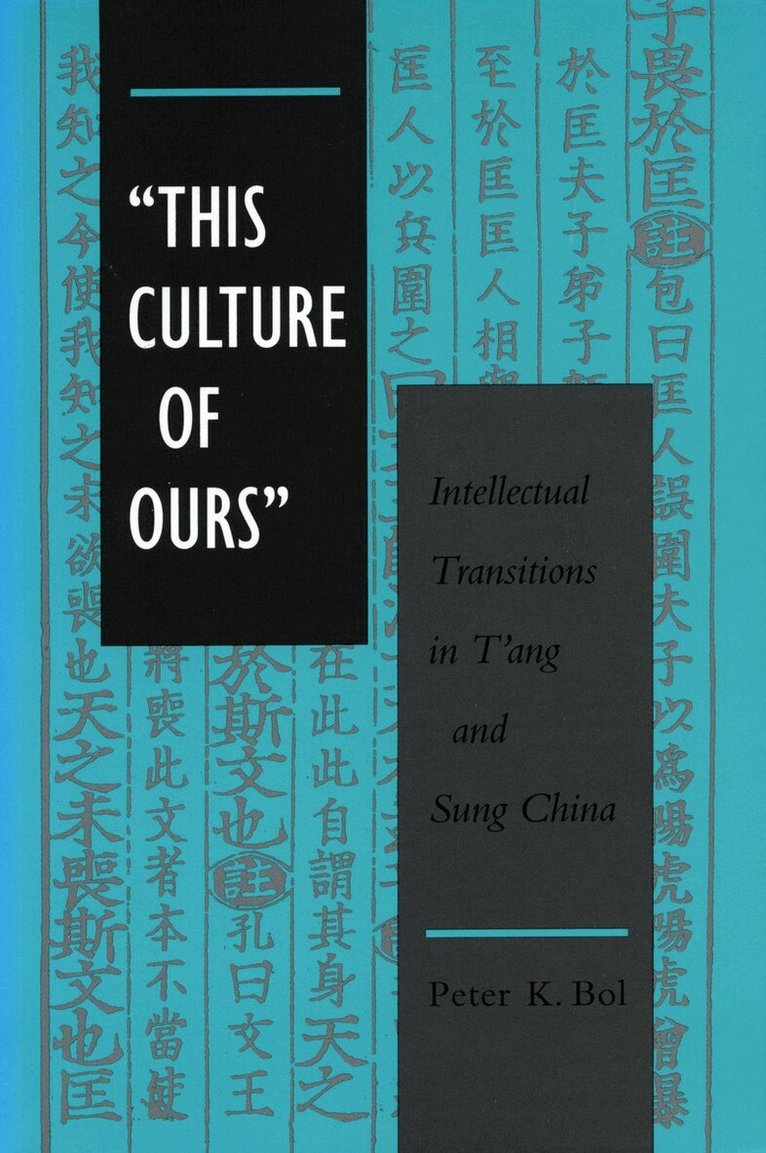
This book traces the shared culture of the Chinese elite from the seventh to the twelfth centuries. The early T'ang definition of 'This Culture of Ours' combined literary and scholarly traditions from the previous five centuries. The late Sung Neo-Confucian movement challenged that definition. The author argues that the Tang-Sung transition is best understood as a transition from a literary view of culture - in which literary accomplishment and mastery of traditional forms were regarded as essential - to the ethical orientation of Neo-Confucianism, in which the cultivation of one's innate moral ability was regarded as the goal of learning. The author shows that this transformation paralleled the collapse of the T'ang order and the restoration of a centralized empire under the Sung, underscoring the connection between elite formation and political institutions.
540 kr
Skickas inom 7-10 vardagar
This book traces the shared culture of the Chinese elite from the seventh to the twelfth centuries. The early T'ang definition of 'This Culture of Ours' combined literary and scholarly traditions from the previous five centuries. The late Sung Neo-Confucian movement challenged that definition. The author argues that the Tang-Sung transition is best understood as a transition from a literary view of culture - in which literary accomplishment and mastery of traditional forms were regarded as essential - to the ethical orientation of Neo-Confucianism, in which the cultivation of one's innate moral ability was regarded as the goal of learning. The author shows that this transformation paralleled the collapse of the T'ang order and the restoration of a centralized empire under the Sung, underscoring the connection between elite formation and political institutions.